Douglas L. Karlen – författare
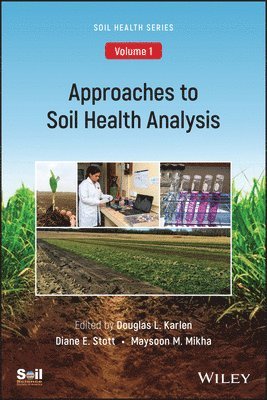
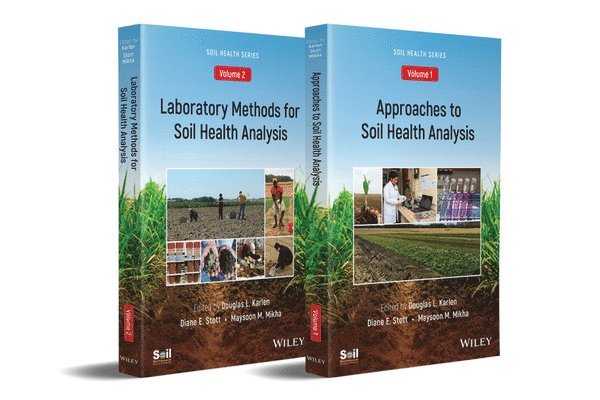
Approaches to Soil Health Analysis (Soil Health series, Volume 1)
795 kr
Skickas inom 5-8 vardagar
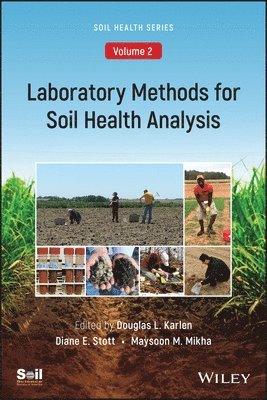
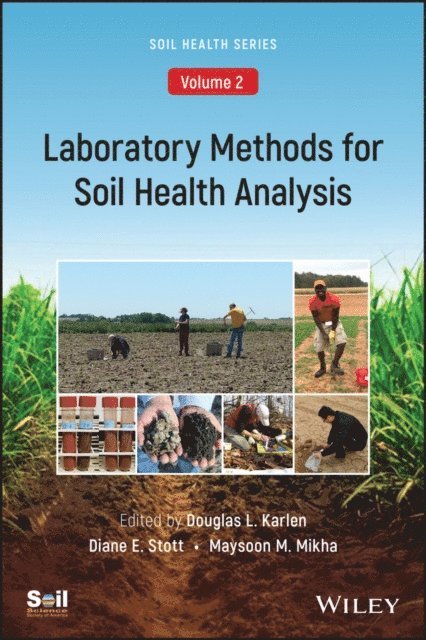
Laboratory Methods for Soil Health Analysis (Soil Health series, Volume 2)
795 kr
Skickas inom 5-8 vardagar
885 kr
Läs direkt efter köp
A concise survey of soil health analysis and its various techniques and applications
The maintenance of healthy soil resources provides the foundation for an array of global efforts and initiatives that affect humanity. Whether they are working to combat food shortages, conserve our ecosystems, or mitigate the impact of climate change, researchers and agriculturalists the world over must be able to correctly examine and understand the complex nature of this essential, fragile resource. These new volumes have been designed to meet this need, addressing the many dimensions of soil health analysis in chapters that are concise, accessible and applicable to the tasks at hand.
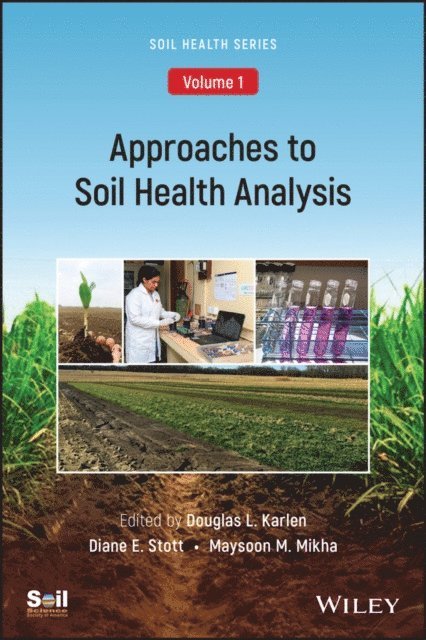
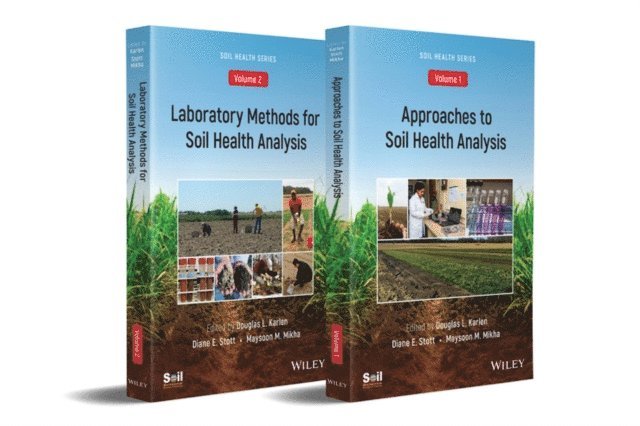
Soil Health, Volume One: Approaches to Soil Health Analysis provides a well-rounded overview of the various methods and strategies available to analysists, and covers topics including:
The history of soil health and its studyChallenges and opportunities facing analysistsMeta-data and its assessmentApplications to forestry and urban land reclamationFuture soil health monitoring and evaluation approachesOffering a far-reaching survey of this increasingly interdisciplinary field, this volume will be of great interest to all those working in agriculture, private sector businesses, non-governmental organizations (NGOs), academic-, state-, and federal-research projects, as well as state and federal soil conservation, water quality and other environmental programs.
900 kr
Läs direkt efter köp
A concise survey of soil health analysis and its various techniques and applications
The maintenance of healthy soil resources provides the foundation for an array of global efforts and initiatives that affect humanity. Whether they are working to combat food shortages, conserve our ecosystems, or mitigate the impact of climate change, researchers and agriculturalists the world over must be able to correctly examine and understand the complex nature of this essential, fragile resource. These new volumes have been designed to meet this need, addressing the many dimensions of soil health analysis in chapters that are concise, accessible and applicable to the tasks at hand.
Soil Health, Volume One: Approaches to Soil Health Analysis provides a well-rounded overview of the various methods and strategies available to analysists, and covers topics including:
The history of soil health and its studyChallenges and opportunities facing analysistsMeta-data and its assessmentApplications to forestry and urban land reclamationFuture soil health monitoring and evaluation approachesOffering a far-reaching survey of this increasingly interdisciplinary field, this volume will be of great interest to all those working in agriculture, private sector businesses, non-governmental organizations (NGOs), academic-, state-, and federal-research projects, as well as state and federal soil conservation, water quality and other environmental programs.
885 kr
Läs direkt efter köp
Analyzing, comparing, and understanding soil health data
The maintenance of healthy soil resources is instrumental to the success of an array of global efforts and initiatives. Whether they are working to combat food shortages, conserve our ecosystems, or mitigate the impact of climate change, researchers and agriculturalists the world over must be able to correctly examine and understand the complex nature of this essential resource. These new volumes have been designed to meet this need, addressing the many dimensions of soil health analysis in chapters that are concise, accessible and applicable to the tasks at hand.
Soil Health, Volume Two: Laboratory Methods for Soil Health Analysis provides explanations of the best practices by which one may arrive at valuable, comparable data and incisive conclusions, and covers topics including:
Sampling considerations and field evaluationsAssessment and interpretation of soil-test biological activity Macro- and micronutrients in soil quality and health PLFA and EL-FAME indicatorsOffering a practical guide to collecting and understanding soil health data, this volume will be of great interest to all those working in agriculture, private sector businesses, non-governmental organizations (NGOs), academic-, state-, and federal-research projects, as well as state and federal soil conservation, water quality and other environmental programs.
900 kr
Läs direkt efter köp
Analyzing, comparing, and understanding soil health data
The maintenance of healthy soil resources is instrumental to the success of an array of global efforts and initiatives. Whether they are working to combat food shortages, conserve our ecosystems, or mitigate the impact of climate change, researchers and agriculturalists the world over must be able to correctly examine and understand the complex nature of this essential resource. These new volumes have been designed to meet this need, addressing the many dimensions of soil health analysis in chapters that are concise, accessible and applicable to the tasks at hand.
Soil Health, Volume Two: Laboratory Methods for Soil Health Analysis provides explanations of the best practices by which one may arrive at valuable, comparable data and incisive conclusions, and covers topics including:
Sampling considerations and field evaluationsAssessment and interpretation of soil-test biological activity Macro- and micronutrients in soil quality and health PLFA and EL-FAME indicatorsOffering a practical guide to collecting and understanding soil health data, this volume will be of great interest to all those working in agriculture, private sector businesses, non-governmental organizations (NGOs), academic-, state-, and federal-research projects, as well as state and federal soil conservation, water quality and other environmental programs.
1 396 kr
Skickas inom 11-20 vardagar
1 572 kr
Läs direkt efter köp
1 587 kr
Läs direkt efter köp
1 755 kr
Läs direkt efter köp
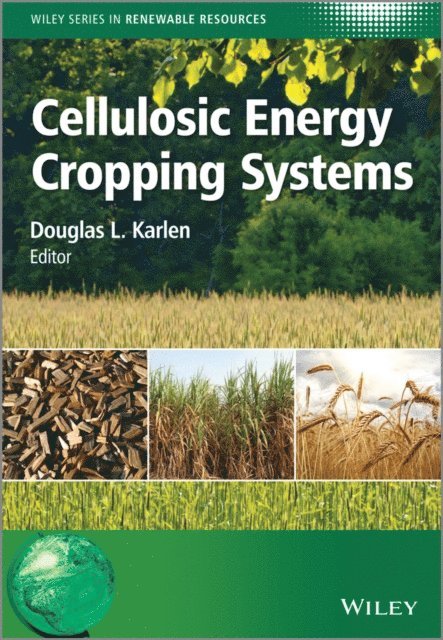
Cellulosic Energy Cropping Systems presents a comprehensive overview of how cellulosic energy crops can be sustainably produced and converted to affordable energy through liquid fuels, heat and electricity.
The book begins with an introduction to cellulosic feedstocks, discussing their potential as a large-scale sustainable energy source, and technologies for the production of liquid fuels, heat and electricity. Subsequent chapters examine miscanthus, switchgrass, sugarcane and energy cane, sorghums and crop residues, reviewing their phylogeny, cultural practices, and opportunities for genetic improvement. This is followed by a detailed focus on woody crops, including eucalyptus, pine, poplar and willow. Critical logistical issues associated with both herbaceous and woody feedstocks are reviewed, and alternate strategies for harvesting, transporting, and storing cellulosic materials are also examined. The final sectionof the booktackles the challenge of achieving long-term sustainability, addressing economic, environmental and social factors.
Cellulosic Energy Cropping Systems is a valuable resource for academics, students and industry professionals working in the field of biomass cultivation and conversion, bioenergy, crop science and agriculture.
Topics covered include:
Identifying suitable cellulosic energy crops that are adapted to a wide range of climates and soils Best management practices for sustainably growing, harvesting, storing, transporting and pre-processing these crops The development of integrated cellulosic energy cropping systems for supplying commercial processing plants Challenges and opportunities for the long-term sustainability of cellulosic energy cropsThis book was conceived and initiated by David I. Bransby, Professor of Energy and Forage Crops in the Department of Crop, Soil and Environmental Sciences at Auburn University, USA.
For more information on the Wiley Series in Renewable Resources, visit www.wiley.com/go/rrs
1 755 kr
Läs direkt efter köp
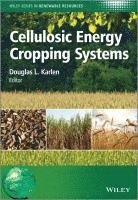
Cellulosic Energy Cropping Systems presents a comprehensive overview of how cellulosic energy crops can be sustainably produced and converted to affordable energy through liquid fuels, heat and electricity.
The book begins with an introduction to cellulosic feedstocks, discussing their potential as a large-scale sustainable energy source, and technologies for the production of liquid fuels, heat and electricity. Subsequent chapters examine miscanthus, switchgrass, sugarcane and energy cane, sorghums and crop residues, reviewing their phylogeny, cultural practices, and opportunities for genetic improvement. This is followed by a detailed focus on woody crops, including eucalyptus, pine, poplar and willow. Critical logistical issues associated with both herbaceous and woody feedstocks are reviewed, and alternate strategies for harvesting, transporting, and storing cellulosic materials are also examined. The final sectionof the booktackles the challenge of achieving long-term sustainability, addressing economic, environmental and social factors.
Cellulosic Energy Cropping Systems is a valuable resource for academics, students and industry professionals working in the field of biomass cultivation and conversion, bioenergy, crop science and agriculture.
Topics covered include:
Identifying suitable cellulosic energy crops that are adapted to a wide range of climates and soils Best management practices for sustainably growing, harvesting, storing, transporting and pre-processing these crops The development of integrated cellulosic energy cropping systems for supplying commercial processing plants Challenges and opportunities for the long-term sustainability of cellulosic energy cropsThis book was conceived and initiated by David I. Bransby, Professor of Energy and Forage Crops in the Department of Crop, Soil and Environmental Sciences at Auburn University, USA.
For more information on the Wiley Series in Renewable Resources, visit www.wiley.com/go/rrs
1 211 kr
Tillfälligt slut