Douglas R. Shier - Böcker
Visar alla böcker från författaren Douglas R. Shier. Handla med fri frakt och snabb leverans.
5 produkter
5 produkter
751 kr
Skickas inom 5-8 vardagar
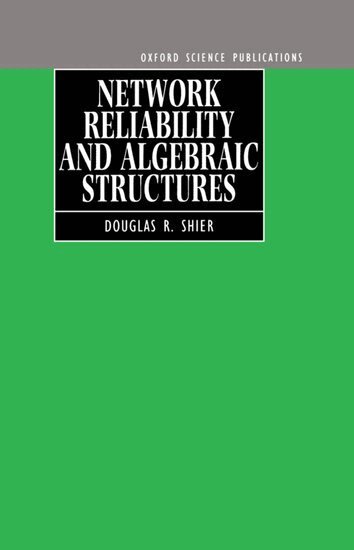
Networks of computer systems, distribution systems, and telecommunication systems play an increasingly important role in our lives. This book is concerned with analysing and assessing the reliability of such networks whose components are prone to possible failure.The field of network reliability has expanded rapidly to provide various mathematical models and computational procedures. In this book the emphasis is on identifying a number of algebraic structures that serve to unify the study of networks, and to suggest new techniques and procedures for analysing the probabilistic behaviour of networks. Consequently, amongst the topics covered are pseudopolynomial algorithms, lattice structures, spaces of polynomials, reliability covering problems, and stochastic path problems.The result is a book which will be an invaluable account of the subject for all mathematicians, computer scientists, reliability engineers, and operations researchers whose work touches on network reliability.
933 kr
Skickas inom 10-15 vardagar
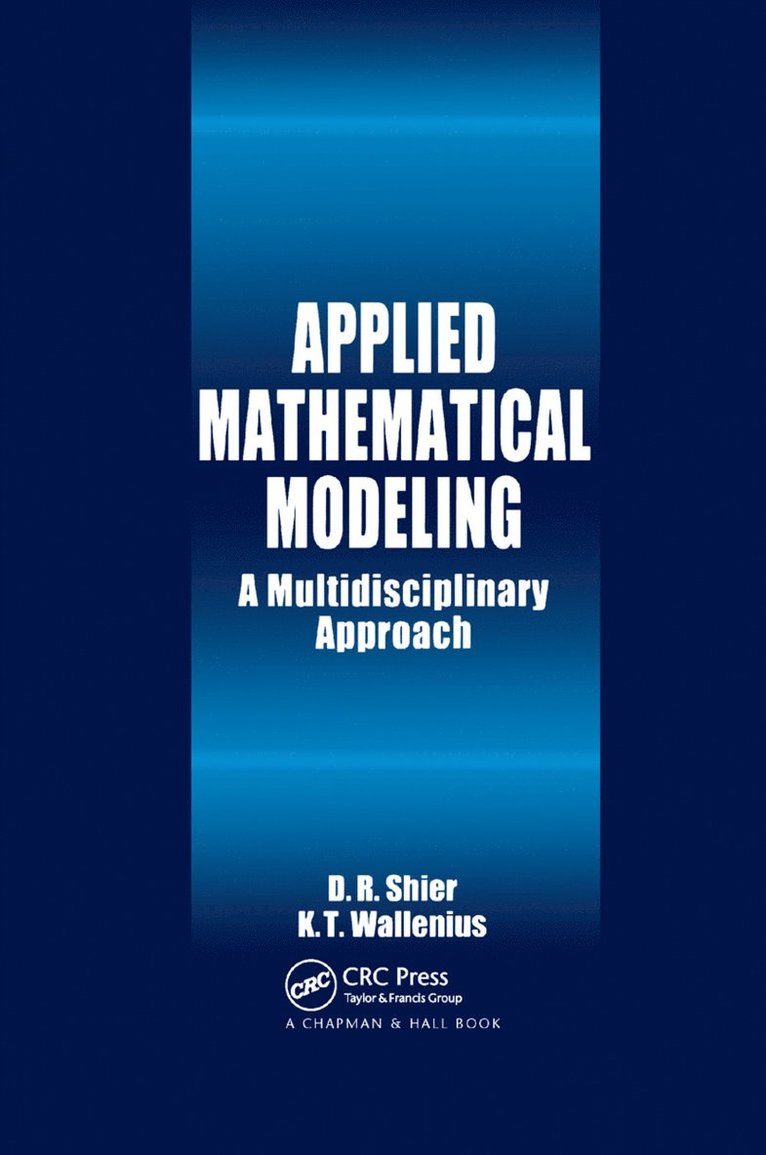
The practice of modeling is best learned by those armed with fundamental methodologies and exposed to a wide variety of modeling experience. Ideally, this experience could be obtained by working on actual modeling problems. But time constraints often make this difficult. Applied Mathematical Modeling provides a collection of models illustrating the power and richness of the mathematical sciences in supplying insight into the operation of important real-world systems. It fills a gap within modeling texts, focusing on applications across a broad range of disciplines. The first part of the book discusses the general components of the modeling process and highlights the potential of modeling in practice. These chapters discuss the general components of the modeling process, and the evolutionary nature of successful model building. The second part provides a rich compendium of case studies, each one complete with examples, exercises, and projects.In keeping with the multidimensional nature of the models presented, the chapters in the second part are listed in alphabetical order by the contributor's last name. Unlike most mathematical books, in which you must master the concepts of early chapters to prepare for subsequent material, you may start with any chapter. Begin with cryptology, if that catches your fancy, or go directly to bursty traffic if that is your cup of tea.Applied Mathematical Modeling serves as a handbook of in-depth case studies that span the mathematical sciences, building upon a modest mathematical background. Readers in other applied disciplines will benefit from seeing how selected mathematical modeling philosophies and techniques can be brought to bear on problems in their disciplines. The models address actual situations studied in chemistry, physics, demography, economics, civil engineering, environmental engineering, industrial engineering, telecommunications, and other areas.
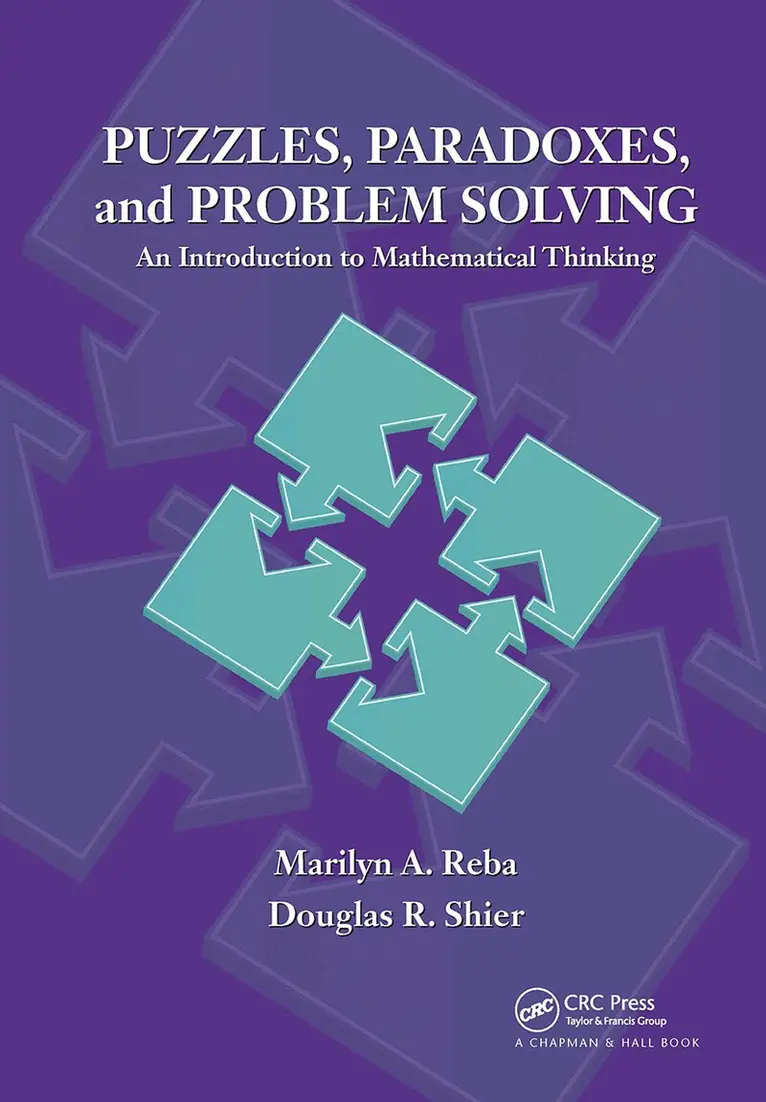
Puzzles, Paradoxes, and Problem Solving
An Introduction to Mathematical Thinking
Häftad, Engelska, 2024
824 kr
Skickas inom 10-15 vardagar
A Classroom-Tested, Alternative Approach to Teaching Math for Liberal Arts Puzzles, Paradoxes, and Problem Solving: An Introduction to Mathematical Thinking uses puzzles and paradoxes to introduce basic principles of mathematical thought. The text is designed for students in liberal arts mathematics courses. Decision-making situations that progress from recreational problems to important contemporary applications develop the critical-thinking skills of non-science and non-technical majors. The logical underpinnings of this textbook were developed and refined throughout many years of classroom feedback and in response to commentary from presentations at national conferences. The text’s five units focus on graphs, logic, probability, voting, and cryptography. The authors also cover related areas, such as operations research, game theory, number theory, combinatorics, statistics, and circuit design. The text uses a core set of common representations, strategies, and algorithms to analyze diverse games, puzzles, and applications. This unified treatment logically connects the topics with a recurring set of solution approaches. Requiring no mathematical prerequisites, this book helps students explore creative mathematical thinking and enhance their own critical-thinking skills. Students will acquire quantitative literacy and appreciation of mathematics through the text’s unified approach and wide range of interesting applications.
Puzzles, Paradoxes, and Problem Solving
An Introduction to Mathematical Thinking
Inbunden, Engelska, 2014
1 693 kr
Skickas inom 7-10 vardagar
A Classroom-Tested, Alternative Approach to Teaching Math for Liberal Arts Puzzles, Paradoxes, and Problem Solving: An Introduction to Mathematical Thinking uses puzzles and paradoxes to introduce basic principles of mathematical thought. The text is designed for students in liberal arts mathematics courses. Decision-making situations that progress from recreational problems to important contemporary applications develop the critical-thinking skills of non-science and non-technical majors. The logical underpinnings of this textbook were developed and refined throughout many years of classroom feedback and in response to commentary from presentations at national conferences. The text’s five units focus on graphs, logic, probability, voting, and cryptography. The authors also cover related areas, such as operations research, game theory, number theory, combinatorics, statistics, and circuit design. The text uses a core set of common representations, strategies, and algorithms to analyze diverse games, puzzles, and applications. This unified treatment logically connects the topics with a recurring set of solution approaches. Requiring no mathematical prerequisites, this book helps students explore creative mathematical thinking and enhance their own critical-thinking skills. Students will acquire quantitative literacy and appreciation of mathematics through the text’s unified approach and wide range of interesting applications.
2 705 kr
Skickas inom 10-15 vardagar
The practice of modeling is best learned by those armed with fundamental methodologies and exposed to a wide variety of modeling experience. Ideally, this experience could be obtained by working on actual modeling problems. But time constraints often make this difficult. Applied Mathematical Modeling provides a collection of models illustrating the power and richness of the mathematical sciences in supplying insight into the operation of important real-world systems. It fills a gap within modeling texts, focusing on applications across a broad range of disciplines. The first part of the book discusses the general components of the modeling process and highlights the potential of modeling in practice. These chapters discuss the general components of the modeling process, and the evolutionary nature of successful model building. The second part provides a rich compendium of case studies, each one complete with examples, exercises, and projects.In keeping with the multidimensional nature of the models presented, the chapters in the second part are listed in alphabetical order by the contributor's last name. Unlike most mathematical books, in which you must master the concepts of early chapters to prepare for subsequent material, you may start with any chapter. Begin with cryptology, if that catches your fancy, or go directly to bursty traffic if that is your cup of tea.Applied Mathematical Modeling serves as a handbook of in-depth case studies that span the mathematical sciences, building upon a modest mathematical background. Readers in other applied disciplines will benefit from seeing how selected mathematical modeling philosophies and techniques can be brought to bear on problems in their disciplines. The models address actual situations studied in chemistry, physics, demography, economics, civil engineering, environmental engineering, industrial engineering, telecommunications, and other areas.