Douglas S. Duckworth – författare
Visar alla böcker från författaren Douglas S. Duckworth. Handla med fri frakt och snabb leverans.
5 produkter
5 produkter
284 kr
Skickas inom 7-10 vardagar
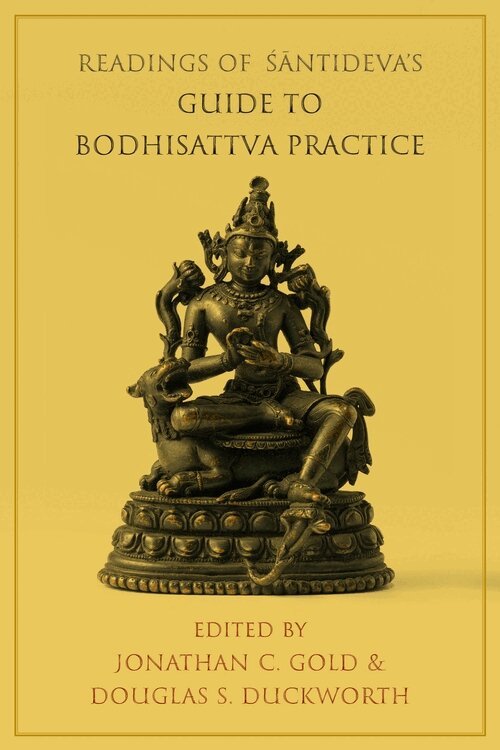
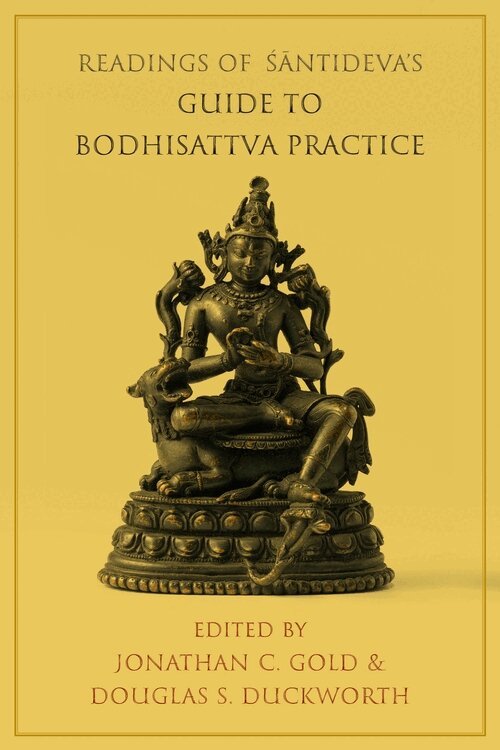
Śāntideva’s eighth-century work, the Guide to Bodhisattva Practice (Bodhicaryāvatāra), is known for its eminently practical instructions and its psychologically vivid articulations of the Mahāyāna path. It is a powerful, succinct poem into which are woven diverse Buddhist traditions of moral transformation, meditative cultivation, and philosophical insight. Since its composition, it has seen continuous use as a ritual, contemplative, and philosophical manual, making it one of the crucial texts of the Buddhist ethical and philosophical tradition.This book serves as a companion to this Indian Buddhist classic. The fifteen essays contained here illuminate the Guide’s many philosophical, literary, ritual, and ethical dimensions. Distinguished scholars discuss the historical significance of the text as an innovative piece of Indian literature, illuminate the important roles it played in shaping Buddhism in Tibet, and bring to light its contemporary significance for philosophy and psychology. Whether experienced or first-time students of Buddhist literature, readers will find compelling new approaches to this resonant masterpiece.
1 252 kr
Skickas inom 5-8 vardagar
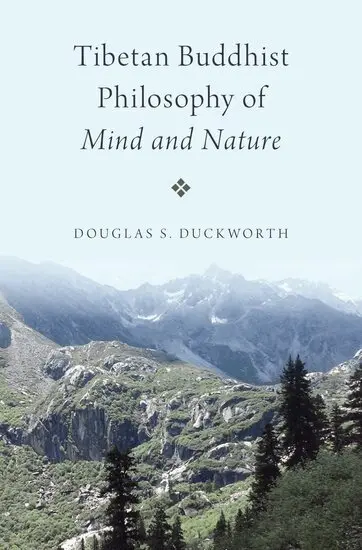
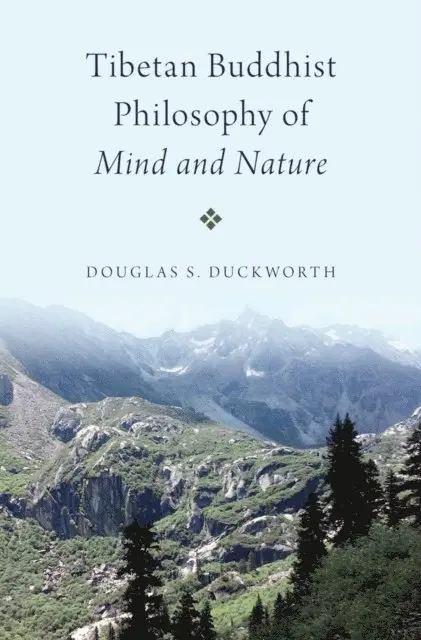
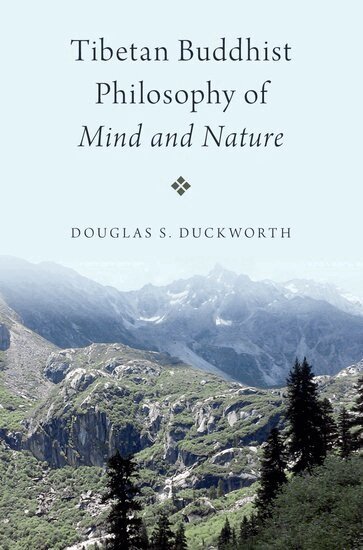
Tibetan Buddhist Philosophy of Mind and Nature offers an engaging philosophical overview of Tibetan Buddhist thought. Integrating competing and complementary perspectives on the nature of mind and reality, Douglas Duckworth reveals the way that Buddhist theory informs Buddhist practice in various Tibetan traditions. Duckworth draws upon a contrast between phenomenology and ontology to highlight distinct starting points of inquiries into mind and nature in Buddhism, and to illuminate central issues confronted in Tibetan Buddhist philosophy. This thematic study engages some of the most difficult and critical topics in Buddhist thought, such as the nature of mind and the meaning of emptiness, across a wide range of philosophical traditions, including the "Middle Way" of Madhyamaka, Yogacara (also known as "Mind-Only"), and tantra. Duckworth provides a richly textured overview that explores the intersecting nature of mind, language, and world depicted in Tibetan Buddhist traditions. Further, this book puts Tibetan philosophy into conversation with texts and traditions from India, Europe, and America, exemplifying the possibility and potential for a transformative conversation in global philosophy.
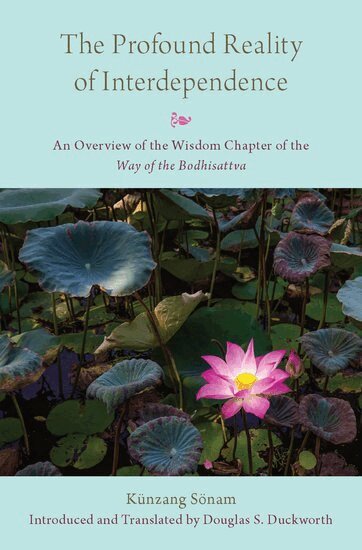
The Profound Reality of Interdependence
An Overview of the Wisdom Chapter of the Way of the Bodhisattva
Inbunden, Engelska, 2019
1 130 kr
Skickas inom 5-8 vardagar
The Way of the Bodhisattva, composed by the monk and scholar Śāntideva in eighth-century India, is a Buddhist treatise in verse that beautifully and succinctly lays out the theory and practice of the Mahayana path of a bodhisattva. Over one thousand years after Śāntideva's composition, Künzang Sönam (1823-1905) produced the most extensive commentary on the Way of the Bodhisattva ever written. This book is the first English translation of Künzang Sönam's overview of Śāntideva's notoriously difficult ninth chapter on wisdom. The ninth chapter of the Way of the Bodhisattva is philosophically very rich but forbiddingly technical, and can only be read well with a good commentary. Künzang Sönam's commentary offers a unique and complete introduction to the view of Prāsaṅgika-Madhyamaka, the summit of Buddhist philosophy in Tibet, as articulated by Tsongkhapa. It brings Śāntideva's text, and Tsongkhapa's interpretation of Prāsaṅgika-Madhyamaka, into conversation with a vast Buddhist literature from India and Tibet. By articulating the integral relationship between emptiness and interdependence, this text formulates a sustained and powerful argument for emptiness as a metaphysical basis of bodhisattva ethics. This volume makes the ninth chapter accessible to English-speaking teachers and students of the Way of the Bodhisattva.
311 kr
Skickas inom 5-8 vardagar
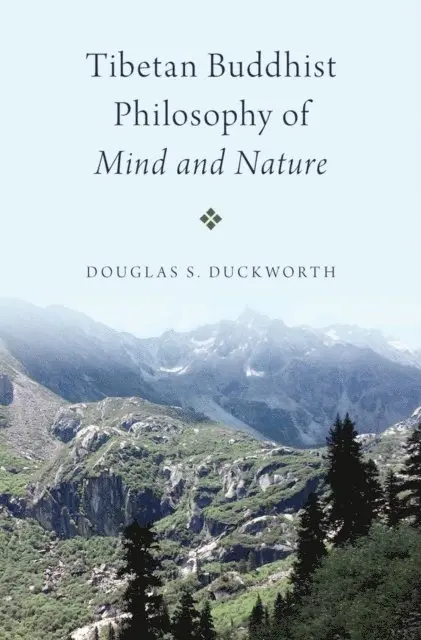
Tibetan Buddhist Philosophy of Mind and Nature offers an engaging philosophical overview of Tibetan Buddhist thought. Integrating competing and complementary perspectives on the nature of mind and reality, Douglas Duckworth reveals the way that Buddhist theory informs Buddhist practice in various Tibetan traditions. Duckworth draws upon a contrast between phenomenology and ontology to highlight distinct starting points of inquiries into mind and nature in Buddhism, and to illuminate central issues confronted in Tibetan Buddhist philosophy. This thematic study engages some of the most difficult and critical topics in Buddhist thought, such as the nature of mind and the meaning of emptiness, across a wide range of philosophical traditions, including the "Middle Way" of Madhyamaka, Yogacara (also known as "Mind-Only"), and tantra. Duckworth provides a richly textured overview that explores the intersecting nature of mind, language, and world depicted in Tibetan Buddhist traditions. Further, this book puts Tibetan philosophy into conversation with texts and traditions from India, Europe, and America, exemplifying the possibility and potential for a transformative conversation in global philosophy.
1 114 kr
Skickas inom 7-10 vardagar
Śāntideva’s eighth-century work, the Guide to Bodhisattva Practice (Bodhicaryāvatāra), is known for its eminently practical instructions and its psychologically vivid articulations of the Mahāyāna path. It is a powerful, succinct poem into which are woven diverse Buddhist traditions of moral transformation, meditative cultivation, and philosophical insight. Since its composition, it has seen continuous use as a ritual, contemplative, and philosophical manual, making it one of the crucial texts of the Buddhist ethical and philosophical tradition.This book serves as a companion to this Indian Buddhist classic. The fifteen essays contained here illuminate the Guide’s many philosophical, literary, ritual, and ethical dimensions. Distinguished scholars discuss the historical significance of the text as an innovative piece of Indian literature, illuminate the important roles it played in shaping Buddhism in Tibet, and bring to light its contemporary significance for philosophy and psychology. Whether experienced or first-time students of Buddhist literature, readers will find compelling new approaches to this resonant masterpiece.