Douglas V Campana – författare
Visar alla böcker från författaren Douglas V Campana. Handla med fri frakt och snabb leverans.
3 produkter
Natufian and Protoneolithic Bone Tools
The Manufacture and Use of Bone Implements in the Zagros and the Levant
Häftad, 1989
399 kr
Lägg i varukorg
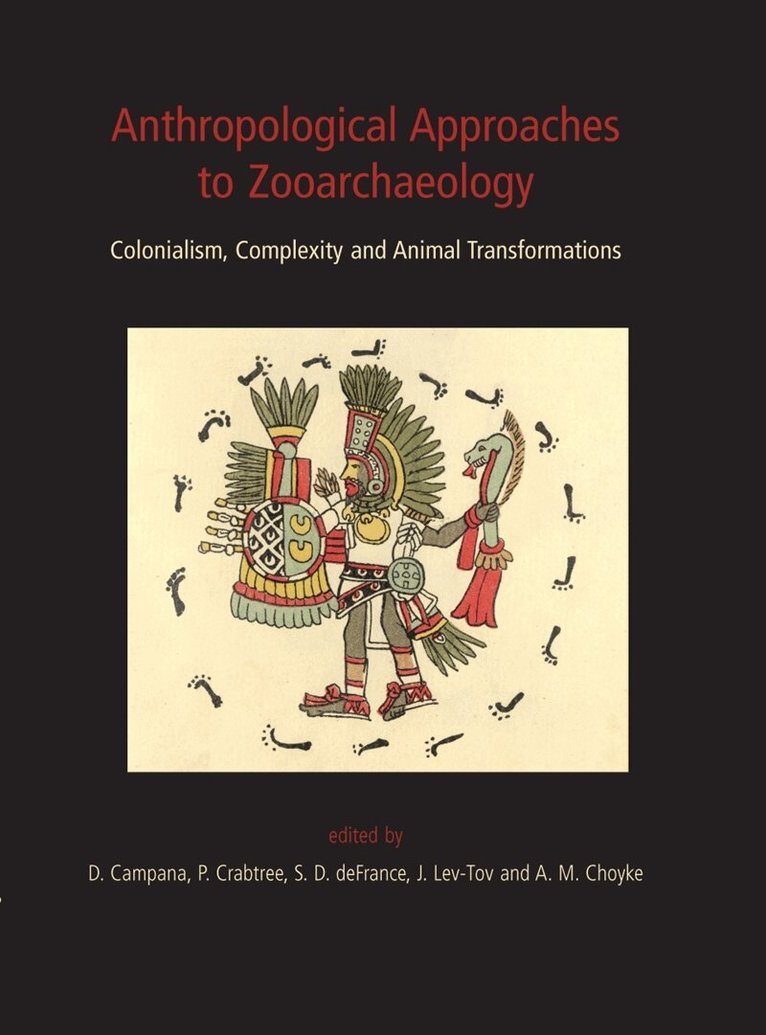
Anthropological Approaches to Zooarchaeology
Colonialism, Complexity and Animal Transformations
Av Douglas V. Campana, Pamela Crabtree m. fl.
E-bok, 2021
127 kr
Lägg i varukorg
Animals in complex human societies are often both meal and symbol, related to everyday practice and ritual. People in such societies may be characterized as having unequal access to such resources, or else the meaning of animals may differ for component groups. Here, in this book, 28 peer-reviewed …
Before Farming – Hunter–Gatherer Society and Subsistence
Hunter-Gatherer Society and Subsistence
Av Douglas V. Campana, Douglas V. Campana
Inbunden, 1995
445 kr
Lägg i varukorg
Over millions of years humans developed an increasingly varied set of relationships with the plants and animals in their environment. By the European Mesolithic and the Near Eastern Epipaleolithic the efficient exploitation of wild food resources had produced a social and economic base that was …