Douglas Wile – författare
Visar alla böcker från författaren Douglas Wile. Handla med fri frakt och snabb leverans.
2 produkter
2 produkter
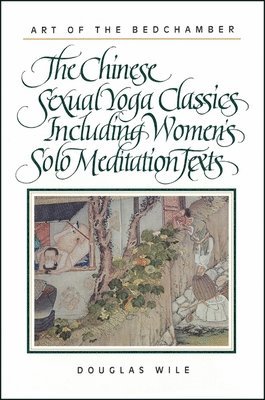
Art of the Bedchamber
The Chinese Sexual Yoga Classics Including Women's Solo Meditation Texts
Häftad, Engelska, 1992
594 kr
Skickas inom 3-6 vardagar
This is the first comprehensive anthology of the Chinese sexology classics, the world's oldest and most advanced tradition of sexual yoga. While remaining accessible to the general reader, the translation of these texts, most never before translated in toto and some only recently unearthed in China, sets new standards of accuracy and scholarly felicity.
651 kr
Skickas inom 3-6 vardagar
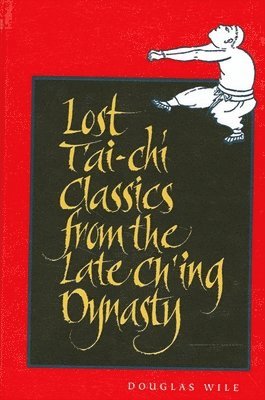
Analysis of rich new material allows Wile to make a fresh survey of longstanding issues: the origins of T'ai-chi; the authorship of the classics; the differences between Wu, Yang, and Li; and the roles of such figures as Chang San-feng, Wang Tsung-yueh, Chiang Fa, and the formerly missing link, Ch'ang Nai-chou.Douglas Wile translates and analyzes four collections of recently released nineteenth-century manuscripts on T'ai-chi ch'uan. These writings of Wu's older brothers Ch'eng-ch'ing and Ju-ch'ing, and his nephew Li I-yu, together with the transmissions of Yang Pan-hou, represent a significant addition to the seminal literature. The rich new texts allow us to make a fresh survey of longstanding issues in T'ai-chi history: the origins of the art; the authorship of the "classics;" the differences between Wu, Yang, and Li; and the roles of Chang San-feng, Wang Tsung-yueh, Chiang Fa, and the formerly missing link, Ch'ang Nai-chou. The original Chinese texts of the four new sets of classics have been appended for the convenience of Chinese readers and scholars.The book reconsiders the world of the Wu, Yang, and Li families of Yung-nien and reconstructs it against the background of the Opium Wars, the Taiping Rebellion, and the decline of the Manchu dynasty. New biographical sources illuminate the domestic and political lives of the Yung-nien circle and their orientation to the late imperial intellectual trends. The development of T'ai-chi ch'uan in the nineteenth century is explored in the context of China's cultural response to the challenge of the West and the role of body-centered arts in Asia during the drive for independence and the ongoing search for national identity.