Dr. Dan Ariely – författare
220 kr
Skickas inom 3-6 vardagar
238 kr
Skickas inom 3-6 vardagar
78 kr
Läs direkt efter köp
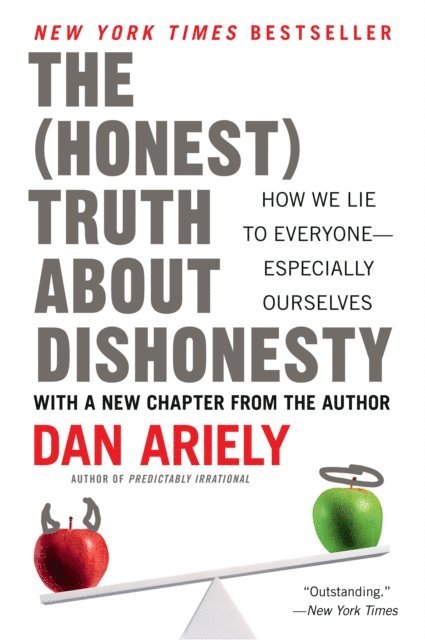
The New York Times bestselling author of Predictably Irrational and The Upside of Irrationality returns with thought-provoking work to challenge our preconceptions about dishonesty and urge us to take an honest look at ourselves.
Does the chance of getting caught affect how likely we are to cheat? How do companies pave the way for dishonesty? Does collaboration make us more honest or less so? Does religion improve our honesty?Most of us think of ourselves as honest, but, in fact, we all cheat. From Washington to Wall Street, the classroom to the workplace, unethical behavior is everywhere. None of us is immune, whether it's the white lie to head off trouble or padding our expense reports. In The (Honest) Truth About Dishonesty, award-winning, bestselling author Dan Ariely turns his unique insight and innovative research to the question of dishonesty.
Generally, we assume that cheating, like most other decisions, is based on a rational cost-benefit analysis. But Ariely argues, and then demonstrates, that it's actually the irrational forces that we don't take into account that often determine whether we behave ethically or not. For every Enron or political bribe, there are countless puffed résumés, hidden commissions, and knockoff purses. In The (Honest) Truth About Dishonesty, Ariely shows why some things are easier to lie about; how getting caught matters less than we think; and how business practices pave the way for unethical behavior, both intentionally and unintentionally. Ariely explores how unethical behavior works in the personal, professional, and political worlds, and how it affects all of us, even as we think of ourselves as having high moral standards.
But all is not lost. Ariely also identifies what keeps us honest, pointing the way for achieving higher ethics in our everyday lives. With compelling personal and academic findings, The (Honest) Truth About Dishonesty will change the way we see ourselves, our actions, and others.
255 kr
Skickas inom 3-6 vardagar
100 kr
Läs direkt efter köp
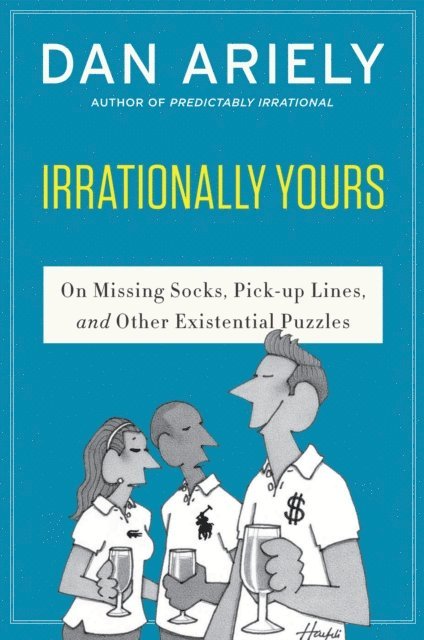
Three-time New York Times bestselling author Dan Ariely teams up with legendary The New Yorker cartoonist William Haefeli to present an expanded, illustrated collection of his immensely popularWall Street Journal advice column, “Ask Ariely”.
Behavioral economist Dan Ariely revolutionized the way we think about ourselves, our minds, and our actions in his books Predictably Irrational, The Upside of Irrationality, and The Honest Truth about Dishonesty. Ariely applies this scientific analysis of the human condition in his “Ask Ariely” Q & A column in the Wall Street Journal, in which he responds to readers who write in with personal conundrums ranging from the serious to the curious:
What can you do to stay calm when you’re playing the volatile stock market? What’s the best way to get someone to stop smoking? How can you maximize the return on your investment at an all-you-can-eat buffet? Is it possible to put a price on the human soul? Can you ever rationally justify spending thousands of dollars on a Rolex?In Ask Ariely, a broad variety of economic, ethical, and emotional dilemmas are explored and addressed through text and images. Using their trademark insight and wit, Ariely and Haefeli help us reflect on how we can reason our way through external and internal challenges. Readers will laugh, learn, and most importantly gain a new perspective on how to deal with the inevitable problems that plague our daily life.
238 kr
Skickas inom 3-6 vardagar
56 kr
Läs direkt efter köp
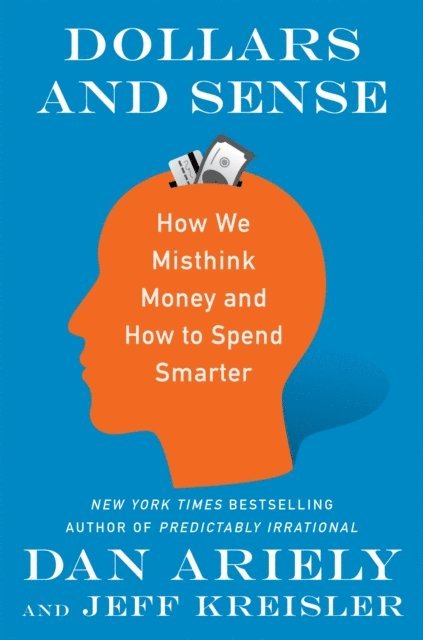
We think of money as numbers, values, and amounts, but when it comes down to it, when we actually use our money, we engage our hearts more than our heads. Emotions play a powerful role in shaping our financial behavior, often making us our own worst enemies as we try to save, access value, and spend responsibly. In Dollars and Sense, bestselling author and behavioral economist Dan Ariely teams up with financial comedian and writer Jeff Kreisler to challenge many of our most basic assumptions about the precarious relationship between our brains and our money. In doing so, they undermine many of personal finance’s most sacred beliefs and explain how we can override some of our own instincts to make better financial choices.
Exploring a wide range of everyday topics—from the lure of pain-free spending with credit cards to the pitfalls of household budgeting to the seductive power of holiday sales—Ariely and Kreisler demonstrate how our misplaced confidence in our spending habits frequently leads us astray, costing us more than we realize, whether it’s the real value of the time we spend driving forty-five minutes to save $10 or our inability to properly assess what the things we buy are actually worth. Together Ariely and Kreisler reveal the emotional forces working against us and how we can counteract them. Mixing case studies and anecdotes with concrete advice and lessons, they cut through the unconscious fears and desires driving our worst financial instincts and teach us how to improve our money habits.
The result not only reveals the rationale behind our most head-scratching financial choices but also offers clear guidance for navigating the treacherous financial landscape of the brain. Fascinating, engaging, funny, and essential, Dollars and Sense provides the practical tools we need to understand and improve our financial choices, save and spend smarter, and ultimately live better.
333 kr
Skickas
265 kr
Läs direkt efter köp
195 kr
Skickas inom 3-6 vardagar
“In this thoughtful, moving, and well-written book, Dan Ariely narrates his personal and professional journey to understand the world of misbelievers and conspiracy theories, and offers insights and tips that will hopefully help all of us protect our fragile social fabric from being torn apart by disinformation and distrust.”—Yuval Harari, bestselling author of Sapiens
“Misbelief is an urgent examination of the human attraction to misinformation. This timely book can provide a crucial foundation for building a more empathetic and informed society.”—Daniel H. Pink, #1 New York Times bestselling author of The Power of Regret
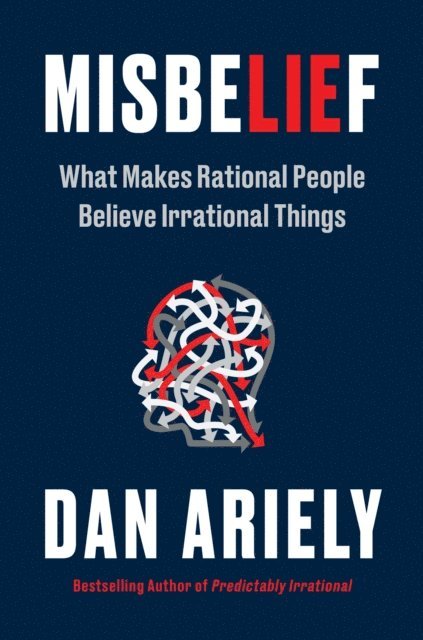
The renowned social scientist, professor, and bestselling author of Predictably Irrational delivers his most urgent and compelling book—an eye-opening exploration of the human side of the misinformation crisis—examining what drives otherwise rational people to adopt deeply irrational beliefs.
Misinformation affects all of us on a daily basis—from social media to larger political challenges, from casual conversations in supermarkets, to even our closest relationships. While we recognize the dangers that misinformation poses, the problem is complex—far beyond what policing social media alone can achieve—and too often our limited solutions are shaped by partisan politics and individual interpretations of truth.
In Misbelief, preeminent social scientist Dan Ariely argues that to understand the irrational appeal of misinformation, we must first understand the behavior of “misbelief”—the psychological and social journey that leads people to mistrust accepted truths, entertain alternative facts, and even embrace full-blown conspiracy theories. Misinformation, it turns out, appeals to something innate in all of us—on the right and the left—and it is only by understanding this psychology that we can blunt its effects. Grounded in years of study as well as Ariely’s own experience as a target of disinformation, Misbelief is an eye-opening and comprehensive analysis of the psychological drivers that cause otherwise rational people to adopt deeply irrational beliefs. Utilizing the latest research, Ariely reveals the key elements—emotional, cognitive, personality, and social—that drive people down the funnel of false information and mistrust, showing how under the right circumstances, anyone can become a misbeliever.
Yet Ariely also offers hope. Even as advanced artificial intelligence has become capable of generating convincing fake news stories at an unprecedented scale, he shows that awareness of these forces fueling misbelief make us, as individuals and as a society, more resilient to its allure. Combating misbelief requires a strategy rooted not in conflict, but in empathy. The sooner we recognize that misbelief is above all else a human problem, the sooner we can become the solution ourselves.