Dr. Eamonn Butler – författare
167 kr
Lyssna direkt efter köp
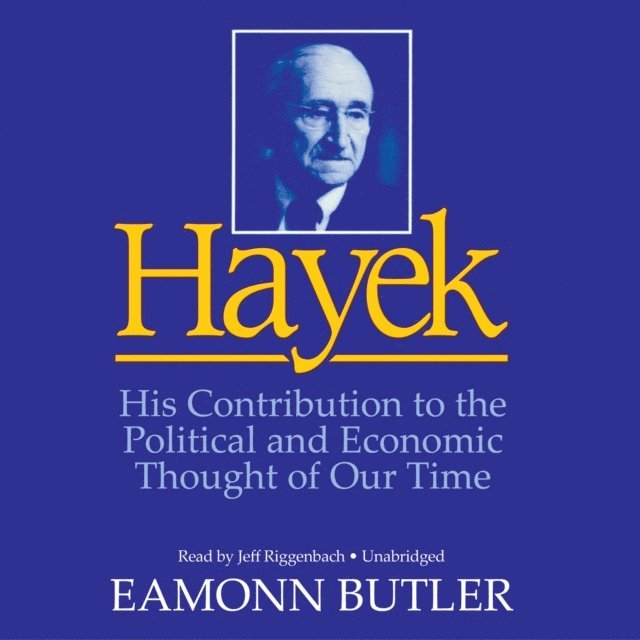
Nobel prize winner F. A. Hayek is one of the great thinkers of the twentieth century, but up to now there has been no book for the non-specialist that describes his ideas and explains their significance. Eamonn Butler’s clear, systematic, perceptive study fills this gap. Starting with a short survey of Hayek’s life, Dr. Butler goes on to analyze all the main elements in his thought under six basic headings: Understanding How Society Works; The Market Process; Hayek’s Critique of Socialism; Criticism of Social Justice; The Institutions of a Liberal Order; and The Constitution of a Liberal State.
Hayek’s influence in helping a generation to understand the nature of society and the errors of collectivism goes far beyond that of any other writer of his period. Having been decades ahead of his time when he began to write, Hayek is proving to be one of the most seminal thinkers of our age.
275 kr
Lyssna direkt efter köp
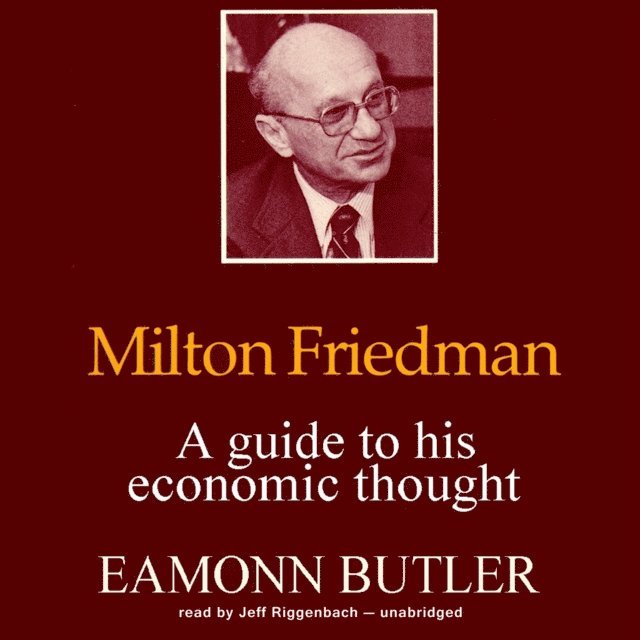
One of the great economists of the twentieth century, Milton Friedman has always challenged the prevailing economic orthodoxy. At the same time, his work has become popular because it is engagingly written and because it helps in practical prediction. Thanks to Friedman, money is now regarded as a far more powerful factor than it had been before. It offers the prospect of permanently controlling the inflation that has become the most important economic problem of our age.
Eamonn Butler’s clear, systematic, perceptive study deftly describes Friedman’s ideas and explains their significance. Starting with a short survey of Friedman’s career, Dr. Butler goes on to analyze the main elements in his thought, including the importance of monetary policy, the supply of money, the factors that influence demand, the causes and nature of inflation, and much more.
279 kr
Lyssna direkt efter köp
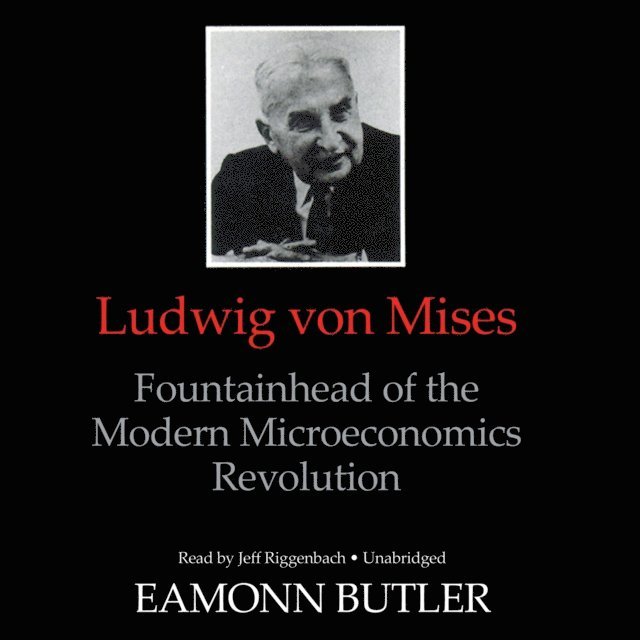
The Austrian economist Ludwig von Mises is increasingly recognized as one of the most important originators of modern economic thought. This book studies his ideas in a clear and systematic way and pulls out from Mises’ own writings the main themes of his work. With an emphasis on microeconomics, Mises argues that all real economic decisions are made by particular people at particular times and places; the motivating forces, therefore, are personal and psychological. In this view, economics is not a science at all but a discipline more like mathematics or geometry. Its principles are deduced not by observation and experiment but from certain axiomatic facts about the nature of human choice. This basic insight allows Mises to study important topics such as entrepreneurship and competition in new and fruitful ways.