Dragan M. Djuric - Böcker
Visar alla böcker från författaren Dragan M. Djuric. Handla med fri frakt och snabb leverans.
3 produkter
3 produkter
Del 30 - Advances in Biochemistry in Health and Disease
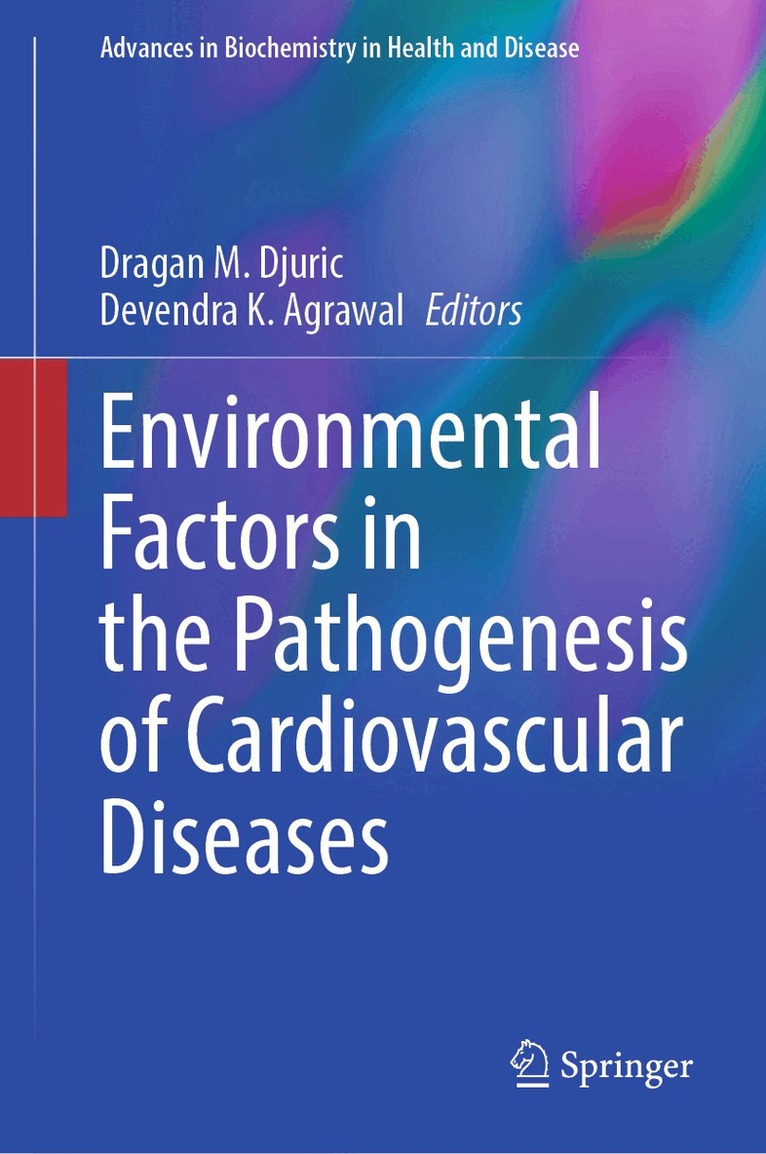
Environmental Factors in the Pathogenesis of Cardiovascular Diseases
Inbunden, Engelska, 2024
3 256 kr
Skickas inom 7-10 vardagar
Environmental conditions and processes are one of the major pillars on which the human well-being rests. It is the core responsibility of the society to preserve and enhance better conditions for the human well-being. Indeed, there are several evolving unmet needs in public health. Emerging and re-emerging infectious diseases and a surge in the incidence of non-communicable diseases, including cardiovascular diseases (CAD), chronic respiratory diseases, and metabolic diseases have been impediments to sustainable well-being.Many factors are critical in the global surge in the rate and incidence of cardiovascular diseases. These include the shift from acute to chronic conditions, the shift from single risk factor vs. multiple influences, aging population, global health disparities, exposure to lower harmful influences over a longer period, etc. However, the epigenetic factors due to unhealthy environment play a most significant role in the underlying pathogenesis of cardiovascular diseases. Unfortunately, this has been ignored for a long time and realized lately to expand and disseminate knowledge to general population, expand research activities to investigate the cellular and molecular mechanisms, and develop better preventive and treatment strategies.The most significant environmental impoverishment in the pathogenesis of cardiovascular diseases include different genetical, chemical, physical, and biological influences, but not limited to, socio-economic status and lack of nutrients, nutritional aspects including habits, diets and additives, inhaled and ingested pollutants, exhaust gas and gasoline products, tobacco smoke, water pollution, alcohol consumption, soil and mineral pollution, solvents, pesticides, microplastics, non-critical usage of drugs, climate change, extreme atmospheric conditions, extremes in noise and temperature, electromagnetic influences, microwaves and radiation, outdoor light pollution, mental stressors, lack of or over exercise, microbiota and microbiological agents like SARS CoV-2 virus, etc.
3 256 kr
Skickas inom 10-15 vardagar
Environmental conditions and processes are one of the major pillars on which the human well-being rests. It is the core responsibility of the society to preserve and enhance better conditions for the human well-being. Indeed, there are several evolving unmet needs in public health. Emerging and re-emerging infectious diseases and a surge in the incidence of non-communicable diseases, including cardiovascular diseases (CAD), chronic respiratory diseases, and metabolic diseases have been impediments to sustainable well-being.Many factors are critical in the global surge in the rate and incidence of cardiovascular diseases. These include the shift from acute to chronic conditions, the shift from single risk factor vs. multiple influences, aging population, global health disparities, exposure to lower harmful influences over a longer period, etc. However, the epigenetic factors due to unhealthy environment play a most significant role in the underlying pathogenesis of cardiovascular diseases. Unfortunately, this has been ignored for a long time and realized lately to expand and disseminate knowledge to general population, expand research activities to investigate the cellular and molecular mechanisms, and develop better preventive and treatment strategies.The most significant environmental impoverishment in the pathogenesis of cardiovascular diseases include different genetical, chemical, physical, and biological influences, but not limited to, socio-economic status and lack of nutrients, nutritional aspects including habits, diets and additives, inhaled and ingested pollutants, exhaust gas and gasoline products, tobacco smoke, water pollution, alcohol consumption, soil and mineral pollution, solvents, pesticides, microplastics, non-critical usage of drugs, climate change, extreme atmospheric conditions, extremes in noise and temperature, electromagnetic influences, microwaves and radiation, outdoor light pollution, mental stressors, lack of or over exercise, microbiota and microbiological agents like SARS CoV-2 virus, etc.
Del 33 - Advances in Biochemistry in Health and Disease
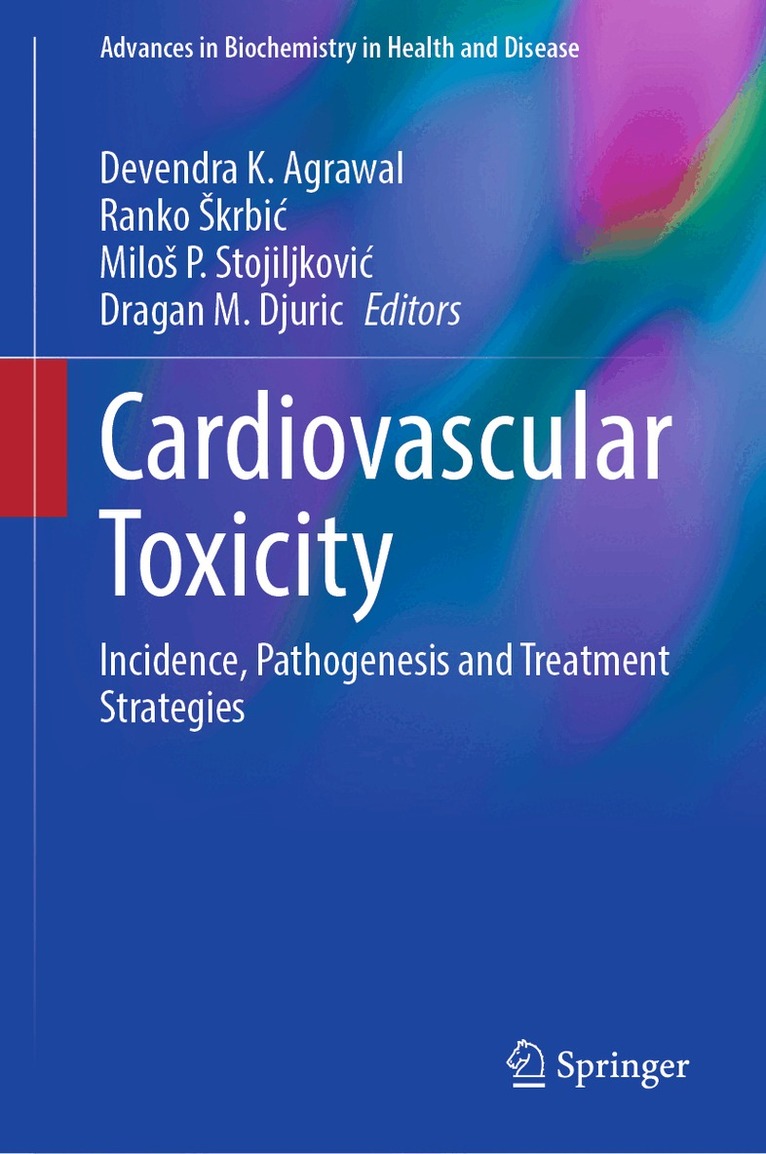
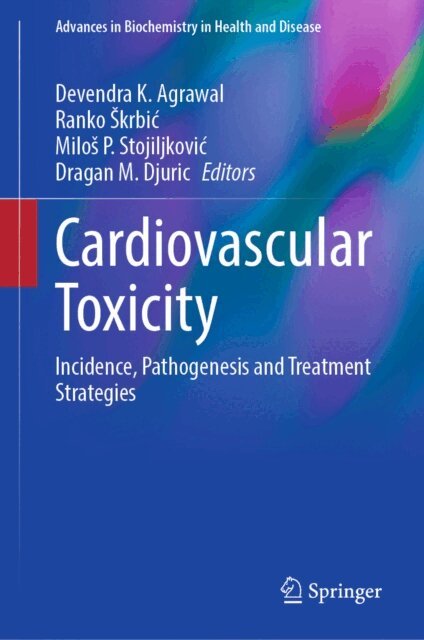
Cardiovascular Toxicity
Incidence, Pathogenesis and Treatment Strategies
Inbunden, Engelska, 2025
2 173 kr
Skickas inom 10-15 vardagar
The cardiovascular system is vital for human well-being, playing key roles in thermoregulation, nutrient transport, fluid balance, and protection from infection. Cardiovascular diseases are leading causes of morbidity and mortality. Pharmaceuticals, illicit drugs, toxins, and environmental factors can induce cardiovascular toxicity, causing structural changes and impairing blood flow. Co-morbidities like diabetes and obesity, along with epigenetic factors and infections, further enhance cardiovascular toxicity. Understanding these factors and developing better therapeutic approaches is crucial.New drugs and vaccines have improved disease treatment, but they can also induce adverse effects by affecting the endothelium, coagulation factors, platelet activation, oxidative stress, inflammation, baroreceptors, autonomic cardiovascular control, and electrophysiology. This issue has been overlooked for a long time but is now gaining attention. Expanding knowledge to the general population and health practitioners, increasing research activities, and developing better preventive and treatment strategies are essential.Cardiovascular adverse effects can be induced by various drug classes used in cancer treatment, infections, and other disorders. Understanding the mechanisms of cardiovascular toxicity and prevention methods is critical. This book, with 40 chapters contributed by distinguished scientists, explores these issues, highlighting knowledge gaps, future directions, and key points. Understanding the biological complexity and interactions between genetic and environmental factors is crucial for developing better therapeutic approaches.