Drew A. Swanson – författare
442 kr
Läs direkt efter köp
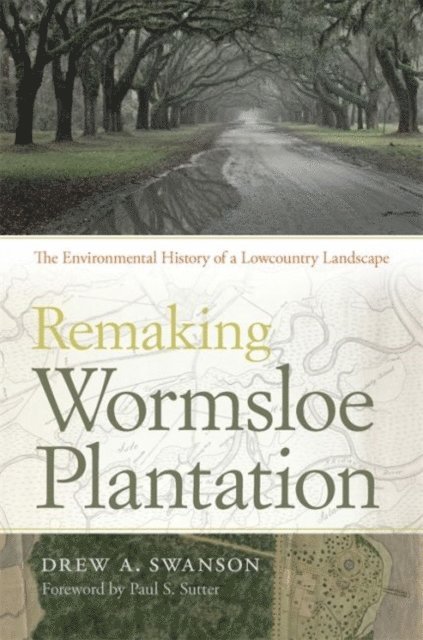
Why do we preserve certain landscapes while developing others without restraint? Drew A. Swanson’s in-depth look at Wormsloe plantation, located on the salt marshes outside of Savannah, Georgia, explores that question while revealing the broad historical forces that have shaped the lowcountry South.Wormsloe is one of the most historic and ecologically significant stretches of the Georgia coast. It has remained in the hands of one family from 1736, when Georgia’s Trustees granted it to Noble Jones, through the 1970s, when much of Wormsloe was ceded to Georgia for the creation of a state historic site. It has served as a guard post against aggression from Spanish Florida; a node in an emerging cotton economy connected to far-flung places like Lancashire and India; a retreat for pleasure and leisure; and a carefully maintained historic site and green space. Like many lowcountry places, Wormsloe is inextricably tied to regional, national, and global environments and is the product of transatlantic exchanges.Swanson argues that while visitors to Wormsloe value what they perceive to be an “authentic,” undisturbed place, this landscape is actually the product of aggressive management over generations. He also finds that Wormsloe is an ideal place to get at hidden stories, such as African American environmental and agricultural knowledge, conceptions of health and disease, the relationship between manual labor and views of nature, and the ties between historic preservation and natural resource conservation. Remaking Wormsloe Plantation connects this distinct Georgia place to the broader world, adding depth and nuance to the understanding of our own conceptions of nature and history.
1 603 kr
Skickas inom 5-8 vardagar
477 kr
Skickas inom 3-6 vardagar
542 kr
Skickas inom 5-8 vardagar
1 621 kr
Läs direkt efter köp
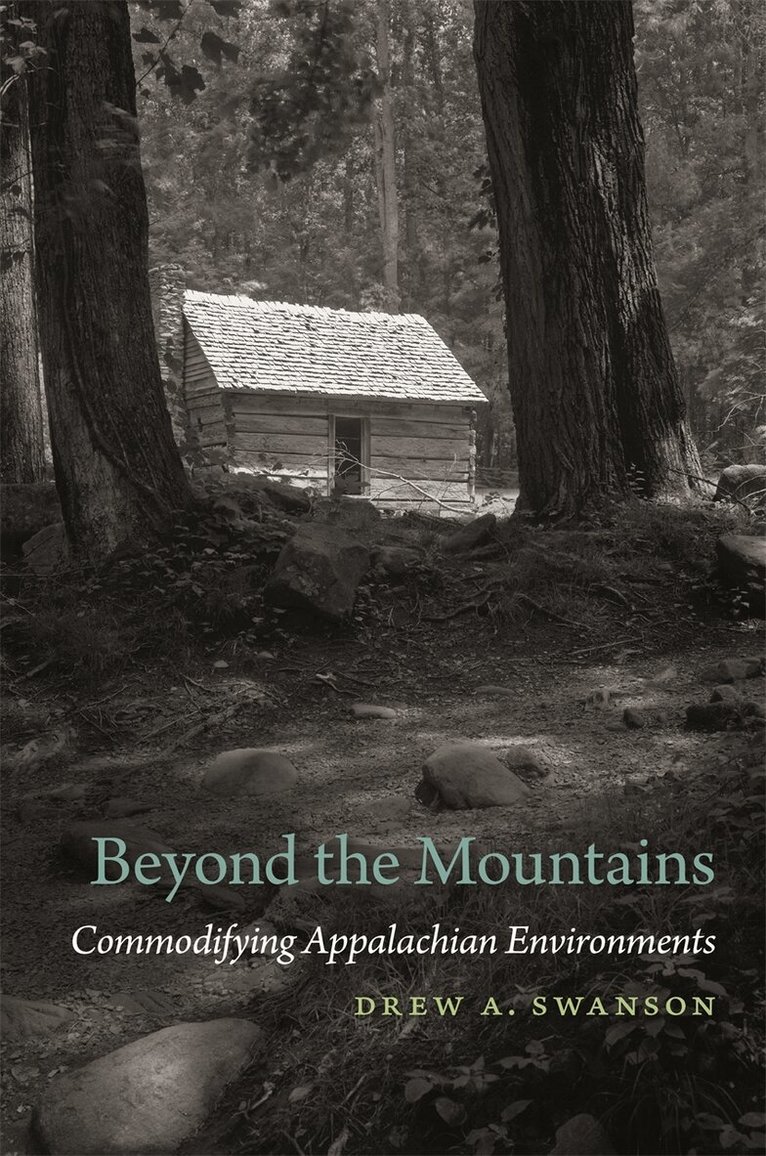
Beyond the Mountains explores the ways in which Appalachia often served as a laboratory for the exploration and practice of American conceptions of nature. The region operated alternately as frontier, wilderness, rural hinterland, region of subsistence agriculture, bastion of yeoman farmers, and place to experiment with modernization. In these various takes on the southern mountains, scattered across time and space, both mountain residents and outsiders consistently believed that the region’s environment made Appalachia distinctive, for better or worse.With chapters dedicated to microhistories focused on particular commodities, Drew A. Swanson builds upon recent Appalachian studies scholarship, emphasizing the diversity of a region so long considered a homogenous backwater. While Appalachia has a recognizable and real coherence rooted in folkways, agriculture, and politics (among other things), it is also a region of varied environments, people, and histories. These discrete stories are, however, linked through the power of conceptualizing nature and work together to reveal the ways in which ideas and uses of nature often created a sense of identity in Appalachia. Delving into the environmental history of the region reveals that Appalachian environments, rather than separating the mountains from the broader world, often served to connect the region to outside places.
1 502 kr
Läs direkt efter köp
Beyond the Mountains explores the ways in which Appalachia often served as a laboratory for the exploration and practice of American conceptions of nature. The region operated alternately as frontier, wilderness, rural hinterland, region of subsistence agriculture, bastion of yeoman farmers, and place to experiment with modernization. In these various takes on the southern mountains, scattered across time and space, both mountain residents and outsiders consistently believed that the region’s environment made Appalachia distinctive, for better or worse.With chapters dedicated to microhistories focused on particular commodities, Drew A. Swanson builds upon recent Appalachian studies scholarship, emphasizing the diversity of a region so long considered a homogenous backwater. While Appalachia has a recognizable and real coherence rooted in folkways, agriculture, and politics (among other things), it is also a region of varied environments, people, and histories. These discrete stories are, however, linked through the power of conceptualizing nature and work together to reveal the ways in which ideas and uses of nature often created a sense of identity in Appalachia. Delving into the environmental history of the region reveals that Appalachian environments, rather than separating the mountains from the broader world, often served to connect the region to outside places.
1 128 kr
Skickas inom 10-15 vardagar
277 kr
Skickas inom 10-15 vardagar
463 kr
Tillfälligt slut