Dubin - Böcker
Visar alla böcker från författaren Dubin. Handla med fri frakt och snabb leverans.
3 produkter
3 produkter
2 756 kr
Skickas inom 7-10 vardagar
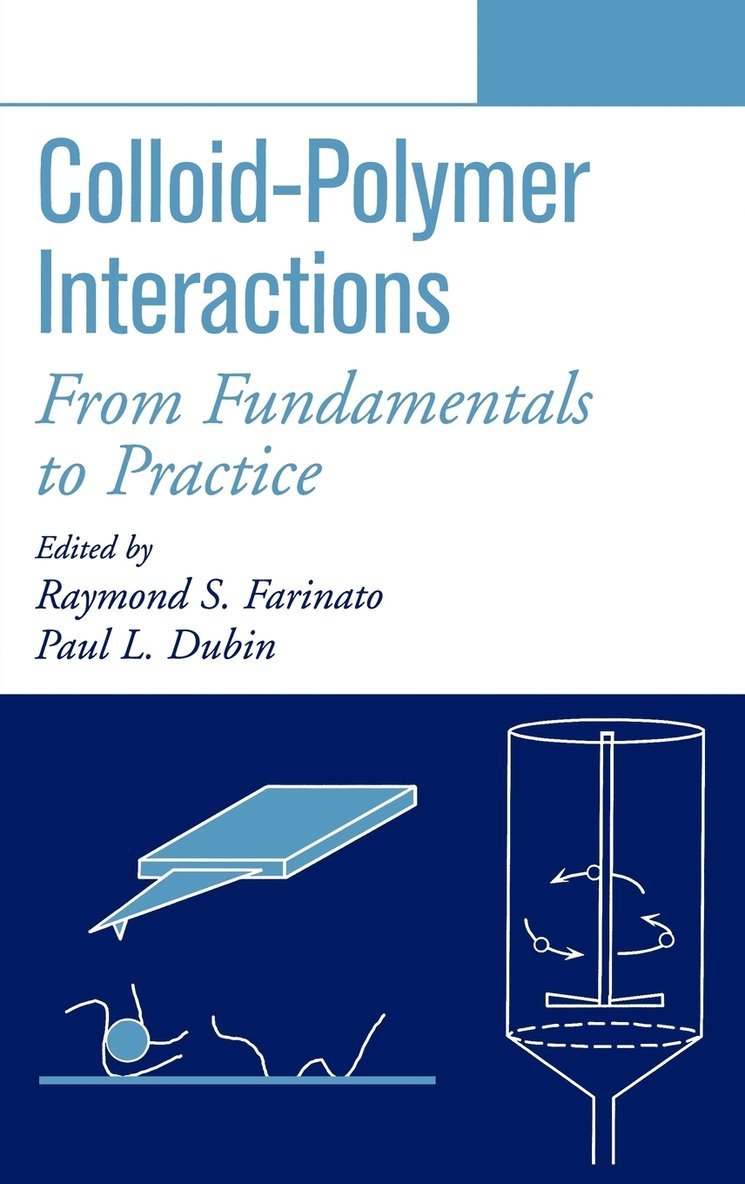
P>Of related interest . . . THE COLLOIDAL DOMAIN Second Edition Where Physics, Chemistry, Biology, and Technology Meet D. Fennell Evans and Håkan Wennerström Fully updated and revised, this new edition of the critically acclaimed book incorporates information on key developments in colloid science and technology in the twentieth century. It provides a unified treatment of colloid theory, methods, and applications to specific systems, complete with concept maps, new worked examples, and more than 250 illustrations. 1999 (0-471-24247-0) 672 pp. FUNDAMENTALS OF INTERFACIAL ENGINEERING Robert J. Stokes and D. Fennell Evans This book emphasizes the importance of the intermolecular forces that hold materials together within a bulk phase or across an interface. It examines the fundamentals of the intermolecular interactions along with the properties, processing, and behavior of fluid interfacial systems. Solid surfaces and interfaces are also discussed. 1996 (0-471-18647-3) 736 pp. POLYMER HANDBOOK Fourth Edition Edited by J. Brandrup, E. H. Immergut, and E. A. Grulke Now in a fourth edition, the Polymer Handbook is one of the most comprehensive resources of fundamental, validated property data of polymeric materials necessary for polymer research. This edition boasts over 30% new material, covering such advances as the new pvt relationships and copolymer reactivity parameters. Improved nomenclature for better indexing and search and retrieval is also provided. 1999 (0-471-16628-6) 2336 pp.
552 kr
Skickas inom 10-15 vardagar
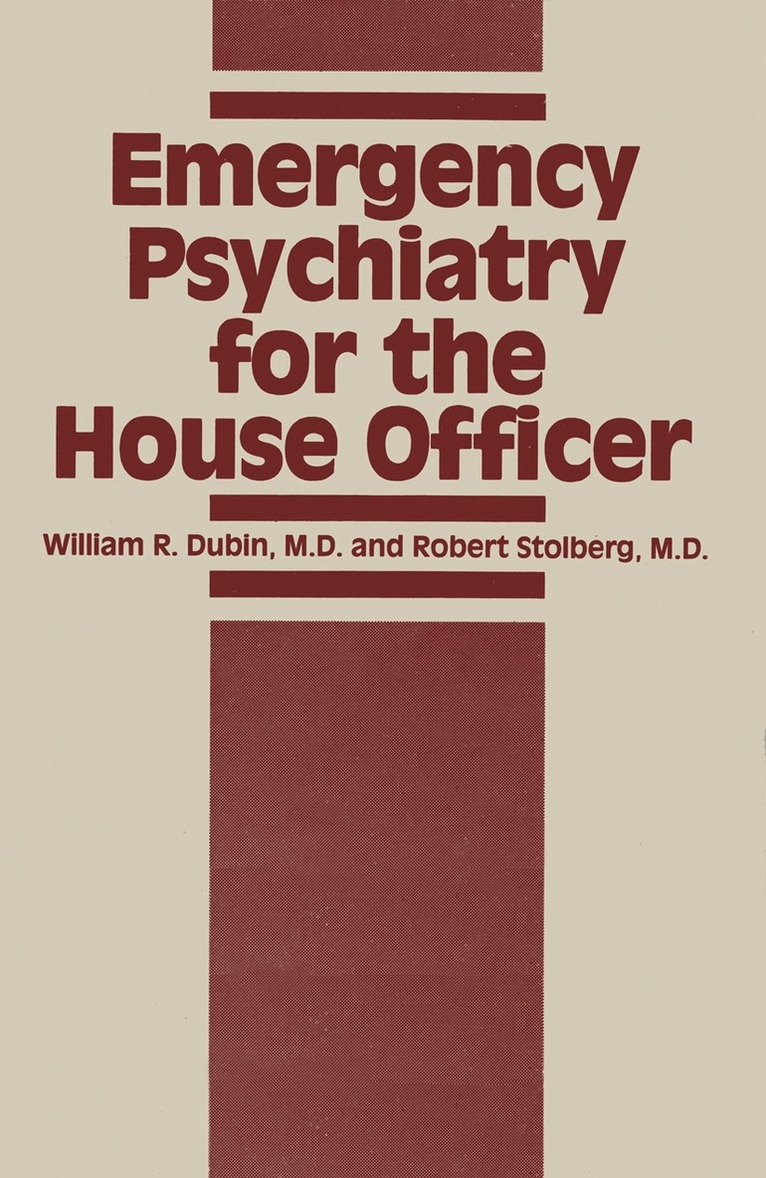
2. The Psychiatric Examination 7 3. Organic Brain Syndromes-Delirium and Dementia 21 4. Psychosis 37 5. Non-psychotic Disturbances 47 6. The Violent Patient 59 7. The Suicidal Patient 67 8. Alcohol Abuse 75 9. Drug Abuse 85 10. Other Common Psychiatric Emergencies 101 Appendix: Psychiatric Side Effects of Medical Drugs 109 Index 165 Chapter 1 Introduction INTRODUCTION Psychiatric patients can be among the most disconcerting patients to treat in an emergency department setting. Because these patients often present with violence, confusion, suicidal attempts and bizarre behavior and thoughts, non-psychiatric physicians often react with various degrees of discomfort and avoidance. However, it is often important to make a decision whether the presenting symptoms are due to functional or organic illness since serious morbidity and mortality can occur in patients with acute organic brain disease. The differential diagnosis would include: Functional (Psychiatric) Disease Organic Disease Affective Disorders Delirium Schizophrenic Disorders Dementia Personality Disorders Anxiety Disorders Adjustment Disorders Findings which are helpful in raising the index of suspicion for organic disease are: a) Disorientation to time and place b) Fluctuating level of consciousness 1 EMERGENCY PSYCHIATRY/2 c) Age over 45 with no previous psychiatric history d) Abnormal autonomic signs (vital signs, pupillary responses, sweating) e) Acute onset of psychotic illness (hours to days) f) Ongoing medical disease and its treatment g) Recognition that hallucinations and delusions are frequently observed in organic as well as functional disease.
303 kr
Skickas inom 7-10 vardagar
This is as the favoured artist of an enterprising Parisian elite, Robert is a prophetic case study of the intersection between aesthetics and modernity's dawning business culture. In this provocative study, Hubert Robert's paintings of urban ruins are interpreted as manifestations of a new consciousness of time, one shaped by the uncertainty of an economy characterized by the anxiety-inducing expansion of credit, frenzied speculation on the stock market, and foolhardy ventures in real estate. At the centre of this lively narrative lie Robert's depictions of the ruins of Paris - macabre and spectacular paintings of desolation - on the eve of the French Revolution. Drawing on a vast range of materials, Futures & Ruins interprets Robert's artworks as harbingers of a modern appetite for self-destruction: the paintings are examined as expressions of the pleasures and perils of a risk economy.