Duc T. Pham – författare
Visar alla böcker från författaren Duc T. Pham. Handla med fri frakt och snabb leverans.
7 produkter
7 produkter
E-bok
PDF, Engelska, 20053 359 kr
Läs direkt efter köp
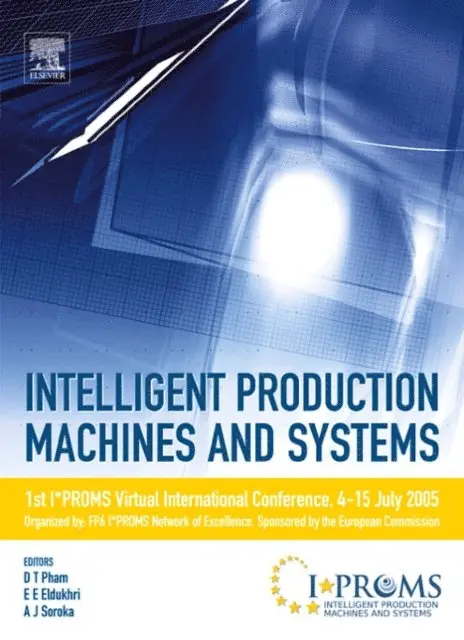
The 2005 Virtual International Conference on IPROMS took place on the Internet between 4 and 15 July 2005. IPROMS 2005 was an outstanding success. During the Conference, some 4168 registered delegates and guests from 71 countries participated in the Conference, making it a truly global phenomenon. This book contains the Proceedings of IPROMS 2005. The 107 peer-reviewed technical papers presented at the Conference have been grouped into twelve sections, the last three featuring contributions selected for IPROMS 2005 by Special Sessions chairmen: - Collaborative and Responsive Manufacturing Systems- Concurrent Engineering- E-manufacturing, E-business and Virtual Enterprises- Intelligent Automation Systems- Intelligent Decision Support Systems- Intelligent Design Systems- Intelligent Planning and Scheduling Systems- Mechatronics- Reconfigurable Manufacturing Systems- Tangible Acoustic Interfaces (Tai Chi)- Innovative Production Machines and Systems- Intelligent and Competitive Manufacturing Engineering
E-bok
PDF, Engelska, 20021 527 kr
Läs direkt efter köp
Smart Inspection Systems: Techniques and Applications of Intelligent Vision will enable engineers to understand the various stages of automated visual inspection (AVI) and how artificial intelligence can be incorporated into each stage to create "smart" inspection systems. The book contains many examples that illustrate and explain the application of conventional and artificial intelligence techniques in AVI. The text covers the whole AVI process, from illumination, image enhancement, segmentation and feature extraction, through to classification, and includes case studies of implemented AVI systems as well as reviews of commercially available inspection systems. Each chapter concludes with exercises.This book will be of interest to users and developers of commercial industrial inspection systems as well as researchers in the fields of machine vision, artificial intelligence and advanced manufacturing engineering.
E-bok
PDF, Engelska, 20113 359 kr
Läs direkt efter köp
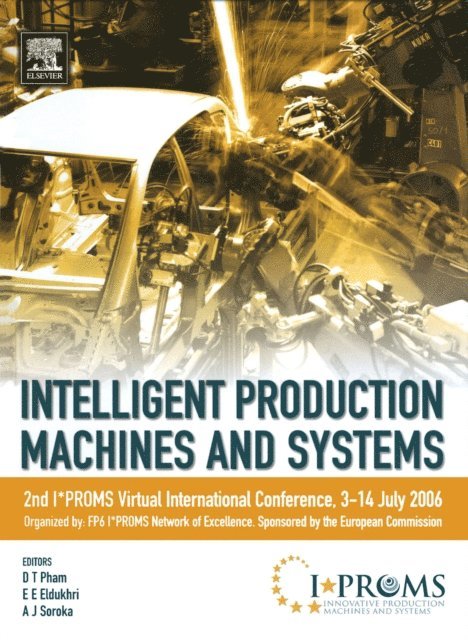
I*PROMS 2005 is an online web-based conference. It provides a platform for presenting, discussing, and disseminating research results contributed by scientists and industrial practitioners active in the area of intelligent systems and soft computing techniques (such as fuzzy logic, neural networks, evolutionary algorithms, and knowledge-based systems) and their application in different areas of manufacturing. Comprised of 100 peer-reviewed articles, this important resource provides tools to help enterprises achieve goals critical to the future of manufacturing.I*PROMS is an European Union-funded network that involves 30 partner organizations and more than 130 researchers from universities, research organizations, and corporations.* State-of-the-art research results * Leading European researchers and industrial practitioners * Comprehensive collection of indexed and peer-reviewed articles in book format supported by a user-friendly full-text CD-ROM with search functionality
E-bok
PDF, Engelska, 20121 367 kr
Läs direkt efter köp
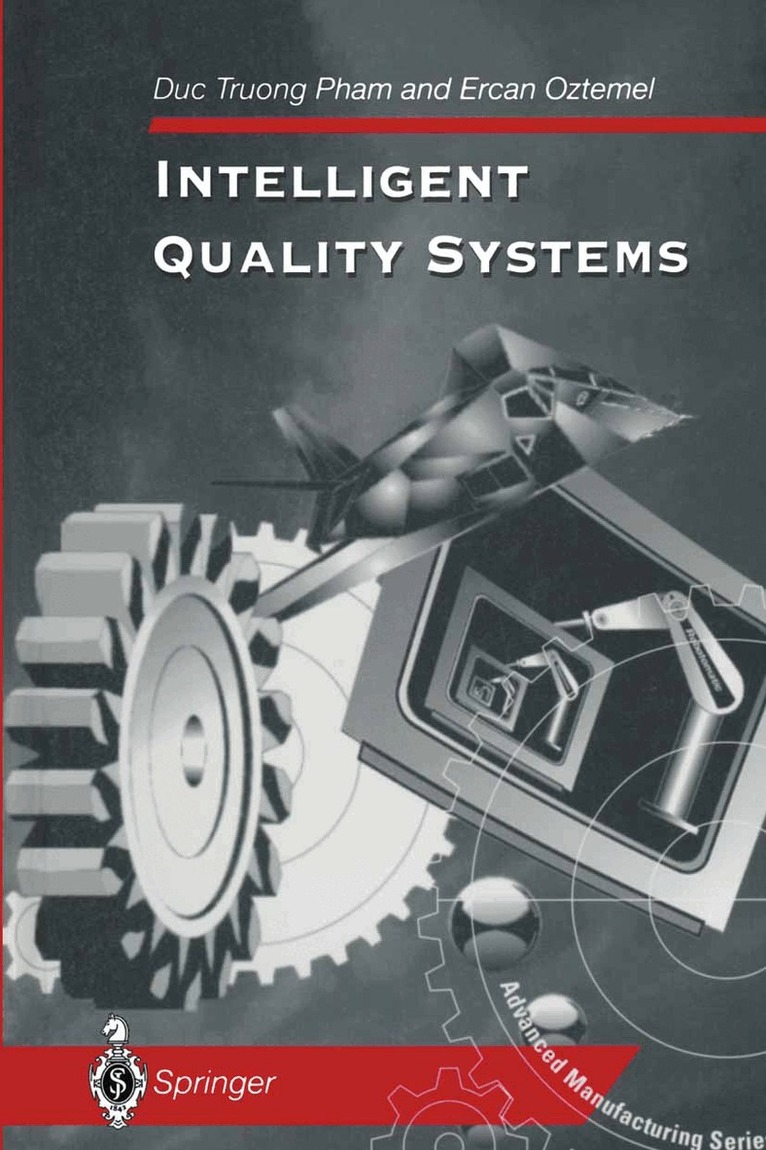
Although the tenn quality does not have a precise and universally accepted definition, its meaning is generally well understood: quality is what makes the difference between success and failure in a competitive world. Given the importance of quality, there is a need for effective quality systems to ensure that the highest quality is achieved within given constraints on human, material or financial resources. This book discusses Intelligent Quality Systems, that is quality systems employing techniques from the field of Artificial Intelligence (AI). The book focuses on two popular AI techniques, expert or knowledge-based systems and neural networks. Expert systems encapsulate human expertise for solving difficult problems. Neural networks have the ability to learn problem solving from examples. The aim of the book is to illustrate applications of these techniques to the design and operation of effective quality systems. The book comprises 8 chapters. Chapter 1 provides an introduction to quality control and a general discussion of possible AI-based quality systems. Chapter 2 gives technical information on the key AI techniques of expert systems and neural networks. The use of these techniques, singly and in a combined hybrid fonn, to realise intelligent Statistical Process Control (SPC) systems for quality improvement is the subject of Chapters 3-5. Chapter 6 covers experimental design and the Taguchi method which is an effective technique for designing quality into a product or process. The application of expert systems and neural networks to facilitate experimental design is described in this chapter.
Häftad, Engelska, 2011
1 083 kr
Skickas inom 10-15 vardagar
Although the tenn quality does not have a precise and universally accepted definition, its meaning is generally well understood: quality is what makes the difference between success and failure in a competitive world. Given the importance of quality, there is a need for effective quality systems to ensure that the highest quality is achieved within given constraints on human, material or financial resources. This book discusses Intelligent Quality Systems, that is quality systems employing techniques from the field of Artificial Intelligence (AI). The book focuses on two popular AI techniques, expert or knowledge-based systems and neural networks. Expert systems encapsulate human expertise for solving difficult problems. Neural networks have the ability to learn problem solving from examples. The aim of the book is to illustrate applications of these techniques to the design and operation of effective quality systems. The book comprises 8 chapters. Chapter 1 provides an introduction to quality control and a general discussion of possible AI-based quality systems. Chapter 2 gives technical information on the key AI techniques of expert systems and neural networks. The use of these techniques, singly and in a combined hybrid fonn, to realise intelligent Statistical Process Control (SPC) systems for quality improvement is the subject of Chapters 3-5. Chapter 6 covers experimental design and the Taguchi method which is an effective technique for designing quality into a product or process. The application of expert systems and neural networks to facilitate experimental design is described in this chapter.
E-bok
PDF, Engelska, 2012687 kr
Läs direkt efter köp
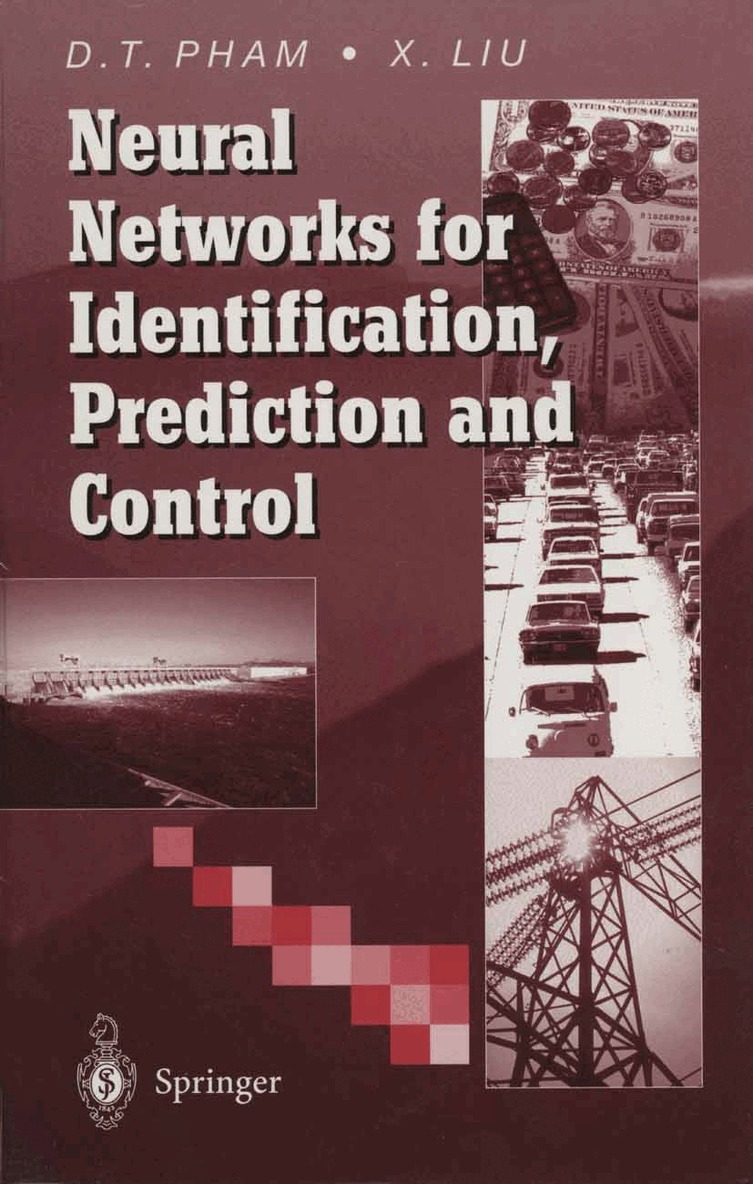
In recent years, there has been a growing interest in applying neural networks to dynamic systems identification (modelling), prediction and control. Neural networks are computing systems characterised by the ability to learn from examples rather than having to be programmed in a conventional sense. Their use enables the behaviour of complex systems to be modelled and predicted and accurate control to be achieved through training, without a priori information about the systems'' structures or parameters. This book describes examples of applications of neural networks In modelling, prediction and control. The topics covered include identification of general linear and non-linear processes, forecasting of river levels, stock market prices and currency exchange rates, and control of a time-delayed plant and a two-joint robot. These applications employ the major types of neural networks and learning algorithms. The neural network types considered in detail are the muhilayer perceptron (MLP), the Elman and Jordan networks and the Group-Method-of-Data-Handling (GMDH) network. In addition, cerebellar-model-articulation-controller (CMAC) networks and neuromorphic fuzzy logic systems are also presented. The main learning algorithm adopted in the applications is the standard backpropagation (BP) algorithm. Widrow-Hoff learning, dynamic BP and evolutionary learning are also described.
Häftad, Engelska, 2012
545 kr
Skickas inom 10-15 vardagar
In recent years, there has been a growing interest in applying neural networks to dynamic systems identification (modelling), prediction and control. Neural networks are computing systems characterised by the ability to learn from examples rather than having to be programmed in a conventional sense. Their use enables the behaviour of complex systems to be modelled and predicted and accurate control to be achieved through training, without a priori information about the systems' structures or parameters. This book describes examples of applications of neural networks In modelling, prediction and control. The topics covered include identification of general linear and non-linear processes, forecasting of river levels, stock market prices and currency exchange rates, and control of a time-delayed plant and a two-joint robot. These applications employ the major types of neural networks and learning algorithms. The neural network types considered in detail are the muhilayer perceptron (MLP), the Elman and Jordan networks and the Group-Method-of-Data-Handling (GMDH) network. In addition, cerebellar-model-articulation-controller (CMAC) networks and neuromorphic fuzzy logic systems are also presented. The main learning algorithm adopted in the applications is the standard backpropagation (BP) algorithm. Widrow-Hoff learning, dynamic BP and evolutionary learning are also described.