E. Falgarone – författare
Visar alla böcker från författaren E. Falgarone. Handla med fri frakt och snabb leverans.
3 produkter
3 produkter
Häftad, Engelska, 1991
543 kr
Skickas inom 10-15 vardagar
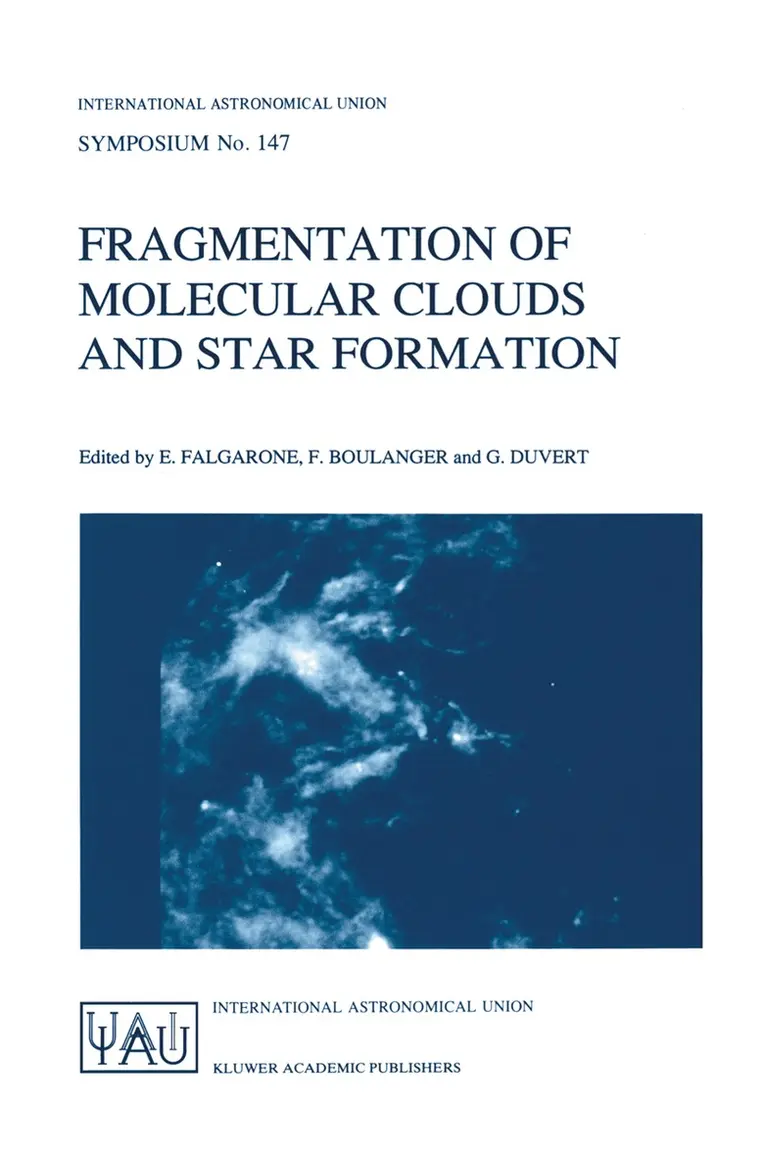
A few years ago, a motivation for organizing one more IAU Symposium on star for mation in Grenoble, was the anticipated completion of the IRAM interferometer on the Plateau de Bures, close to Grenoble. This choice was also a sort of late celebration of the genius of Joseph Fourier, born in Grenoble, whose work is the very fondation of in terferometry. At the time when we finally announced the advent of this conference, the first reactions we got from the community were expressions of saturation and even reject, the Symposium being unfortunately scheduled almost simultaneously as two other major meetings on closely related topics, and sponsored by different organizations. A wave of disappointment then reached the organizers. Some of us were enthusiastic enough to help the others overcome their discouragement. Let them be thanked here. There was, indeed, a deeper motivation for organizing this conference. It was to trigger the meeting and communication of physicists and astrophysicists since many of the difficulties met now in understanding the physics of the interstellar medium and its evolution toward star formation are common to several, if not most, other fields of physics. They are assigned to one origin: complexity.
Inbunden, Engelska, 2003
1 079 kr
Skickas inom 10-15 vardagar
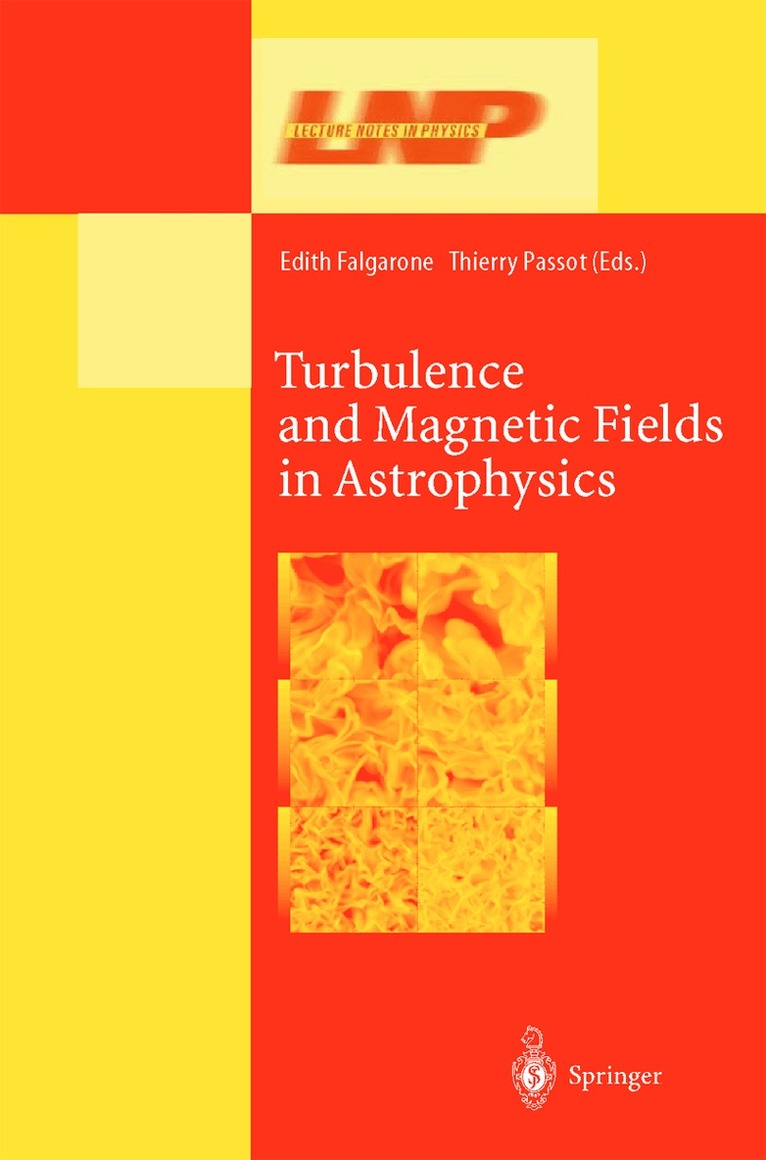
This book contains review articles of most of the topics addressed at the conf- ence on Simulations of Magnetohydrodynamic turbulence in astrophysics: recent achievements and perspectives which took place from July 2 to 6, 2001 at the Institut Henri Poincar´e in Paris. We made the choice to publish these lectures in a tutorial form so that they can be read by a broad audience. As a result, this book does not give an exhaustive view of all the subjects addressed during the conference. The main objective of this workshop which gathered about 90 scientists from di?erent ?elds, was to present and confront recent results on the topic of t- bulence in magnetized astrophysical environments. A second objective was to discuss the latest generation of numerical codes, such as those using adaptive mesh re?nement (AMR) techniques. During a plenary discussion at the end of the workshop discussions were held on several topics, often at the heart of vivid controversies. Topics included the timescale for the dissipation of magneto-hydrodynamical (MHD) turbulence, the role of boundary conditions, the characteristics of imbalanced turbulence, the validity of the polytropic approach to Alfv´en waves support within interst- lar clouds, the source of turbulence inside clouds devoid of stellar activity, the timescale for star formation, the Alfv´en Mach number of interstellar gas motions, the formation process for helical ?elds in the interstellar medium. The impact of small upon large scales was also discussed.
E-bok
PDF, Engelska, 2012712 kr
Läs direkt efter köp
A few years ago, a motivation for organizing one more IAU Symposium on star for mation in Grenoble, was the anticipated completion of the IRAM interferometer on the Plateau de Bures, close to Grenoble. This choice was also a sort of late celebration of the genius of Joseph Fourier, born in Grenoble, whose work is the very fondation of in terferometry. At the time when we finally announced the advent of this conference, the first reactions we got from the community were expressions of saturation and even reject, the Symposium being unfortunately scheduled almost simultaneously as two other major meetings on closely related topics, and sponsored by different organizations. A wave of disappointment then reached the organizers. Some of us were enthusiastic enough to help the others overcome their discouragement. Let them be thanked here. There was, indeed, a deeper motivation for organizing this conference. It was to trigger the meeting and communication of physicists and astrophysicists since many of the difficulties met now in understanding the physics of the interstellar medium and its evolution toward star formation are common to several, if not most, other fields of physics. They are assigned to one origin: complexity.