E. Frances White – författare
Visar alla böcker från författaren E. Frances White. Handla med fri frakt och snabb leverans.
4 produkter
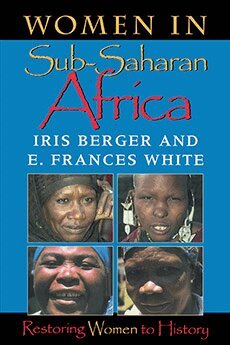
Women in Sub-Saharan Africa
Restoring Women to History
Av Iris Berger, E. Frances White
Häftad, 1999
180 kr
Lägg i varukorg
"These four volumes in this major series . . . provide a single-source reference to the status of the field of women's history and to ways that the field can be expanded. . . . A basic set for all academic libraries." —Library Journal Academic NewswireBerger and White focus on Sub-Saharan Africa, …
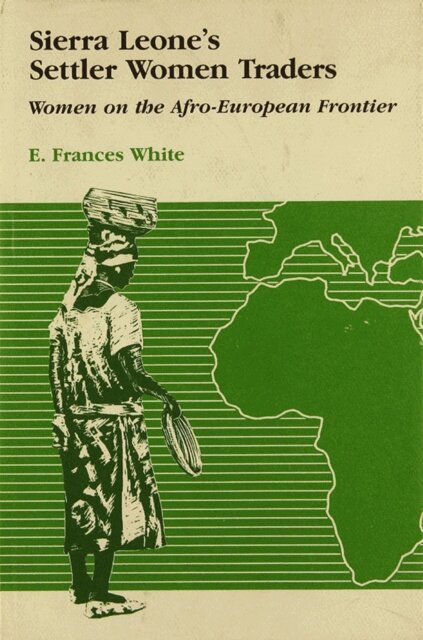
Sierra Leone's Settler Women Traders
Women on the Afro-European Frontier
E-bok, 2025
808 kr
Lägg i varukorg
The early part of the nineteenth century saw the establishment of West Africa’s Sierra Leone settlement as an important center for the expanding trade economy. A surprising number of Sierra Leonean traders were Krio women, whose crosscultural background helped them to mediate the contact between …
Dark Continent of Our Bodies
Black Feminism & Politics of Respectability
Inbunden, 2001
884 kr
Tillfälligt slut
In this provocative book, a black lesbian feminist looks at black feminism its roots, its role, and its implications. From Charles Darwin and nineteenth-century racism to black nationalism and the Nation of Islam, from Baptist women's groups to James Baldwin; E. Frances White takes on one …
Dark Continent of Our Bodies
Black Feminism & Politics of Respectability
Häftad, 2001
309 kr
Tillfälligt slut
In this provocative book, a black lesbian feminist looks at black feminism -- its roots, its role, and its implications. From Charles Darwin and nineteenth-century racism to black nationalism and the Nation of Islam, from Baptist women's groups to James Baldwin, E. Frances White takes on one …