E.J.R. David – författare
Visar alla böcker från författaren E.J.R. David. Handla med fri frakt och snabb leverans.
6 produkter
6 produkter
Häftad, Engelska, 2013
904 kr
Skickas inom 5-8 vardagar
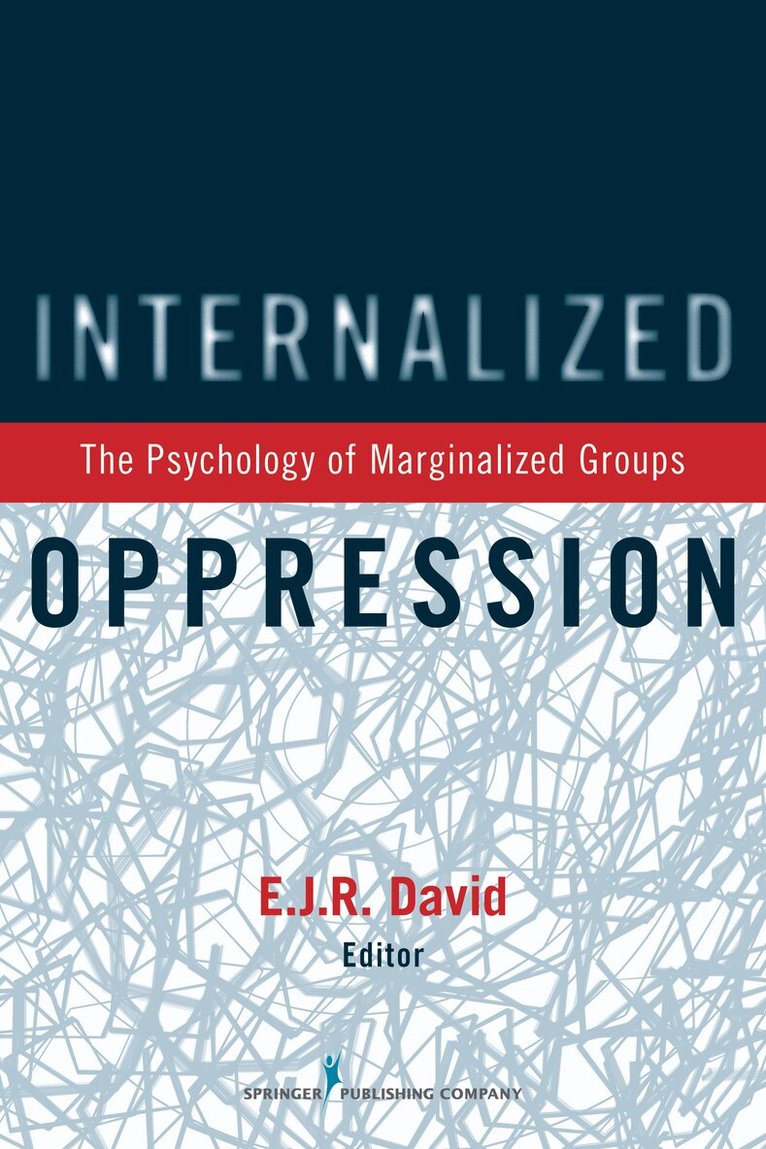
"It is a great honorÖto write the foreword to such an important book edited by E.J.R. David, filled with contributions from leading and emerging psychological scholars on internalized oppression. One of the best features of the book, in my opinion, is that the chapter authorsÖare allowed to share their own personal experiences and that such experiences are regarded to be just as valid and legitimate as the 'theories' and 'empirical studies' that they review." -Eduardo Duran, PhD7th Direction Therapy, Assessment, and ConsultingAuthor of Healing the Soul Wound and Co-Author of Native American Postcolonial PsychologyThe oppression of various groups has taken place throughout human history. People are stereotyped, discriminated against, and treated unjustly simply because of their social group membership. But what does it look like when the oppression that people face from the outside gets under their skin? Long overdue, this is the first book to highlight the universality of internalized oppression across marginalized groups in the United States from a mental health perspective. It focuses on the psychological manifestations and mental health implications of internalized oppression for a variety of groups. The book provides insight into the ways in which internalized oppression influences the thoughts, attitudes, feelings, and behaviors of the oppressed toward themselves, other members of their group, and members of the dominant group. It also considers promising clinical and community programs that are currently addressing internalized oppression among specific groups. The book describes the implications and unique manifestations of internalized oppression among African Americans, Latinos, Asian Americans, Pacific Islanders, American Indians and Alaska natives, women, people with disabilities, and the lesbian, gay, bisexual, and transgender community. For each group, the text considers its demographic profile, history of oppression, contemporary oppression, common manifestations and mental and behavioral health implications, clinical and community programs, and future directions. Chapters are written by leading and emerging scholars, who share their personal experiences to provide a real-world point of view. Additionally, each chapter is coauthored by a member of a particular community group, who helps to bring academic concepts to life. Key Features: Addresses the universality of internalized oppression across marginalized groups in the U.S. and its corresponding mental health and psychological manifestations Considers how specific groups exhibit internalized oppression in their own unique ways Provides insight into how internalized oppression influences the thoughts, feelings, attitudes, and behaviors of the oppressed Highlights promising clinical and community programs
Häftad, Engelska, 2017
326 kr
Skickas inom 3-6 vardagar
A father's personal and intimate account of his Filipino and Alaska Native family's experiences, and his search for how to help his children overcome the effects of historical and contemporary oppression.In a series of letters to his mixed-race Koyukon Athabascan family, E. J. R. David shares his struggles, insecurities, and anxieties as a Filipino American immigrant man, husband, and father living in the lands dominated by his family's colonizer. The result is We Have Not Stopped Trembling Yet, a deeply personal and heartfelt exploration of the intersections and widespread social, psychological, and health implications of colonialism, immigration, racism, sexism, intergenerational trauma, and internalized oppression. Weaving together his lived realities, his family's experiences, and empirical data, David reflects on a difficult journey, touching upon the importance of developing critical and painful consciousness, as well as the need for connectedness, strength, freedom, and love, in our personal and collective efforts to heal from the injuries of historical and contemporary oppression. The persecution of two marginalized communities is brought to the forefront in this book. Their histories underscore and reveal how historical and contemporary oppression has very real and tangible impacts on Peoples across time and generations.
Häftad, Engelska, 2013
396 kr
Skickas
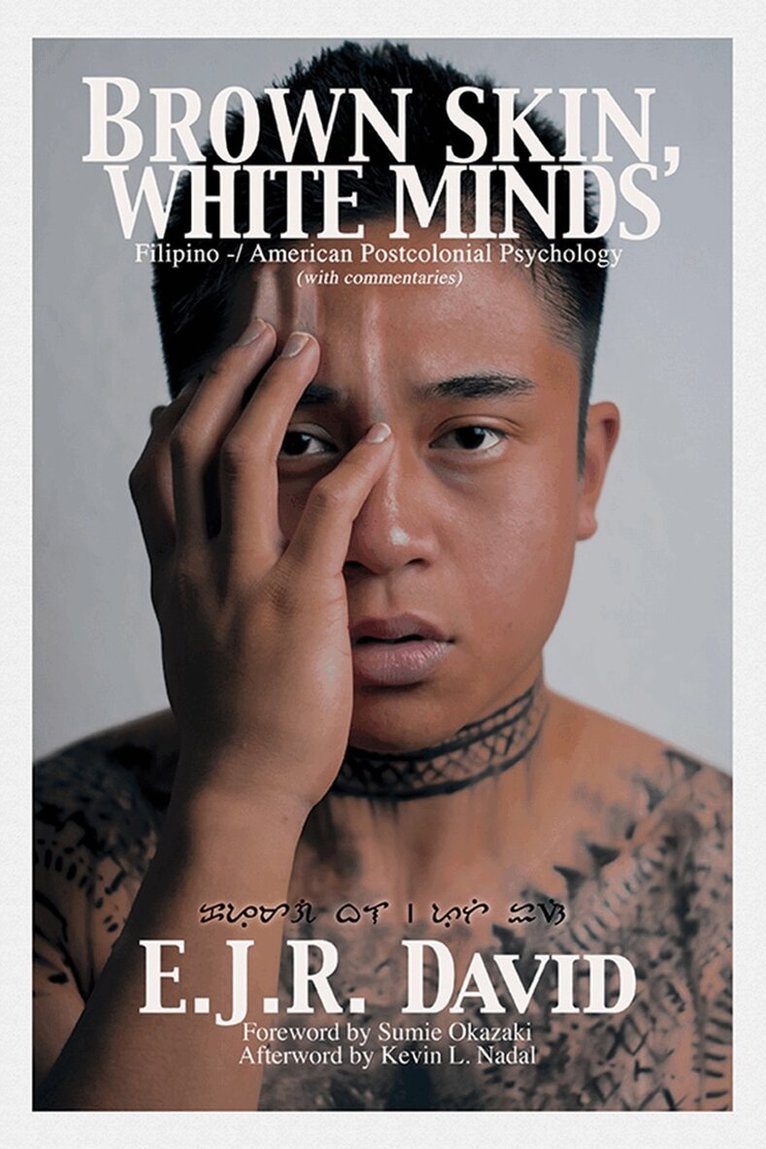
Filipino Americans have a long and rich history with and within the United States, and they are currently the second largest Asian group in the country. However, very little is known about how their historical and contemporary relationship with America may shape their psychological experiences. The most insidious psychological consequence of their historical and contemporary experiences is colonial mentality or internalized oppression. Some common manifestations of this phenomenon are described below: Skin-whitening products are used often by Filipinos in the Philippines to make their skins lighter. Skin whitening clinics and businesses are popular in the Philippines as well. The "beautiful" people such as actors and other celebrities endorse these skin-whitening procedures. Children are told to stay away from the sun so they do not get "too dark." Many Filipinos also regard anything "imported" to be more special than anything "local" or made in the Philippines. In the United States, many Filipino Americans make fun of "fresh-off-the-boats" (FOBs) or those who speak English with Filipino accents. Many Filipino Americans try to dilute their "Filipino-ness" by saying that they are mixed with some other races. Also, many Filipino Americans regard Filipinos in the Philippines, and pretty much everything about the Philippines, to be of "lower class" and those of the "third world.The historical and contemporary reasons for why Filipino / Americans display these attitudes, beliefs, and behaviors - often referred to as colonial mentality - are explored in Brown Skin, White Minds. This book is a peer-reviewed publication that integrates knowledge from multiple scholarly and scientific disciplines to identify the past and current catalysts for such self-denigrating attitudes and behaviors. It takes the reader from indigenous Tao culture, Spanish and American colonialism, colonial mentality or internalized oppression along with its implications on Kapwa, identity, and mental health, to decolonization in the clinical, community, and research settings. This book is intended for the entire community - teachers, researchers, students, and service providers interested in or who are working with Filipinos and Filipino Americans, or those who are interested in the psychological consequences of colonialism and oppression. This book may serve as a tool for remembering the past and as a tool for awakening to address the present.
Inbunden, Engelska, 2013
668 kr
Skickas inom 5-8 vardagar
Filipino Americans have a long and rich history with and within the United States, and they are currently the second largest Asian group in the country. However, very little is known about how their historical and contemporary relationship with America may shape their psychological experiences. The most insidious psychological consequence of their historical and contemporary experiences is colonial mentality or internalized oppression. Some common manifestations of this phenomenon are described below: Skin-whitening products are used often by Filipinos in the Philippines to make their skins lighter. Skin whitening clinics and businesses are popular in the Philippines as well. The "beautiful" people such as actors and other celebrities endorse these skin-whitening procedures. Children are told to stay away from the sun so they do not get "too dark." Many Filipinos also regard anything "imported" to be more special than anything "local" or made in the Philippines. In the United States, many Filipino Americans make fun of "fresh-off-the-boats" (FOBs) or those who speak English with Filipino accents. Many Filipino Americans try to dilute their "Filipino-ness" by saying that they are mixed with some other races. Also, many Filipino Americans regard Filipinos in the Philippines, and pretty much everything about the Philippines, to be of "lower class" and those of the "third world.The historical and contemporary reasons for why Filipino / Americans display these attitudes, beliefs, and behaviors - often referred to as colonial mentality - are explored in Brown Skin, White Minds. This book is a peer-reviewed publication that integrates knowledge from multiple scholarly and scientific disciplines to identify the past and current catalysts for such self-denigrating attitudes and behaviors. It takes the reader from indigenous Tao culture, Spanish and American colonialism, colonial mentality or internalized oppression along with its implications on Kapwa, identity, and mental health, to decolonization in the clinical, community, and research settings. This book is intended for the entire community - teachers, researchers, students, and service providers interested in or who are working with Filipinos and Filipino Americans, or those who are interested in the psychological consequences of colonialism and oppression. This book may serve as a tool for remembering the past and as a tool for awakening to address the present.
E-bok
Engelska, 2013279 kr
Läs direkt efter köp
Filipino Americans have a long and rich history with and within the United States, and they are currently the second largest Asian group in the country. However, very little is known about how their historical and contemporary relationship with America may shape their psychological experiences. The most insidious psychological consequence of their historical and contemporary experiences is colonial mentality or internalized oppression. Some common manifestations of this phenomenon are described below: Skin-whitening products are used often by Filipinos in the Philippines to make their skins lighter. Skin whitening clinics and businesses are popular in the Philippines as well. The "e;beautiful"e; people such as actors and other celebrities endorse these skin-whitening procedures. Children are told to stay away from the sun so they do not get "e;too dark."e; Many Filipinos also regard anything "e;imported"e; to be more special than anything "e;local"e; or made in the Philippines. In the United States, many Filipino Americans make fun of "e;fresh-off-the-boats"e; (FOBs) or those who speak English with Filipino accents. Many Filipino Americans try to dilute their "e;Filipino-ness"e; by saying that they are mixed with some other races. Also, many Filipino Americans regard Filipinos in the Philippines, and pretty much everything about the Philippines, to be of "e;lower class"e; and those of the "e;third world.The historical and contemporary reasons for why Filipino / Americans display these attitudes, beliefs, and behaviors - often referred to as colonial mentality - are explored in Brown Skin, White Minds. This book is a peer-reviewed publication that integrates knowledge from multiple scholarly and scientific disciplines to identify the past and current catalysts for such self-denigrating attitudes and behaviors. It takes the reader from indigenous Tao culture, Spanish and American colonialism, colonial mentality or internalized oppression along with its implications on Kapwa, identity, and mental health, to decolonization in the clinical, community, and research settings. This book is intended for the entire community - teachers, researchers, students, and service providers interested in or who are working with Filipinos and Filipino Americans, or those who are interested in the psychological consequences of colonialism and oppression. This book may serve as a tool for remembering the past and as a tool for awakening to address the present.
E-bok
Engelska, 2013424 kr
Läs direkt efter köp
Filipino Americans have a long and rich history with and within the United States, and they are currently the second largest Asian group in the country. However, very little is known about how their historical and contemporary relationship with America may shape their psychological experiences. The most insidious psychological consequence of their historical and contemporary experiences is colonial mentality or internalized oppression. Some common manifestations of this phenomenon are described below: Skin-whitening products are used often by Filipinos in the Philippines to make their skins lighter. Skin whitening clinics and businesses are popular in the Philippines as well. The "e;beautiful"e; people such as actors and other celebrities endorse these skin-whitening procedures. Children are told to stay away from the sun so they do not get "e;too dark."e; Many Filipinos also regard anything "e;imported"e; to be more special than anything "e;local"e; or made in the Philippines. In the United States, many Filipino Americans make fun of "e;fresh-off-the-boats"e; (FOBs) or those who speak English with Filipino accents. Many Filipino Americans try to dilute their "e;Filipino-ness"e; by saying that they are mixed with some other races. Also, many Filipino Americans regard Filipinos in the Philippines, and pretty much everything about the Philippines, to be of "e;lower class"e; and those of the "e;third world.The historical and contemporary reasons for why Filipino / Americans display these attitudes, beliefs, and behaviors - often referred to as colonial mentality - are explored in Brown Skin, White Minds. This book is a peer-reviewed publication that integrates knowledge from multiple scholarly and scientific disciplines to identify the past and current catalysts for such self-denigrating attitudes and behaviors. It takes the reader from indigenous Tao culture, Spanish and American colonialism, colonial mentality or internalized oppression along with its implications on Kapwa, identity, and mental health, to decolonization in the clinical, community, and research settings. This book is intended for the entire community - teachers, researchers, students, and service providers interested in or who are working with Filipinos and Filipino Americans, or those who are interested in the psychological consequences of colonialism and oppression. This book may serve as a tool for remembering the past and as a tool for awakening to address the present.