E. Kenneth Weir - Böcker
Visar alla böcker från författaren E. Kenneth Weir. Handla med fri frakt och snabb leverans.
5 produkter
5 produkter
2 946 kr
Skickas inom 10-15 vardagar
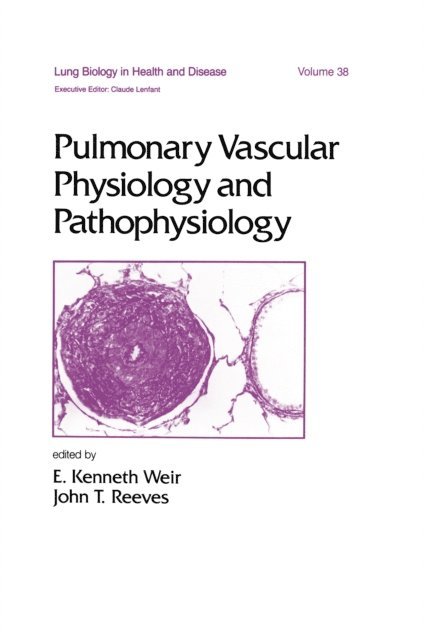
Considering various aspects of pulmonary vascular control and the pulmonary vasculature's response to injury and disease, this monograph applies recent advances in molecular biology to increasing our understanding of cell proliferation, interactions between the endothelium and smooth muscle, and the etiologies of various forms of pulmonary hypertension.In addition, this book presents important reviews of lung phylogeny, right ventricular function, high altitude pulmonary edema, plus unique discussions of areas for which there have been no previous attempts to analyze all available information, such as pregnancy, diving, hyperbaria, and exercise.Pulmonary Vascular Physiology and Pathophysiology assesses the basic mechanisms underlying pulmonary health and disease ... investigates the response of pulmonary circulation to stress and disease ... highlights the ability of lung circulation to adapt to major environmental changes and varying metabolic demands ... and contains some 2,000 citations of relevant literature.Illustrated with nearly 170 diagrams, photomicrographs, and tables, Pulmonary Vascular Physiology and Pathophysiology is a superb reference for pulmonary physiologists, cardiologists, pediatricians, cardiovascular surgeons, anesthesiologists, pathologists, and cell and molecular biologists.
2 013 kr
Skickas inom 7-10 vardagar
Birth is a sudden, traumatic transition of environments. Once the placental oxygen supply ceases, the foetus has only minutes to establish pulmonary oxygen transport, which requires not only inflation of the lungs, but also sudden and sustained changes in the lung circulation. Not long ago, research in this field was largely restricted to morphology and physiology. Now the powerful new tools of cellular and molecular biology have begun toshed light on the physiological processes in the developing lung and its supporting vasculature. In 22 chapters, three main sections explore lung growth and development, vascular cell growth and differentiation, and the mechanisms of hemodynamic control in the neonate; extensive illustrations give a comprehensive picture of pulmonary circulatory development. Factors controlling vasculogenesis and angiogenesis are described by the scientists who pioneered the field. Similarly, the intracellular signaling cascades that determine proliferation or growth inhibition of fibroblasts, smooth muscle cells, and endothelial cells are also presented in an understandable manner. Finally, the role ofsubstances, such as nitric oxide and endothelin, that control the hemodynamics of the fetal and neonatal circulations are discussed in detail, particularly in relation to the changes occurring at birth.This book will inform basic scientists as well as the clinician and student, and should be of particular interest to pediatric cardiologists, pulmonary medicine physicians, and vascular biologists.
1 458 kr
Tillfälligt slut
This publication is unique and ground breaking because no previous volume has focused on the mechanisms by which nitric oxide and oxygen radicals are involved in vascular pathophysiology. This book provides a current review of the use of nitric oxide to treat pulmonary hypertension, whether idiopathic or secondary to congenital heart disease. In this respect, it should be read by pediatric cardiologists. Respiratory care physicians and intensive-care specialists who study and treat ARDS or IRDS (adult or infant respiratory distress syndromes) would also benefit from this publication. This book is of particular interest to physiologists concerned with vascular biology or with the activity of nitric oxide and oxygen radicals.
945 kr
Skickas inom 7-10 vardagar
A thorough exploration of the interaction between erythrocytes, leukocytes, platelets, and the pulmonary vasculature in a variety of disease states-an important topic not addressed by other books. The lungs accommodate the entire cardiac output, and the pulmonary vessels are well known for their metabolic and endocrine functions, as well as gas exchange. The interaction of the pulmonary circulation with the cellular elements of blood has received less attention. Interactions of Blood and the Pulmonary Circulation covers many topics of interest to the clinician. In particular, chapters on sickle cell anemia provide a wealth of information on mechanisms of vascular occlusion, suggesting new approaches to treatment for the cardiologist and the pulmonary and intensive care physician. Intensivists will also enjoy the chapters on the role of leukocytes and inflammation in lung injury, and those on the contribution of platelets and thrombosis in pulmonary hypertension. The long-term management of chronic thromboembolic pulmonary hypertension is covered in detail. This book will be of special interest to pulmonary and intensive care physicians, cardiologists, hematologists, and vascular biologists.
534 kr
Skickas inom 10-15 vardagar
6 Ions can pass through a single membrane channel at a rate of 10 ions/second. Over the last decade the ability to measure ion flux so precisely and to document the opening and closing of individual ion channels has provided a powerful tool to those working on smooth muscle physiology and vascular reactivity. The use of potassium channel blockers by Tom Lloyd in the 1960s and calcium channel blockers by Ivan McMurtry in the 1970s indicated the importance of ion flux in regulating pulmonary vascular tone. Recent advances in technology. principally the patch-clamp technique and fluorescent ion-sensitive dyes. now permit a more detailed description of physiologic mechanisms. This volume arises from the Sixth Grover Conference on the Pulmonary Circulation. a NATO Advanced Research Workshop. held in Colorado in October 1992. A group of international sCientists who are leaders in the field of ion flux focused their attention on the problems of the pulmonary vasculature. The chapters in this book describe the present state of knowledge of the movement and storage of ions in vascular endothelial and smooth muscle cells. Those who are not familiar with the techniques of patch clamping and calcium imaging will find an introduction to these methods in the chapters by Leblanc and Wan and Archer et al. The role of potassium channels in oxygen sensing illustrates the rapid progress which the study of ion currents has made possible.