E. M. Scott – författare
Visar alla böcker från författaren E. M. Scott. Handla med fri frakt och snabb leverans.
4 produkter
4 produkter
907 kr
Skickas inom 7-10 vardagar
The Wiley Paperback Series makes valuable content more accessible to a new generation of statisticians, mathematicians and scientists. Sensitivity analysis is used to ascertain how a given model output depends upon the input parameters. This is an important method for checking the quality of a given model, as well as a powerful tool for checking the robustness and reliability of its analysis. The topic is acknowledged as essential for good modelling practice and is an implicit part of any modelling field. Offers an accessible introduction to sensitivity analysis.Covers all the latest research.Illustrates concepts with numerous examples, applications and case studies.Includes contributions from the leading researchers active in developing strategies for sensitivity analysis.The principles of sensitivity analysis are carefully described and suitable methods for approaching many types of problems are given. The book introduces the modeller to the entire casual assessment chain, from data to predictions, whilst explaining the impact of source uncertainties and framing assumptions. A ‘hitch-hikers guide’ is included to allow the more experienced reader to readily access specific applications.Modellers from a wide range of disciplines, including biostatistics, economics, environmental impact assessment, chemistry and engineering will benefit greatly from the numerous examples and applications."Presents many different sensitivity analysis methodologies and demonstrates their usefulness in scientific research." (Zentralblatt MATH)
Del 535 - Wiley Series in Probability and Statistics
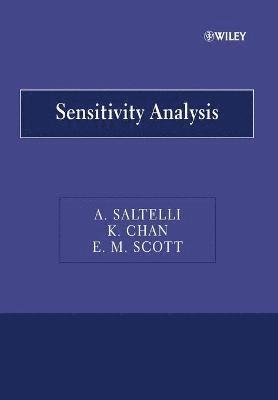
Sensitivity Analysis
Gauging the Worth of Scientific Models
Inbunden, Engelska, 2000
1 945 kr
Skickas inom 7-10 vardagar
Sensitivity analysis is used to ascertain how a given model output depends upon the input parameters. This is an important method for checking the quality of a given model, as well as a powerful tool for checking the robustness and reliability of its analysis. The topic is acknowledged as essential for good modelling practice, and is an implicit part of any modelling field. · Offers an accessible introduction to sensitivity analysis · Covers all the latest research · Illustrates concepts with numerous examples, applications and case studies · Includes contributions form the leading researchers active in developing strategies for sensitivity analysis The principles of sensitivity analysis area carefully described, and suitable methods for approaching many types of problems are given. The book introduces the modeller to the entire causal assessment chain, from data to predictions, whilst explaining the impact of source uncertainties and framing assumptions. A 'hitch-hiker's guide' is included to allow the more experienced reader to readily access specific applications. Modellers from a wide range of disciplines, including biostatistics, economics, environmental impact assessment, chemistry and engineering will benefit greatly form the numerous examples and applications.
Del 42 - NATO Science Series: IV:
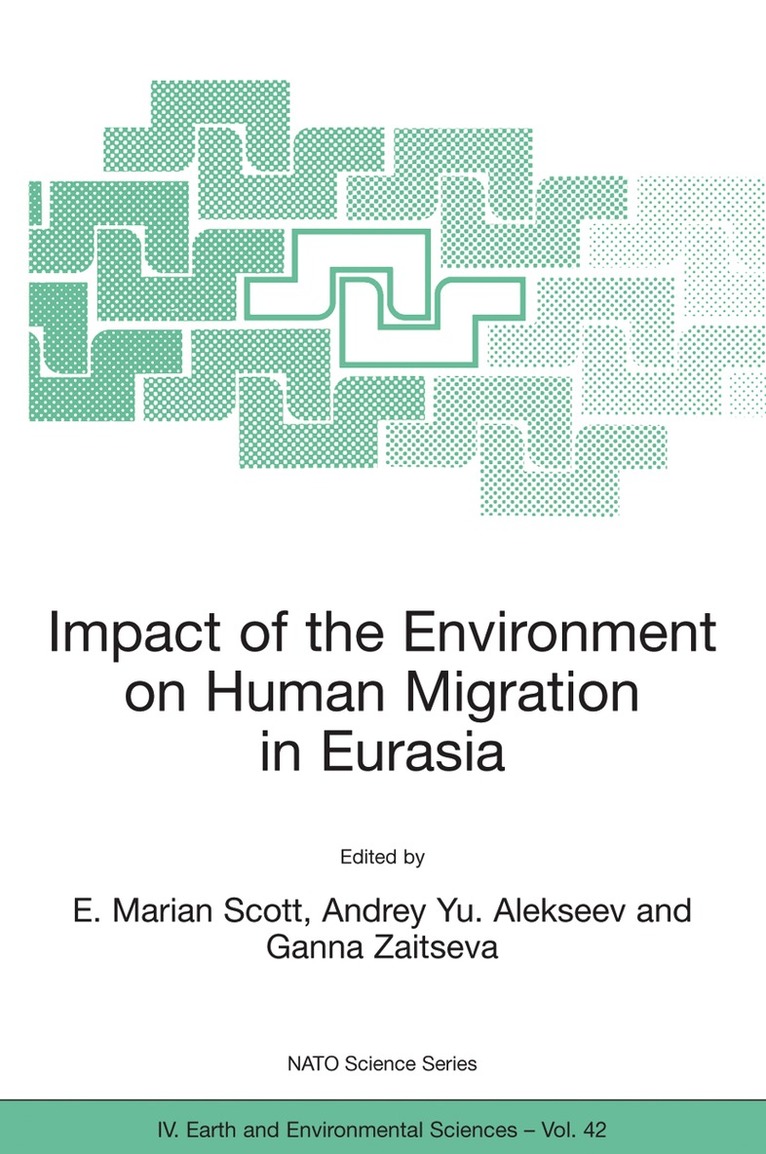
Impact of the Environment on Human Migration in Eurasia
Proceedings of the NATO Advanced Research Workshop, held in St. Petersburg, 15-18 November 2003
Inbunden, Engelska, 2004
2 117 kr
Skickas inom 10-15 vardagar
This book is a collection of the articles presented at the NATO Advanced Research Workshop (ARW 979859) held in St. Petersburg, from the 15-18 November 2003 in the Hermitage Museum. The title of the workshop was “The impact of the environment on Human Migration in Eurasia”. More than 40 scientists from Russia, Ukraine, Kazakhstan, Poland, Germany, Switzerland, The Netherlands, United Kingdom, Belgium, Finland, Lithuania and Latvia took part. The themes of the workshop focused on the origin, development, interactions, and migrations of prehistoric and ancient populations, specifically the Scythians, in Eurasia and their relationships with the environment of the time. The discussion of these questions necessitated the participation of specialists from a wide range of academic fields. Beyond any doubt, the environment played an important role in the life of ancient nomadic populations, forming the basis of their economies and influencing various aspects of their mode of life. In this respect, the collaboration of specialists in the Humanities and Science is essential for the solution of scientific questions concerning these peoples. Over the past few years, a large amount of new proxy data related to environmental changes during the Pleistocene and the Holocene and their impact on human life has become available. Our discussion was predominantly limited to environmental changes related to the Holocene. In st this period of about 10000 years, the main focus was on the 1 millennium BC.
Impact of the Environment on Human Migration in Eurasia
Proceedings of the NATO Advanced Research Workshop, held in St. Petersburg, 15-18 November 2003
Häftad, Engelska, 2004
2 117 kr
Skickas inom 10-15 vardagar
This book is a collection of the articles presented at the NATO Advanced Research Workshop (ARW 979859) held in St. Petersburg, from the 15-18 November 2003 in the Hermitage Museum. The title of the workshop was “The impact of the environment on Human Migration in Eurasia”. More than 40 scientists from Russia, Ukraine, Kazakhstan, Poland, Germany, Switzerland, The Netherlands, United Kingdom, Belgium, Finland, Lithuania and Latvia took part. The themes of the workshop focused on the origin, development, interactions, and migrations of prehistoric and ancient populations, specifically the Scythians, in Eurasia and their relationships with the environment of the time. The discussion of these questions necessitated the participation of specialists from a wide range of academic fields. Beyond any doubt, the environment played an important role in the life of ancient nomadic populations, forming the basis of their economies and influencing various aspects of their mode of life. In this respect, the collaboration of specialists in the Humanities and Science is essential for the solution of scientific questions concerning these peoples. Over the past few years, a large amount of new proxy data related to environmental changes during the Pleistocene and the Holocene and their impact on human life has become available. Our discussion was predominantly limited to environmental changes related to the Holocene. In st this period of about 10000 years, the main focus was on the 1 millennium BC.