E. Melanie DuPuis - Böcker
Visar alla böcker från författaren E. Melanie DuPuis. Handla med fri frakt och snabb leverans.
9 produkter
9 produkter
2 238 kr
Skickas inom 10-15 vardagar
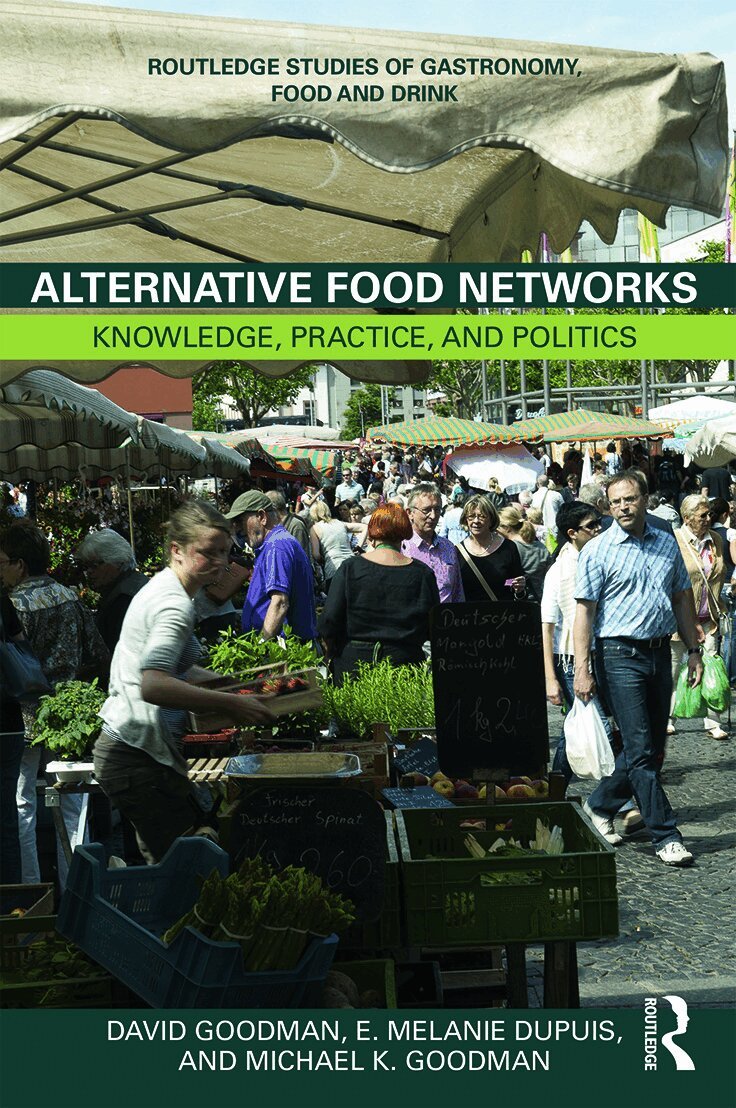
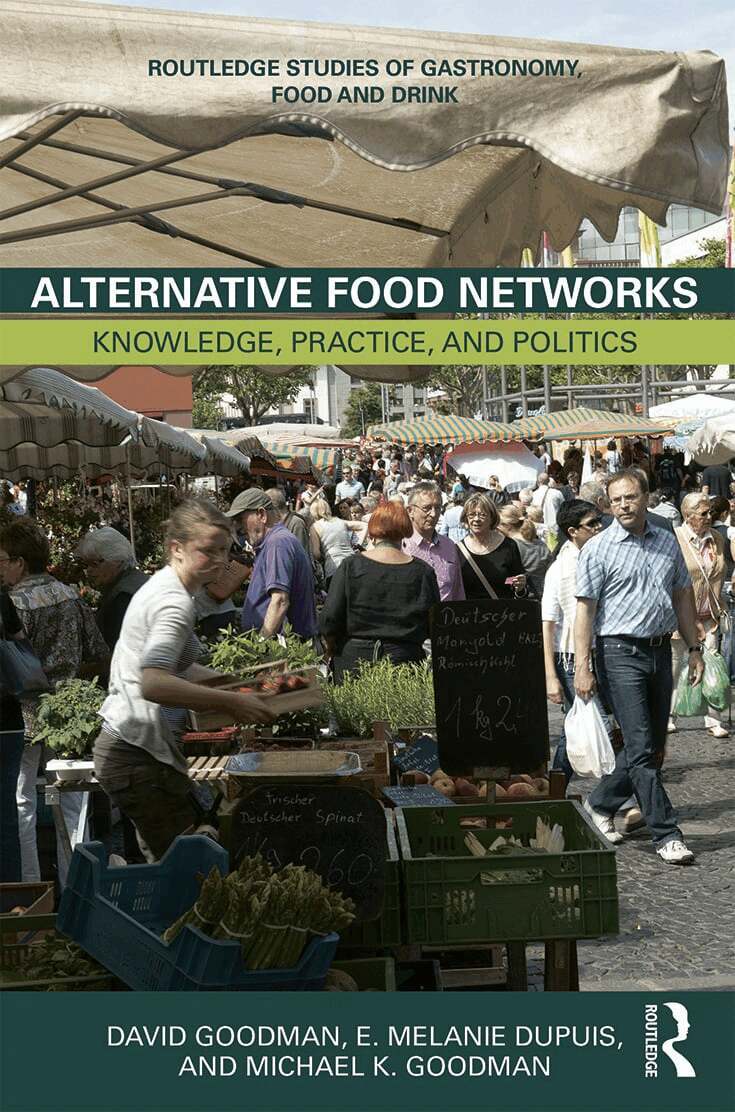
Farmers’ markets, veggie boxes, local foods, organic products and Fair Trade goods – how have these once novel, "alternative" foods, and the people and networks supporting them, become increasingly familiar features of everyday consumption? Are the visions of "alternative worlds" built on ethics of sustainability, social justice, animal welfare and the aesthetic values of local food cultures and traditional crafts still credible now that these foods crowd supermarket shelves and other "mainstream" shopping outlets? This timely book provides a critical review of the growth of alternative food networks and their struggle to defend their ethical and aesthetic values against the standardizing pressures of the corporate mainstream with its "placeless and nameless" global supply networks. It explores how these alternative movements are "making a difference" and their possible role as fears of global climate change and food insecurity intensify. It assesses the different experiences of these networks in three major arenas of food activism and politics: Britain and Western Europe, the United States, and the global Fair Trade economy. This comparative perspective runs throughout the book to fully explore the progressive erosion of the interface between alternative and mainstream food provisioning. As the era of "cheap food" draws to a close, analysis of the limitations of market-based social change and the future of alternative food economies and localist food politics place this book at the cutting-edge of the field. The book is thoroughly informed by contemporary social theory and interdisciplinary social scientific scholarship, formulates an integrative social practice framework to understand alternative food production-consumption, and offers a unique geographical reach in its case studies.
935 kr
Skickas inom 10-15 vardagar
Farmers’ markets, veggie boxes, local foods, organic products and Fair Trade goods – how have these once novel, "alternative" foods, and the people and networks supporting them, become increasingly familiar features of everyday consumption? Are the visions of "alternative worlds" built on ethics of sustainability, social justice, animal welfare and the aesthetic values of local food cultures and traditional crafts still credible now that these foods crowd supermarket shelves and other "mainstream" shopping outlets? This timely book provides a critical review of the growth of alternative food networks and their struggle to defend their ethical and aesthetic values against the standardizing pressures of the corporate mainstream with its "placeless and nameless" global supply networks. It explores how these alternative movements are "making a difference" and their possible role as fears of global climate change and food insecurity intensify. It assesses the different experiences of these networks in three major arenas of food activism and politics: Britain and Western Europe, the United States, and the global Fair Trade economy. This comparative perspective runs throughout the book to fully explore the progressive erosion of the interface between alternative and mainstream food provisioning. As the era of "cheap food" draws to a close, analysis of the limitations of market-based social change and the future of alternative food economies and localist food politics place this book at the cutting-edge of the field. The book is thoroughly informed by contemporary social theory and interdisciplinary social scientific scholarship, formulates an integrative social practice framework to understand alternative food production-consumption, and offers a unique geographical reach in its case studies.
Del 58 - California Studies in Food and Culture
Dangerous Digestion
The Politics of American Dietary Advice
Inbunden, Engelska, 2015
790 kr
Skickas inom 7-10 vardagar
Throughout American history, ingestion (eating) has functioned as a metaphor for interpreting and imagining this society and its political systems. Discussions of American freedom itself are pervaded with ingestive metaphors of choice (what to put in) and control (what to keep out). From the country's founders to the abolitionists to the social activists of today, those seeking to form and reform American society have cast their social-change goals in ingestive terms of choice and control. But they have realized their metaphors in concrete terms as well, purveying specific advice to the public about what to eat or not. These conversations about "social change as eating" reflect American ideals of freedom, purity, and virtue. Drawing on social and political history as well as the history of science and popular culture, Dangerous Digestion examines how American ideas about dietary reform mirror broader thinking about social reform. Inspired by new scientific studies of the human body as a metabiome-a collaboration of species rather than an isolated, intact, protected, and bounded individual-E.Melanie DuPuis invokes a new metaphor-digestion-to reimagine the American body politic, opening social transformations to ideas of mixing, fermentation, and collaboration. In doing so, the author explores how social activists can rethink politics as inclusive processes that involve the inherently risky mixing of cultures, standpoints, and ideas.
Del 58 - California Studies in Food and Culture
Dangerous Digestion
The Politics of American Dietary Advice
Häftad, Engelska, 2015
295 kr
Skickas inom 7-10 vardagar
Throughout American history, ingestion (eating) has functioned as a metaphor for interpreting and imagining this society and its political systems. Discussions of American freedom itself are pervaded with ingestive metaphors of choice (what to put in) and control (what to keep out). From the country's founders to the abolitionists to the social activists of today, those seeking to form and reform American society have cast their social-change goals in ingestive terms of choice and control. But they have realized their metaphors in concrete terms as well, purveying specific advice to the public about what to eat or not. These conversations about "social change as eating" reflect American ideals of freedom, purity, and virtue. Drawing on social and political history as well as the history of science and popular culture, Dangerous Digestion examines how American ideas about dietary reform mirror broader thinking about social reform. Inspired by new scientific studies of the human body as a metabiome-a collaboration of species rather than an isolated, intact, protected, and bounded individual-E.Melanie DuPuis invokes a new metaphor-digestion-to reimagine the American body politic, opening social transformations to ideas of mixing, fermentation, and collaboration. In doing so, the author explores how social activists can rethink politics as inclusive processes that involve the inherently risky mixing of cultures, standpoints, and ideas.
1 628 kr
Skickas inom 7-10 vardagar
The act of eating defines and redefines borders. What constitutes “American” in our cuisine has always depended on a liberal crossing of borders, from “the line in the sand” that separates Mexico and the United States, to the grassland boundary with Canada, to the imagined divide in our collective minds between “our” food and “their” food. Immigrant workers have introduced new cuisines and ways of cooking that force the nation to question the boundaries between “us” and “them.” The stories told in Food Across Borders highlight the contiguity between the intimate decisions we make as individuals concerning what we eat and the social and geopolitical processes we enact to secure nourishment, territory, and belonging. Published in cooperation with the William P. Clements Center for Southwest Studies, Southern Methodist University.
989 kr
Skickas inom 10-15 vardagar
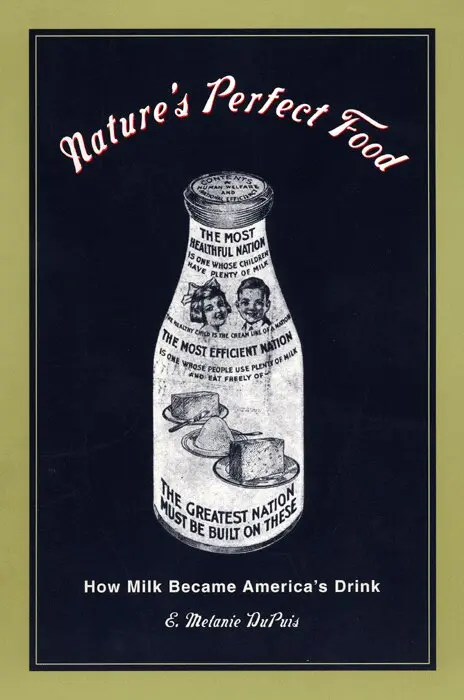
The story of how Americans came to drink milkFor over a century, America's nutrition authorities have heralded milk as "nature's perfect food," as "indispensable" and "the most complete food." These milk "boosters" have ranged from consumer activists, to government nutritionists, to the American Dairy Council and its ubiquitous milk moustache ads. The image of milk as wholesome and body-building has a long history, but is it accurate?Recently, within the newest social movements around food, milk has lost favor. Vegan anti-milk rhetoric portrays the dairy industry as cruel to animals and milk as bad for humans. Recently, books with titles like, "Milk: The Deadly Poison," and "Don't Drink Your Milk" have portrayed milk as toxic and unhealthy. Controversies over genetically-engineered cows and questions about antibiotic residue have also prompted consumers to question whether the milk they drink each day is truly good for them.In Nature's Perfect Food Melanie Dupuis illuminates these questions by telling the story of how Americans came to drink milk. We learn how cow's milk, which was associated with bacteria and disease became a staple of the American diet. Along the way we encounter 19th century evangelists who were convinced that cow's milk was the perfect food with divine properties, brewers whose tainted cow feed poisoned the milk supply, and informal wetnursing networks that were destroyed with the onset of urbanization and industrialization. Informative and entertaining, Nature's Perfect Food will be the standard work on the history of milk.
416 kr
Skickas inom 7-10 vardagar
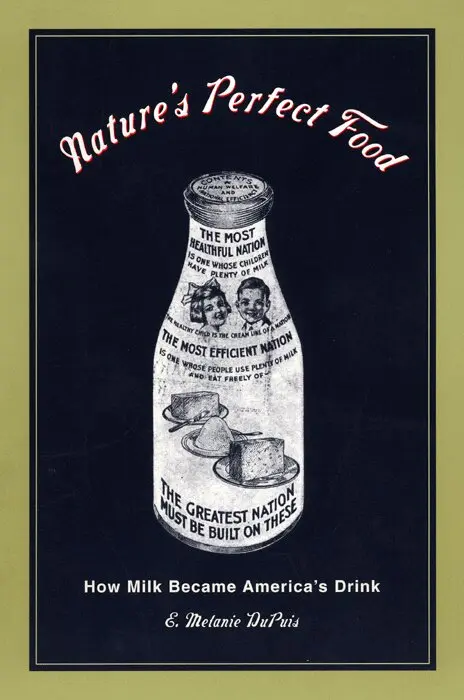
The story of how Americans came to drink milkFor over a century, America's nutrition authorities have heralded milk as "nature's perfect food," as "indispensable" and "the most complete food." These milk "boosters" have ranged from consumer activists, to government nutritionists, to the American Dairy Council and its ubiquitous milk moustache ads. The image of milk as wholesome and body-building has a long history, but is it accurate?Recently, within the newest social movements around food, milk has lost favor. Vegan anti-milk rhetoric portrays the dairy industry as cruel to animals and milk as bad for humans. Recently, books with titles like, "Milk: The Deadly Poison," and "Don't Drink Your Milk" have portrayed milk as toxic and unhealthy. Controversies over genetically-engineered cows and questions about antibiotic residue have also prompted consumers to question whether the milk they drink each day is truly good for them.In Nature's Perfect Food Melanie Dupuis illuminates these questions by telling the story of how Americans came to drink milk. We learn how cow's milk, which was associated with bacteria and disease became a staple of the American diet. Along the way we encounter 19th century evangelists who were convinced that cow's milk was the perfect food with divine properties, brewers whose tainted cow feed poisoned the milk supply, and informal wetnursing networks that were destroyed with the onset of urbanization and industrialization. Informative and entertaining, Nature's Perfect Food will be the standard work on the history of milk.
921 kr
Skickas inom 10-15 vardagar
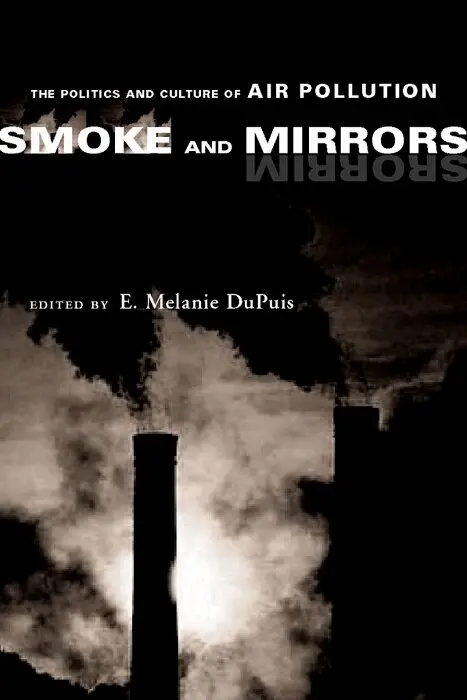
Who gets to breathe clean air? Who benefits from the cheaper products produced with dirty air? The answers, as the contributors to Smoke and Mirrors tell us, are sometimes as gray as the air itself.From the coal factory chimneys in Manchester in the late nineteenth century to the smog hanging over Los Angeles in the late twentieth century, air pollution has long been one of the greatest threats to our environment. In this important collection of original essays, the leading environmental scientists and social scientists examine the politics of air pollution policies and help us to understand the ways these policies have led to, idiosyncratic, effective, ineffective, and even disastrous choices about what we choose to put into and take out of the air. Offering historical, contemporary and cross-national perspectives, this volume provides a refreshing new approach to understanding how air pollution policies have evolved over time.
404 kr
Skickas inom 7-10 vardagar
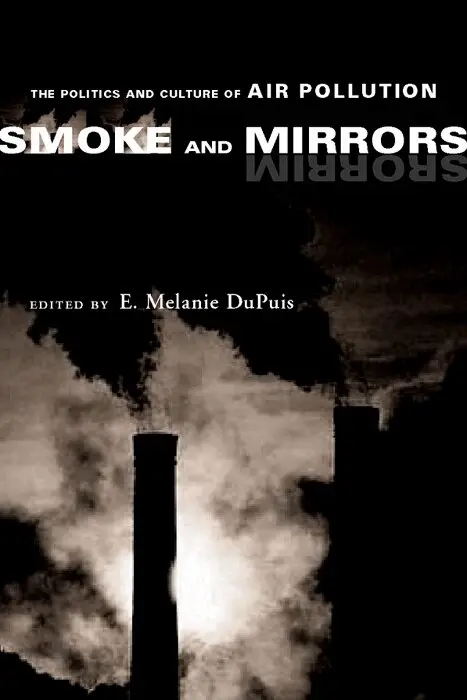
Who gets to breathe clean air? Who benefits from the cheaper products produced with dirty air? The answers, as the contributors to Smoke and Mirrors tell us, are sometimes as gray as the air itself.From the coal factory chimneys in Manchester in the late nineteenth century to the smog hanging over Los Angeles in the late twentieth century, air pollution has long been one of the greatest threats to our environment. In this important collection of original essays, the leading environmental scientists and social scientists examine the politics of air pollution policies and help us to understand the ways these policies have led to, idiosyncratic, effective, ineffective, and even disastrous choices about what we choose to put into and take out of the air. Offering historical, contemporary and cross-national perspectives, this volume provides a refreshing new approach to understanding how air pollution policies have evolved over time.