E. Paul Torrance – författare
Visar alla böcker från författaren E. Paul Torrance. Handla med fri frakt och snabb leverans.
7 produkter
7 produkter
E-bok
PDF, Engelska, 20021 064 kr
Läs direkt efter köp
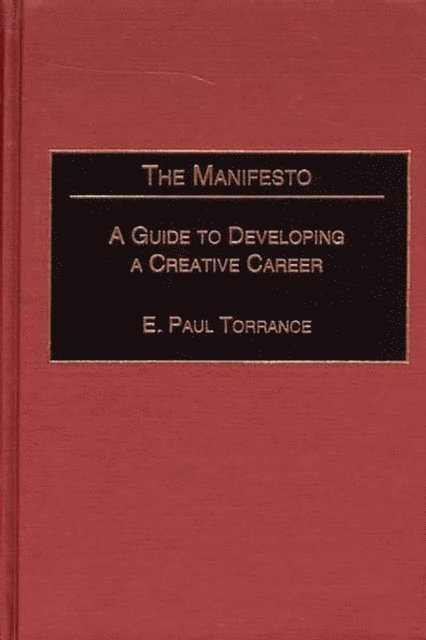
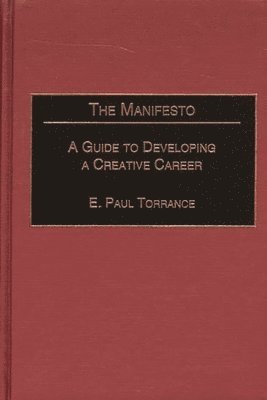
More than 40 years ago, E. Paul Torrance undertook to study creativity in students and study whether it would predict their creative achievements as adults. He and his colleagues wanted to determine what other factors influence, predict, encourage or sustain their creativity over time. There has never been a longitudinal study of creativity of this magnitude. Its findings will be useful to, and have implications for, several audiences: parents, teachers, counselors—especially vocational counselors—university and college instructors, and educational administrators.The Manifesto for Children was developed on the basis of the responses of 215 young adults who had attended two elementary schools in Minnesota from 1958 to 1964. They had been administered some creativity tests each year, and they were followed up in 1980. On the basis of their questionnaire responses, the Manifesto was developed to describe their ongoing struggle to maintain their creativity and use their strengths to create their careers and to provide guidance to children. In 1998, they were followed up to assess their creative achievements and to validate the Manifesto. Some of the participants had attained eminence, while others had attained only mediocre careers.
Inbunden, Engelska, 1995
1 107 kr
Skickas inom 10-15 vardagar
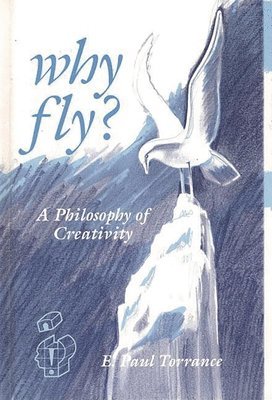
Why Fly? is without argument, an important contribution to the body of theoretical literature on creativity. What makes this work unique, however, is that it's content and focus also enable it to stand on the shelf along side books on counseling/self help, curriculum development, school administration, business, and leadership. In short, Dr. Torrance has successfully produced a book with nearly universal appeal and application possibilities. - Roeper Review . . .For readers who are well-versed in Torrance's major ideas and themes, the book will serve as a convenient reference resource and probably as a source of some previously undiscovered pieces. For new explorers into the creativity literature, it will provide helpful grounding in the work of a major figure in the field and foundation for new questions and directions. Gifted Child Quarterly
Häftad, Engelska, 1995
589 kr
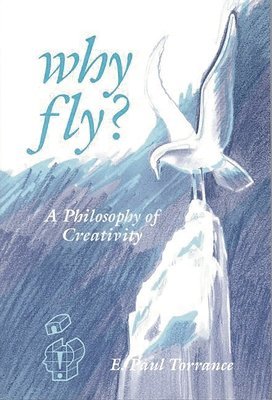
Why Fly? is without argument, an important contribution to the body of theoretical literature on creativity. What makes this work unique, however, is that it's content and focus also enable it to stand on the shelf along side books on counseling/self help, curriculum development, school administration, business, and leadership. In short, Dr. Torrance has successfully produced a book with nearly universal appeal and application possibilities. - Roeper Review . . .For readers who are well-versed in Torrance's major ideas and themes, the book will serve as a convenient reference resource and probably as a source of some previously undiscovered pieces. For new explorers into the creativity literature, it will provide helpful grounding in the work of a major figure in the field and foundation for new questions and directions. Gifted Child Quarterly
Inbunden, Engelska, 2000
812 kr
Skickas inom 10-15 vardagar
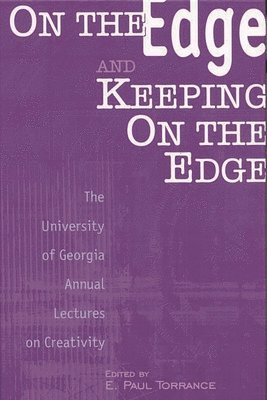
On the Edge and Keeping on the Edge contains the first ten lectures in a series sponsored by the University of Georgia's Torrance Center for Creative Studies. Annually, the Lecture Committee tried to identify someone who was on the cutting edge of creativity research. When a decision was made to publish the first ten lectures, the editor asked each lecturer to describe what he/she had done to keep on the edge. In the first lecture, E. Paul Torrance spoke of his experiences in using his networks to stimulate and keep the creative process flowing. The other areas were creative problem solving (Sidney J. Parnes), the psychology of thinking (Donald J. Treffinger), intergenerational influences (Robert D. Strom), visioning (Joe Khatena), questioning (Garnet Millar), philosophy and ethics (Joseph P. Hester), the Beyonders (Kobus Neethling), and motivation (Dorothy A. Sisk). Volume II will be entitled Going Beyond the Edge. The first ten lectures were by scholars who had taken us to the edge, and kept us on the edge. It takes people who are free to use their imaginations, like novelists, humorists, actors and actresses, inventors, artists, dancers, and those in other creative areas.
Häftad, Engelska, 2000
476 kr
Skickas inom 10-15 vardagar
On the Edge and Keeping on the Edge contains the first ten lectures in a series sponsored by the University of Georgia's Torrance Center for Creative Studies. Annually, the Lecture Committee tried to identify someone who was on the cutting edge of creativity research. When a decision was made to publish the first ten lectures, the editor asked each lecturer to describe what he/she had done to keep on the edge. In the first lecture, E. Paul Torrance spoke of his experiences in using his networks to stimulate and keep the creative process flowing. The other areas were creative problem solving (Sidney J. Parnes), the psychology of thinking (Donald J. Treffinger), intergenerational influences (Robert D. Strom), visioning (Joe Khatena), questioning (Garnet Millar), philosophy and ethics (Joseph P. Hester), the Beyonders (Kobus Neethling), and motivation (Dorothy A. Sisk). Volume II will be entitled Going Beyond the Edge. The first ten lectures were by scholars who had taken us to the edge, and kept us on the edge. It takes people who are free to use their imaginations, like novelists, humorists, actors and actresses, inventors, artists, dancers, and those in other creative areas.
Inbunden, Engelska, 2002
1 013 kr
Skickas inom 10-15 vardagar
More than 40 years ago, E. Paul Torrance undertook to study creativity in students and study whether it would predict their creative achievements as adults. He and his colleagues wanted to determine what other factors influence, predict, encourage or sustain their creativity over time. There has never been a longitudinal study of creativity of this magnitude. Its findings will be useful to, and have implications for, several audiences: parents, teachers, counselors—especially vocational counselors—university and college instructors, and educational administrators.The Manifesto for Children was developed on the basis of the responses of 215 young adults who had attended two elementary schools in Minnesota from 1958 to 1964. They had been administered some creativity tests each year, and they were followed up in 1980. On the basis of their questionnaire responses, the Manifesto was developed to describe their ongoing struggle to maintain their creativity and use their strengths to create their careers and to provide guidance to children. In 1998, they were followed up to assess their creative achievements and to validate the Manifesto. Some of the participants had attained eminence, while others had attained only mediocre careers.
E-bok
Engelska, 201853 kr
Läs direkt efter köp
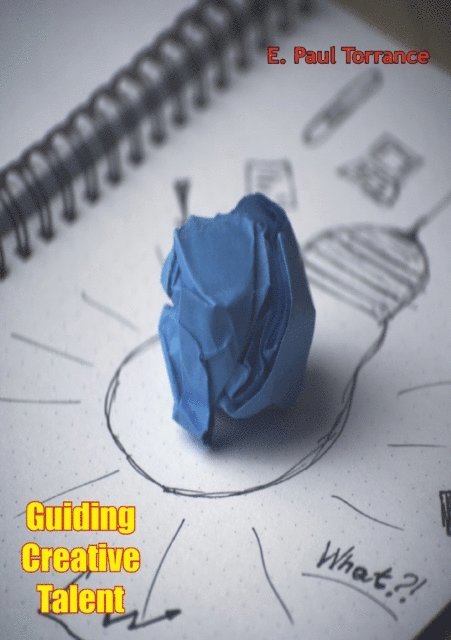
Anyone with an interest in the problems of highly creative children will find this volume useful in guiding a wide range of creative talent at all age and educational levels. In preparing this material, I have drawn most heavily upon my own research and that of my colleagues concerning the creative thinking of children, adolescents, and adults. Although my emphasis is upon the problems of highly creative children, I believe you will find these materials useful in guiding a wide range of creative talent at all age and educational levels. I have also attempted to give these research findings and observations meaning from my experience as a teacher, counselor, and principal in a high school and as a college teacher and counselor, roles in which I have met many highly creative individuals. I have also drawn upon my research concerning behavior under emergency and extreme conditions, especially situations involving coercion.