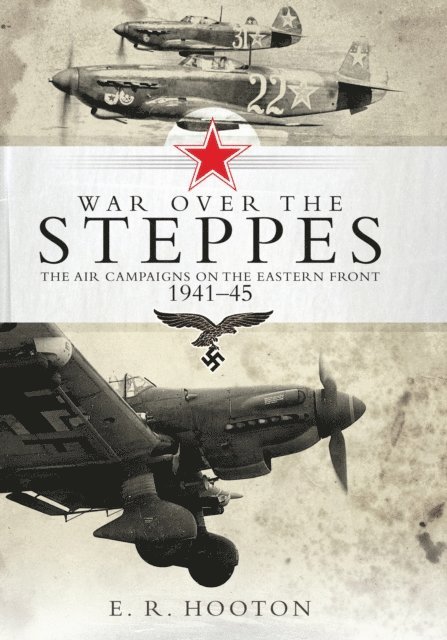
The air war over the Steppes was more than a brutal clash in which might alone triumphed.It was a conflict that saw tactical and technological innovation as the Soviet air force faced off against Herman Göring''s Luftwaffe. As Germany and the Soviet Union battled for victory on the Eastern Front they had to overcome significant strategic and industrial problems, as well as fighting against the extreme weather conditions of the East. These factors combined with the huge array of aircraft used on the Eastern Front to create one of the most compelling conflicts of the war.Told primarily from the strategic and command perspective, this account offers a detailed analysis of this oft-overlooked air war, tracing the clashes between Germany and the Soviet Union over the course of World War II. Historical photographs complement the examination as author E. R. Hooton explores these epic aerial battles between the Third Reich and the Soviet Union.
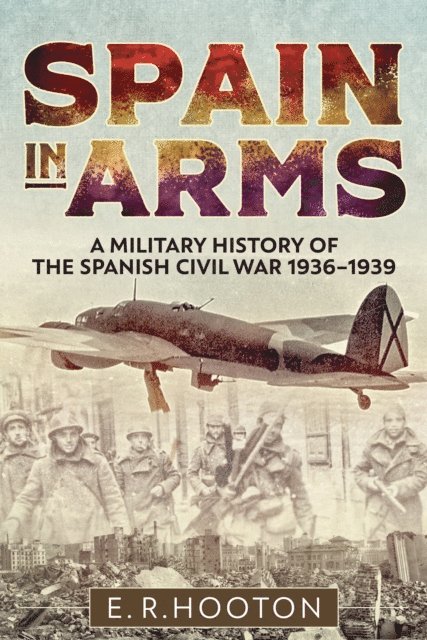
This detailed military history of the Spanish Civil War dispels long-held misconceptions and sheds significant new light on the conflict. Spain in Arms chronicles the development of the Spanish Civil War on the battlefield, examining eight campaigns waged between 1937 and 1939. Through detailed analysis, it demonstrates how many accounts of military operations during this conflict are based upon half-truths and propaganda. From the Madrid Front to the Catalonia Offensive, each campaigns is chronicled with special focus on the weapons and tactics used, as well as the moment-to-moment decisions of both Republican and Nationalist generals. Hooton also sheds light on the true extent of foreign intervention in the conflict. Using British and French archives, he produces a more accurate—and radically different—account of the battles and the factors that shaped them. Ultimately, Hooton reveals the superiority of the Nationalist alliance in both training and overall command. Spain in Arms draws on specialized German, Italian and Russian works, and is the first book to quote secret data about Italian air operations intercepted by the British. A magisterial work of military history, it combines detailed analysis with historical context, showing how the events of the Spanish civil War provide a link between the First and Second World Wars.
The Spanish Civil War was won and lost upon the high seas. It was won because the Nationalists had an uninterrupted flow of men and materials while Republican sea lanes were attacked by Fascist warships, submarines, and aircraft – the pirates of the title. These attacks also involved dozens of foreign merchantmen and warships, including American, as well as hundreds of men, women, and boys. The worst affected was the British merchant marine, which dominated Spanish trade – some owners used rust buckets to maximise profits in a trade, which resulted in the loss of 66 British lives.The naval element of the Spanish Civil War began with a rebellion followed by a mutiny and a massacre. Both the German and Italian navies became involved in the naval war, attacking Spanish ships and then British warships and merchantmen. A blockade in the north led to confrontations between the Royal Navy and Nationalist Navy, the mining of a British liner and tales of daring among determined British master mariners. Later in the war there were attacks by Italian surface warships, submarines, and aircraft against foreign shipping in the Mediterranean and Aegean leading to the British and French threatening pirate submarines.This is a story of exploitation, heroism, chauvinism, piracy, international inaction, and espionage which has never been told. It includes details of such things as the first aerial campaign against shipping and the first operational use of sonar against a submarine.
For seven years, the plains and marshes around Basra became the crucible of one of the 20th century’s most devastating conflicts—the Iran–Iraq War. Characterized by brutal, bloody battles and staggering casualties. What began as a bold Iranian counter-offensive evolved into relentless attempts to breach Iraq’s fortified defenses around Basra. These offensives failed, leading to Iraq’s decisive 1988 counteroffensive that forced Iran into a reluctant peace.But victory came at a cost. Saddam Hussein’s overreach into Kuwait just a few years later reversed Iraq’s gains and set the stage for the enduring Middle Eastern crises of today. Intriguingly, the technological seeds of modern drone warfare—for example the technology used against Israel and Ukraine—can be traced back to this war.Drawing on newly available sources from both Iran and Iraq, alongside declassified CIA reports, this book offers a balanced and comprehensive account of the Iran–Iraq War. With vivid narratives of the battles, strategic insights, and exploration of its far-reaching consequences, this is a definitive chronicle of a war that reshaped the Middle East and the art of warfare itself.
Spain in Arms is a new military history of the Spanish Civil War. It examines how the Spanish Civil War conflict developed on the battlefield through the prism of eight campaigns between 1937-1939 and shows how many accounts of military operations during this conflict are based upon half-truths and propaganda. The book is based upon nearly 60 years of extensive research into the Spanish Civil War, augmented by information from specialised German, Italian and Russian works. The Italian campaign against the Basques on the Northern Front in 1937 was one of the most spectacular Nationalist successes of the Civil War, with 60,000 prisoners taken. This is also the first book to quote secret data about Italian air operations intercepted by the British. The figures intercepted by the British show the Italians flew 1,215 sorties and dropped 231 tons of bombs during the campaign, whilst also suffering the heaviest losses. It also demonstrates how the Nationalists won not simply by benefitting from a cornucopia of modern arms from the Fascist powers but by using its limited resources to maximum effect. Spain in Arms reveals the Nationalist battlefield superiority in terms of training and overall command, and the Republic's corresponding weaknesses in the same fields. The Republican Brunete and Belchite offensives of 1937 are described in detail, from the weapons they carried and the tactics they employed to the dynamic Nationalist response and reaction of the generals. This book also explores how the extent of foreign intervention on both sides has been greatly exaggerated throughout history and provides the first accurate information on this military intervention, using British and French archives to produce a radically different but more accurate account of the battles and the factors and men who shaped them. Hooton finally gives the historical context and operational implications of the battlefield events to provide a link between the First and Second World Wars.
The fuse to the First World War was lit in the Balkans where simmering hatreds exploded into violence. Like a string of firecrackers, these hatreds had been fuelled by attacks on the Turkish Ottoman Empire in the previous few years. From 1911-1912, Italy seized Libya. In 1912, the Balkan states united to drive Turkey out of Europe in the First Balkans War, and in the following year in the Second Balkans War, turned on each other in a division of the spoils which allowed Turkey to retain a foothold in Europe. This was a war of land campaigns, sea battles and amphibious operations in which the new military technology was first used. Submarine and aircraft attacked ships, aircraft made reconnaissance flights and bombed troops while even electronic warfare was used. It also saw mirror images of the events in the First World War; Bulgarians driven from Salonika where an Allied army would later be contained and Turkish troops held back in the Dardanelles, their guns driving off a naval task force. These now forgotten wars were the overture to the First World War and yet they have overtones a century later.The First World War saw echoes of these campaigns in Salonika and especially in the Dardanelles, while the ethnic tensions would erupt into further bloodshed after the Cold War ended as Yugoslavia collapsed during the 1990s.