E. Virginia Demos - Böcker
Visar alla böcker från författaren E. Virginia Demos. Handla med fri frakt och snabb leverans.
4 produkter
4 produkter
1 670 kr
Skickas inom 7-10 vardagar
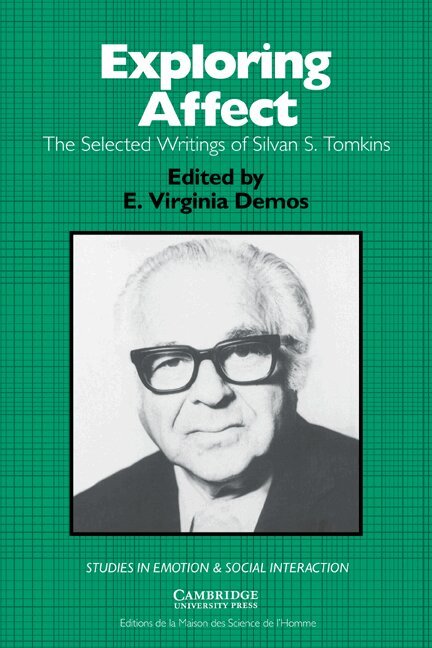
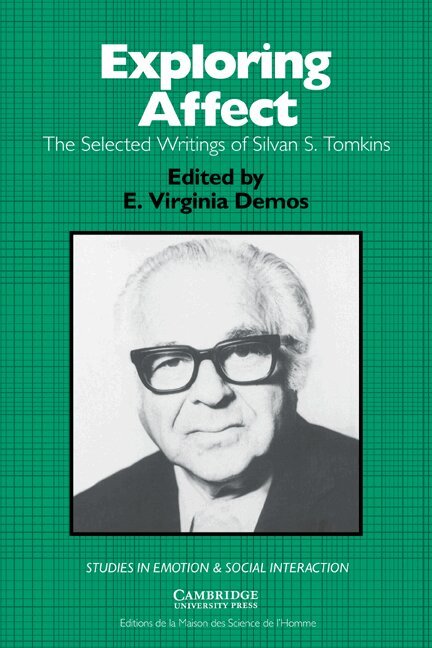
Silvan Tomkins was one of the most influential theorists on emotion and emotional expression. Over a period of 40 - some years - until his death in 1991 - he developed a set of original, important ideas about the nature of affect and its relationship to cognition and personality. Tomkins dealt with fundamental questions in a fresh and provocative way, establishing affect as a separate, biological system, and providing compelling data on discrete affect expressions. Several years before his death, Professor Tomkins agreed to bring his papers (unpublished and published) together into Exploring Affect for Cambridge Studies in Emotion and Social Interaction. He worked with Paul Ekman and Klaus Scherer to develop a structure for the book that would synthesize his theory of emotion. Unfortunately, he died before he was able to complete the process. Virginia Demos, who knew Professor Tomkins well, took on the enormous task of compiling the papers and writing connective material for the book. This volume of Tomkins selected writings on affect brings together his works of four decades and makes them available at a more receptive time in the field. It is a treasure trove of provocative, insightful and relevant ideas.
Affect Theory of Silvan Tomkins for Psychoanalysis and Psychotherapy
Recasting the Essentials
Inbunden, Engelska, 2019
1 836 kr
Skickas inom 10-15 vardagar
The Affect Theory of Silvan Tomkins for Psychoanalysis and Psychotherapy explores central issues in current clinical work, using the theories put forward by Silvan Tomkins and presenting them in detail, as well as integrating them with the most up-to-date neuroscience findings and infancy research, all based on a biopsychosocial, dynamic systems approach.Part I describes the essentials of life, based on our evolutionary and biological heritage, namely a need for a coherent understanding of one’s world and the capacity to act in that world; the infant's capacities are described in detail as embodying both. Longitudinal data is provided beginning at birth into the third year of life. Part II reviews current debates in psychoanalysis relating to motivation, and the lack of an internally consistent theory. Recent neuroscience findings are presented, which both negate drive theory, and support Tomkins' theory. His theory is then described in detail. In Part III, two case histories are presented: one is a clinical case illustrating one of Tomkins' affect powered scripts. The second case is drawn from a longitudinal study extending from birth, into early adulthood, which is made sense of with the help of Tomkins' theory. Demos concludes with a look at competing approaches to theory and responds to recent cognitive-based attempts to disprove both Tomkins' work and the latest findings from neuroscience. The Affect Theory of Silvan Tomkins for Psychoanalysis and Psychotherapy will appeal to psychoanalysts and psychoanalytic psychotherapists, as well as psychiatrists, psychologists, social workers, and psychiatric nurses.
Affect Theory of Silvan Tomkins for Psychoanalysis and Psychotherapy
Recasting the Essentials
Häftad, Engelska, 2019
508 kr
Skickas inom 10-15 vardagar
The Affect Theory of Silvan Tomkins for Psychoanalysis and Psychotherapy explores central issues in current clinical work, using the theories put forward by Silvan Tomkins and presenting them in detail, as well as integrating them with the most up-to-date neuroscience findings and infancy research, all based on a biopsychosocial, dynamic systems approach.Part I describes the essentials of life, based on our evolutionary and biological heritage, namely a need for a coherent understanding of one’s world and the capacity to act in that world; the infant's capacities are described in detail as embodying both. Longitudinal data is provided beginning at birth into the third year of life. Part II reviews current debates in psychoanalysis relating to motivation, and the lack of an internally consistent theory. Recent neuroscience findings are presented, which both negate drive theory, and support Tomkins' theory. His theory is then described in detail. In Part III, two case histories are presented: one is a clinical case illustrating one of Tomkins' affect powered scripts. The second case is drawn from a longitudinal study extending from birth, into early adulthood, which is made sense of with the help of Tomkins' theory. Demos concludes with a look at competing approaches to theory and responds to recent cognitive-based attempts to disprove both Tomkins' work and the latest findings from neuroscience. The Affect Theory of Silvan Tomkins for Psychoanalysis and Psychotherapy will appeal to psychoanalysts and psychoanalytic psychotherapists, as well as psychiatrists, psychologists, social workers, and psychiatric nurses.
519 kr
Skickas inom 7-10 vardagar
Silvan Tomkins was one of the most influential theorists on emotion and emotional expression. Over a period of 40 - some years - until his death in 1991 - he developed a set of original, important ideas about the nature of affect and its relationship to cognition and personality. Tomkins dealt with fundamental questions in a fresh and provocative way, establishing affect as a separate, biological system, and providing compelling data on discrete affect expressions. Several years before his death, Professor Tomkins agreed to bring his papers (unpublished and published) together into Exploring Affect for Cambridge Studies in Emotion and Social Interaction. He worked with Paul Ekman and Klaus Scherer to develop a structure for the book that would synthesize his theory of emotion. Unfortunately, he died before he was able to complete the process. Virginia Demos, who knew Professor Tomkins well, took on the enormous task of compiling the papers and writing connective material for the book. This volume of Tomkins selected writings on affect brings together his works of four decades and makes them available at a more receptive time in the field. It is a treasure trove of provocative, insightful and relevant ideas.