Eberhard O. Voit – författare
Visar alla böcker från författaren . Handla med fri frakt och snabb leverans.
9 produkter
9 produkter
Häftad, Engelska, 2020
110 kr
Skickas inom 5-8 vardagar
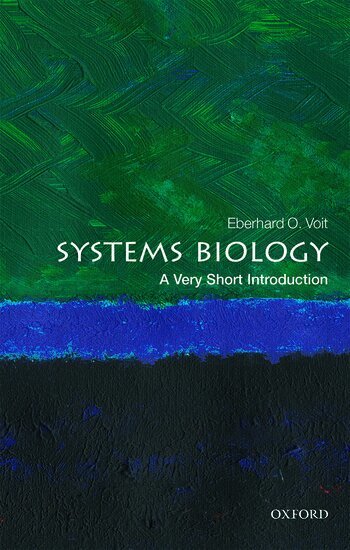
Systems biology came about as growing numbers of engineers and scientists from other fields created algorithms which supported the analysis of biological data in incredible quantities. Whereas biologists of the past had been forced to study one item or aspect at a time, due to technical and biological limitations, it suddenly became possible to study biological phenomena within their natural contexts. This interdisciplinary field offers a holistic approach to interpreting these processes, and has been responsible for some of the most important developments in the science of human health and environmental sustainability. This Very Short Introduction outlines the exciting processes and possibilities in the new field of systems biology. Eberhard O. Voit describes how it enabled us to learn how intricately the expression of every gene is controlled, how signaling systems keep organisms running smoothly, and how complicated even the simplest cells are. He explores what this field is about, why it is needed, and how it will affect our understanding of life, particularly in the areas of personalized medicine, drug development, food and energy production, and sustainable stewardship of our environments. Throughout he considers how new tools are being provided from the fields of mathematics, computer science, engineering, physics, and chemistry to grasp the complexity of the countless interacting processes in cells which would overwhelm the cognitive and analytical capabilities of the human mind. ABOUT THE SERIES: The Very Short Introductions series from Oxford University Press contains hundreds of titles in almost every subject area. These pocket-sized books are the perfect way to get ahead in a new subject quickly. Our expert authors combine facts, analysis, perspective, new ideas, and enthusiasm to make interesting and challenging topics highly readable.
E-bok
PDF, Engelska, 202089 kr
Läs direkt efter köp
Systems biology came about as growing numbers of engineers and scientists from other fields created algorithms which supported the analysis of biological data in incredible quantities. Whereas biologists of the past had been forced to study one item or aspect at a time, due to technical and biological limitations, it suddenly became possible to study biological phenomena within their natural contexts. This interdisciplinary field offers a holistic approach to interpreting these processes, and has been responsible for some of the most important developments in the science of human health and environmental sustainability. This Very Short Introduction outlines the exciting processes and possibilities in the new field of systems biology. Eberhard O. Voit describes how it enabled us to learn how intricately the expression of every gene is controlled, how signaling systems keep organisms running smoothly, and how complicated even the simplest cells are. He explores what this field is about, why it is needed, and how it will affect our understanding of life, particularly in the areas of personalized medicine, drug development, food and energy production, and sustainable stewardship of our environments. Throughout he considers how new tools are being provided from the fields of mathematics, computer science, engineering, physics, and chemistry to grasp the complexity of the countless interacting processes in cells which would overwhelm the cognitive and analytical capabilities of the human mind. ABOUT THE SERIES: The Very Short Introductions series from Oxford University Press contains hundreds of titles in almost every subject area. These pocket-sized books are the perfect way to get ahead in a new subject quickly. Our expert authors combine facts, analysis, perspective, new ideas, and enthusiasm to make interesting and challenging topics highly readable.
E-bok
Engelska, 202089 kr
Läs direkt efter köp
Systems biology came about as growing numbers of engineers and scientists from other fields created algorithms which supported the analysis of biological data in incredible quantities. Whereas biologists of the past had been forced to study one item or aspect at a time, due to technical and biological limitations, it suddenly became possible to study biological phenomena within their natural contexts. This interdisciplinary field offers a holistic approach to interpreting these processes, and has been responsible for some of the most important developments in the science of human health and environmental sustainability. This Very Short Introduction outlines the exciting processes and possibilities in the new field of systems biology. Eberhard O. Voit describes how it enabled us to learn how intricately the expression of every gene is controlled, how signaling systems keep organisms running smoothly, and how complicated even the simplest cells are. He explores what this field is about, why it is needed, and how it will affect our understanding of life, particularly in the areas of personalized medicine, drug development, food and energy production, and sustainable stewardship of our environments. Throughout he considers how new tools are being provided from the fields of mathematics, computer science, engineering, physics, and chemistry to grasp the complexity of the countless interacting processes in cells which would overwhelm the cognitive and analytical capabilities of the human mind. ABOUT THE SERIES: The Very Short Introductions series from Oxford University Press contains hundreds of titles in almost every subject area. These pocket-sized books are the perfect way to get ahead in a new subject quickly. Our expert authors combine facts, analysis, perspective, new ideas, and enthusiasm to make interesting and challenging topics highly readable.
Häftad, Engelska, 2011
544 kr
Skickas inom 7-10 vardagar
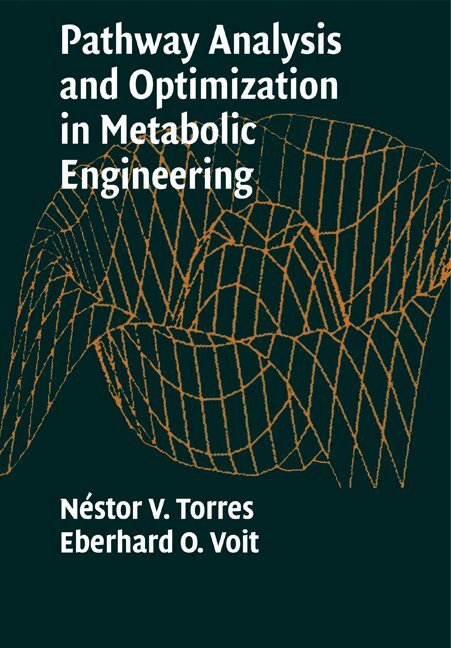
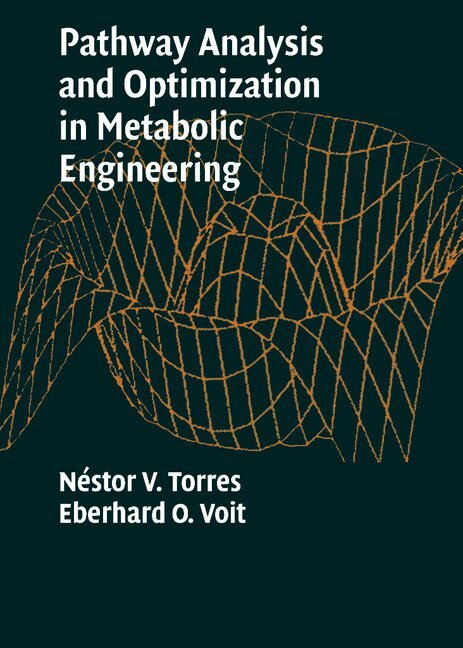
Facility in the targeted manipulation of the genetic and metabolic composition of organisms, combined with unprecedented computational power, is forging a niche for a new subspecialty of biotechnology called metabolic engineering. First published in 2002, this book introduces researchers and advanced students in biology and engineering to methods of optimizing biochemical systems of biotechnological relevance. It examines the development of strategies for manipulating metabolic pathways, demonstrates the need for effective systems models, and discusses their design and analysis, while placing special emphasis on optimization. The authors propose power-law models and methods of biochemical systems theory toward these ends. All concepts are derived from first principles, and the text is richly illustrated with numerous graphs and examples throughout. Special features include: nontechnical and technical introductions to models of biochemical systems; a review of basic methods of model design and analysis; concepts of optimization; and detailed case studies.
Inbunden, Engelska, 2002
1 616 kr
Skickas inom 7-10 vardagar
Facility in the targeted manipulation of the genetic and metabolic composition of organisms, combined with unprecedented computational power, is forging a niche for a new subspecialty of biotechnology called metabolic engineering. First published in 2002, this book introduces researchers and advanced students in biology and engineering to methods of optimizing biochemical systems of biotechnological relevance. It examines the development of strategies for manipulating metabolic pathways, demonstrates the need for effective systems models, and discusses their design and analysis, while placing special emphasis on optimization. The authors propose power-law models and methods of biochemical systems theory toward these ends. All concepts are derived from first principles, and the text is richly illustrated with numerous graphs and examples throughout. Special features include: nontechnical and technical introductions to models of biochemical systems; a review of basic methods of model design and analysis; concepts of optimization; and detailed case studies.
Inbunden, Engelska, 2016
693 kr
Skickas inom 7-10 vardagar
Living systems are dynamic and extremely complex and their behaviour is often hard to predict by studying their individual parts. Systems biology promises to reveal and analyse these highly connected, regulated and adaptable systems, using mathematical modelling and computational analysis. This new systems approach is already having a broad impact on biological research and has potentially far-reaching implications for our understanding of life. Written in an informal and non-technical style, this book provides an accessible introduction to systems biology. Self-contained vignettes each convey a key theme and are intended to enlighten, provoke and interest readers of different academic disciplines, but also to offer new insight to those working in the field. Using a minimum amount of jargon and no mathematics, Voit manages to convey complex ideas and give the reader a genuine sense of the excitement that systems biology brings with it, as well as the current challenges and opportunities.
Häftad, Engelska, 2016
431 kr
Skickas inom 7-10 vardagar
Living systems are dynamic and extremely complex and their behaviour is often hard to predict by studying their individual parts. Systems biology promises to reveal and analyse these highly connected, regulated and adaptable systems, using mathematical modelling and computational analysis. This new systems approach is already having a broad impact on biological research and has potentially far-reaching implications for our understanding of life. Written in an informal and non-technical style, this book provides an accessible introduction to systems biology. Self-contained vignettes each convey a key theme and are intended to enlighten, provoke and interest readers of different academic disciplines, but also to offer new insight to those working in the field. Using a minimum amount of jargon and no mathematics, Voit manages to convey complex ideas and give the reader a genuine sense of the excitement that systems biology brings with it, as well as the current challenges and opportunities.
E-bok
Engelska, 2016523 kr
Läs direkt efter köp
Living systems are dynamic and extremely complex and their behaviour is often hard to predict by studying their individual parts. Systems biology promises to reveal and analyse these highly connected, regulated and adaptable systems, using mathematical modelling and computational analysis. This new systems approach is already having a broad impact on biological research and has potentially far-reaching implications for our understanding of life. Written in an informal and non-technical style, this book provides an accessible introduction to systems biology. Self-contained vignettes each convey a key theme and are intended to enlighten, provoke and interest readers of different academic disciplines, but also to offer new insight to those working in the field. Using a minimum amount of jargon and no mathematics, Voit manages to convey complex ideas and give the reader a genuine sense of the excitement that systems biology brings with it, as well as the current challenges and opportunities.
E-bok
PDF, Engelska, 2016521 kr
Läs direkt efter köp
Living systems are dynamic and extremely complex and their behaviour is often hard to predict by studying their individual parts. Systems biology promises to reveal and analyse these highly connected, regulated and adaptable systems, using mathematical modelling and computational analysis. This new systems approach is already having a broad impact on biological research and has potentially far-reaching implications for our understanding of life. Written in an informal and non-technical style, this book provides an accessible introduction to systems biology. Self-contained vignettes each convey a key theme and are intended to enlighten, provoke and interest readers of different academic disciplines, but also to offer new insight to those working in the field. Using a minimum amount of jargon and no mathematics, Voit manages to convey complex ideas and give the reader a genuine sense of the excitement that systems biology brings with it, as well as the current challenges and opportunities.