Ebrima Sall – författare
Visar alla böcker från författaren . Handla med fri frakt och snabb leverans.
7 produkter
7 produkter
Häftad, Engelska, 2012
533 kr
Skickas inom 5-8 vardagar
Häftad, Engelska, 1997
537 kr
Skickas inom 5-8 vardagar
Häftad, Engelska, 2006
619 kr
Skickas inom 5-8 vardagar
Häftad, Franska, 2008
586 kr
Skickas inom 5-8 vardagar
E-bok
PDF, Franska, 2008688 kr
Läs direkt efter köp
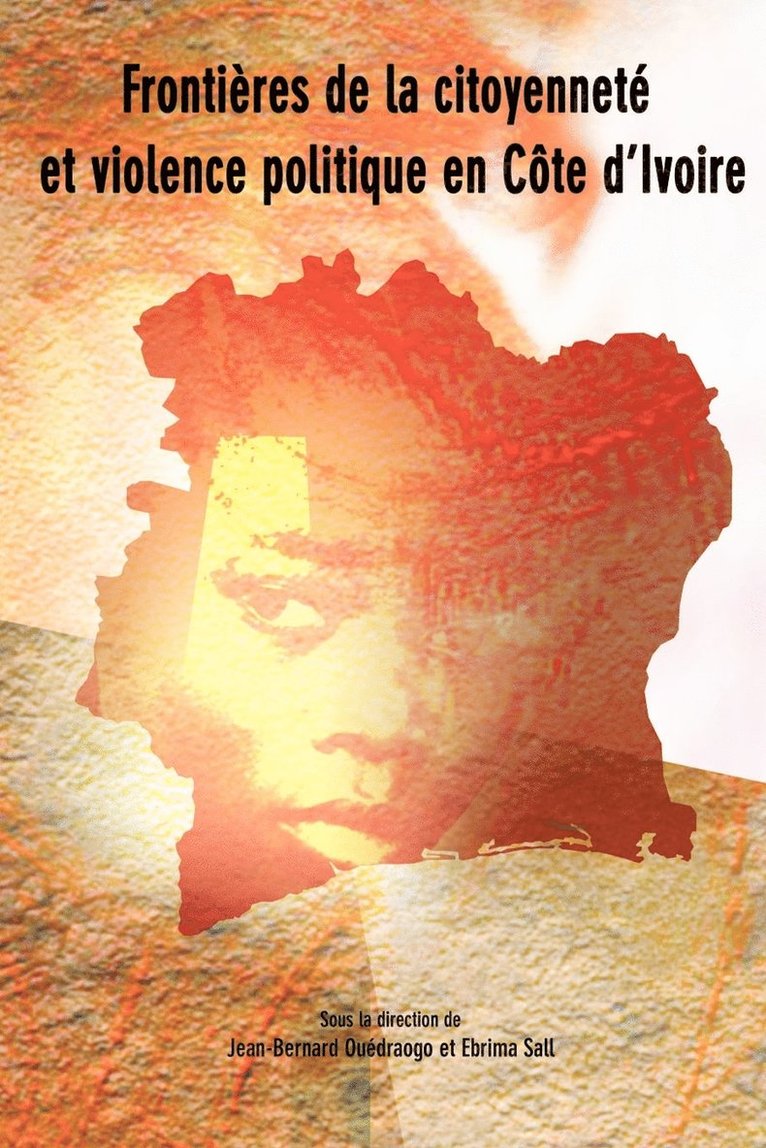
This book seeks to explain the events that have been taking place in C?te d'Ivoire since 1999 and which are commonly referred to as 'la crise ivoirienne' (the Ivorian crisis). It seems that the day to day interpretation of the events did not provide a satisfactory explanation of the deep fracture and that it was necessary to reconsider the essentialist theoretical categories that are striving to impose on us a false view, made cumbersome by ethnocentric prejudices. To avoid falling into the trap of the day to day interpretation of events will require an in-depth questioning of the causes of the foreseen collapse of the Ivorian model. Having a grasp on the historical meaning of facts is required in examining the sequence and interconnection of events which we always need to rule on the historical weight in order to gauge the tragic trend of the social dynamics. While looking for the causes of the social and political rift, the authors of this volume started by asking a central question: How does the weight of the modern Ivorian society formation intervene in the modalities of the actions of individuals and current collectivities? The brutal and violent fracture which the Ivorian social formation underwent brings forth, once again, the issue of collective identities and unveils, at the same time, the challenges related to the incomplete nature of the construction of 'Nation States' in Africa. In fact, it is a mistake to think that the crisis spontaneously started among partisan higher authorities and to ignore that behind the ostentatious declarations on National Unity, pre-colonial groups have not completely melted into the modern 'Nation'. Furthermore, in the process of 'national' social space formation, new social combinations emerge by continuously re-inventing themselves. It seems that the roots of current crises reside in the unprecedented transformation which contemporary African societies have been undergoing.
Häftad, Engelska, 2015
379 kr
Skickas inom 5-8 vardagar
E-bok
PDF, Engelska, 2015454 kr
Läs direkt efter köp
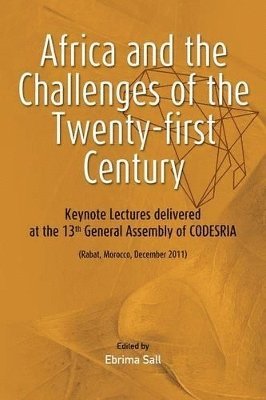
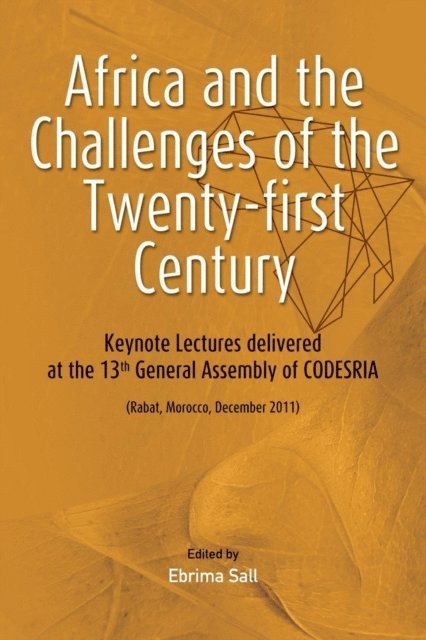
The Council for the Development of Social Science Research in Africa, CODESRIA, held its 13th General Assembly, 5-9 December 2011, in Rabat Morocco. The theme of the scientific conference was: �Africa and the Challenges of the Twenty-first Century�. Some of the reasons that influenced the choice of this theme were to do with how Africa should position itself in the new global political and economic order in the context of an increasingly complex neoliberal globalisation. Changes in intercultural relations at the global level, climate change, poverty, rapid urbanisation, the ICTs revolution, the emergence of a multi-polar world and the phenomenon of emerging powers of the South are some of the realities of our world that are widely and extensively discussed by both academics and policy-makers. This book contains the statutory lectures of the 13th General Assembly. Each one speaks to major challenges that African and the Global South are facing in this second decade of the Twenty-first Century: neoliberal globalisation, capital flight, the land question, gender relations, with a particular focus on matriarchy; and universalism.