E.C. Donaldson – författare
Visar alla böcker från författaren E.C. Donaldson. Handla med fri frakt och snabb leverans.
5 produkter
5 produkter
E-bok
PDF, Engelska, 1995696 kr
Läs direkt efter köp
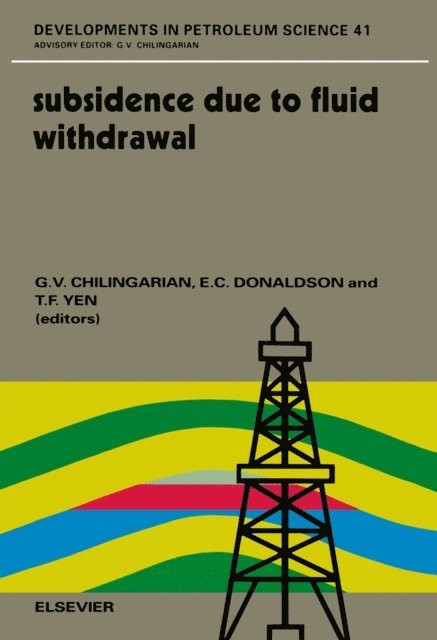
Subsidence of geologic surface structures due to withdrawal of fluids from aquifers and petroleum reservoirs is a phenomenon experienced throughout the world as the demand for water and hydrocarbons increases with increasing population growth. This book addresses the definition and theories of subsidence, and the influences of unique conditions on subsidence; it includes discussions of specific field cases and a basic mathematical model of reservoir compaction and accompanying loss of porosity and permeability. The book is designed as a reference for readers giving immediate access to the geological events that establish conditions for compaction, the mathematical theories of compaction and subsidence, and practical considerations of field case histories in various regions of the world.
E-bok
PDF, Engelska, 1985783 kr
Läs direkt efter köp
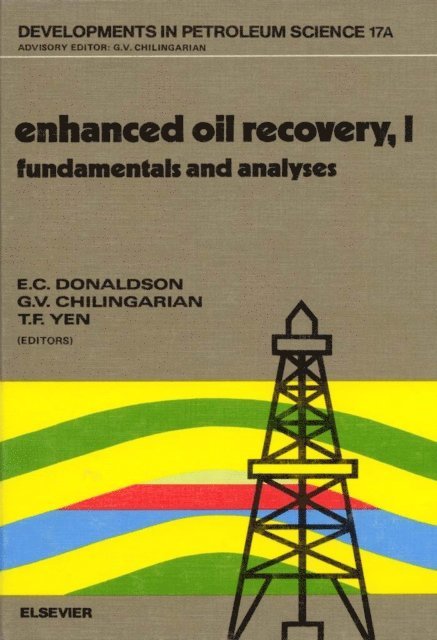
An in-depth study of the fundamental aspects of enhanced oil recovery (EOR), this book brings together detailed analyses of proven techniques. It begins with the current theories of the origin of oil and ends with a treatise on waterflooding which is the basis of the majority of EOR processes. Two and three-phase relative permeability relationships are discussed since they form the basis for fluid flow processes in porous media. The advent of EOR has increased the need for a better understanding of three-phase flow because this has become an integral part of carbon dioxide and steam injection, yet is an area of experimental study that has been seriously neglected. The book gives a complete review and theoretical analysis of two- and three-phase fluid flow, plus a basic introduction to single-well pressure transient testing which is essential to the evaluation of volume, intrinsic reservoir pressure, reservoir discontinuities, in situ permeability and many other data required for complete reservoir evaluation. A discussion of oilfield waters is followed closely by the chemical and physical properties of employing various current EOR techniques.The book will interest a wide range of readers. Teachers of petroleum engineering will find it a ready reference to basic requirements for implementation of various EOR processes. Petroleum engineering researchers can use it to review the current state-of-the-art of the basic premise of EOR and find in it the necessary background analyses for projection of future research. The field-oriented, practical petroleum engineer will discover it to be a reliable reference to criteria for pre-EOR reservoir analysis.
E-bok
PDF, Engelska, 1989696 kr
Läs direkt efter köp
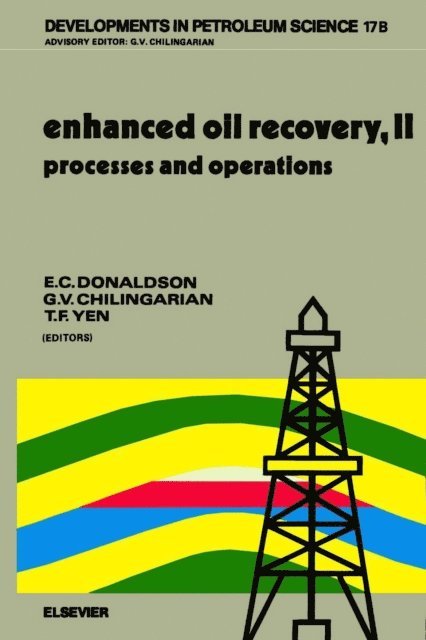
Written by foremost experts in the field, and formulated with attention to classroom use for advanced studies in reservoir characterization and processes, this book reviews and summarises state-of-the-art progress in the field of enhanced oil recovery (EOR). All of the available techniques: alkaline flooding; surfactant flooding; carbon dioxide flooding; steam flooding; in-situ combustion; gas injection; miscible flooding; microbial recovery; and polymer flooding are discussed and compared. Together with Volume I, it presents a complete text on enhanced recovery technology and, hence, is an almost indispensible reference text.This second volume compliments the first by presenting as complete an analysis as possible of current oilfield theory and technology, for accomplishment of maximum production of oil. Many different processes have been developed and field tested for enhancement of oil recovery. The emerging philosophy is that no single process is applicable to all petroleum reservoirs. Each must be treated as unique, and carefully evaluated for characteristics that are amenable to one or two of the proven technologies of EOR. This book will aid the engineer in field evaluation and selection of the best EOR technology for a given oilfield. Even the emerging technology of microbial applications to enhance oil recovery are reviewed and explained in terms that are easily understood by field engineers.The book is presented in a manner suitable for graduate studies. The only addition required of teachers is to supply example problems for class work. An appendix includes a reservoir mathematic model and program for general application that can also be used for teaching.
E-bok
PDF, Engelska, 1989783 kr
Läs direkt efter köp
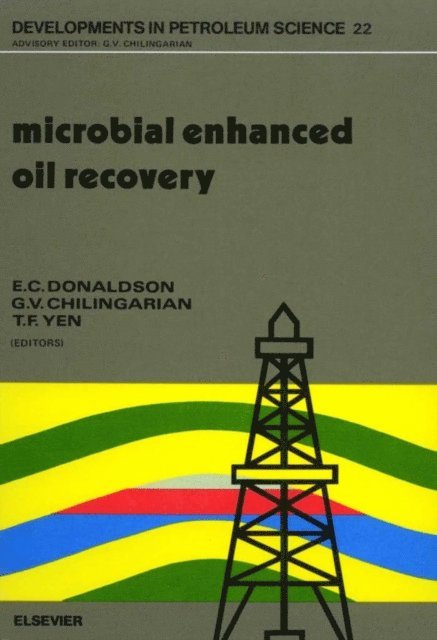
The use of microorganisms and their metabolic products to stimulate oil production is currently receiving renewed interest worldwide. This technique involves the injection of selected microorganisms into the reservoir and the subsequent stimulation and transportation of their in situ growth products, in order that their presence will aid in further reduction of residual oil left in the reservoir after secondary recovery is exhausted. Although unlikely to replace conventional microbial enhanced oil recovery, this unique process seems superior in many respects. Self-duplicating units, namely the bacteria cells, are injected into the reservoir and by their in situ multiplication they magnify beneficial effects.This new approach to enhancement of oil recovery was initiated in 1980 and the first results were published in the proceedings of two international conferences. This book evolved from these conferences, and was designed to encompass all current aspects of microbial enhanced oil recovery: the development of specific cultures, increase of the population for field application, various methods for field applications and the results, and the environmental concerns associated with this newly developed technology. It provides a comprehensive treatise of the subject, and is arranged to show the laboratory development of microbes suited to microbial enhanced oil recovery and the perpetuation of the special cultures in a petroleum reservoir. Thus, this book has specific usefulness in the laboratory, the oilfield and the classroom. Although not written as a text book, it can be used as a reference volume for graduate studies in enhanced oil recovery.
E-bok
PDF, Engelska, 1991783 kr
Läs direkt efter köp
This conference was instituted to examine field activities in Microbial Enhancement of Oil Recovery. The U.S. Department of Energy has sponsored several field projects and the details from some of these were presented, as well as a few from industry. The balance of the program was concerned with new developments in research.Today''s oil production technology leaves one third to one half of the original oil in place in the reservoir at abandonment of secondary recovery (waterflooding). This leaves a very large target for microbial enhanced oil recovery which was shown by the research papers of this conference to be capable of producing up to 50% of the residual oil. The field trials show that the normal projected oil production decline curve can be reversed, or leveled off by microbial enhancement of oil recovery.This conference has shown that a variety of applications are possible to correct oilfield problems as well as to enhance oil recovery. Among these is the suppression of hydrogen sulfide production which alone is a tremendous advance because of the large quantity of sour oil production. If hydrogen sulfide production can be curtailed it would increase the value of the produced oil, decrease it toxicity, and largely decrease it corrosiveness. All of these would be welcome both in the field and at the petroleum refinery where special precautions must be taken to process sour crude oil.Another very important discovery is the ability of certain bacteria to eliminate paraffin deposition around the producing well and in the tubulars. This is a welcome improvement for many producers who have considerable difficulty in controlling paraffin deposition.