Eddy Arnold - Böcker
Visar alla böcker från författaren Eddy Arnold. Handla med fri frakt och snabb leverans.
7 produkter
7 produkter
Del 9 - IUCr Series. International Tables for Crystallography
International Tables for Crystallography, Volume F
Crystallography of Biological Macromolecules
Inbunden, Engelska, 2012
3 483 kr
Skickas inom 7-10 vardagar
International Tables for Crystallography Volume F is an expert guide to macromolecular crystallography for the structural biologist. It was commissioned by the International Union of Crystallography in recognition of the extraordinary contributions that knowledge of macromolecular structure has made, and will make, to the analysis of biological systems, from enzyme catalysis to the workings of a whole cell. The volume covers all stages of a crystallographic analysis from the preparation of recombinant proteins, through crystallization, diffraction data collection, phase determination, structure validation and structure analysis. Although the volume is written for experienced scientists, it is recognized that the reader is more likely to be a biologist interested in structure than a classical crystallographer interested in biology. Thus, there are chapters on the fundamentals, history and current perspectives of macromolecular crystallography, as well as on useful programs and databases such as the Protein Data Bank. Each chapter is written by one or more internationally recognized experts.This second edition features 19 new articles and many articles from the first edition have been revised. The new articles cover topics such as standard definitions for quality indicators, expression of membrane proteins, protein engineering, high-throughput crystallography, radiation damage, merohedral twinning, low-resolution ab initio phasing, robotic crystal loading, whole-cell X-ray diffraction imaging and halogen interactions in biological crystal structures. There are also new articles on relevant software, including software for electron microscopy. These enhancements will ensure that Volume F continues to be a key reference for macromolecular crystallographers and structural biologists.More information on the series can be found at: http://it.iucr.org
156 kr
Skickas inom 5-8 vardagar
264 kr
Skickas inom 5-8 vardagar
221 kr
Skickas inom 3-6 vardagar
395 kr
Skickas inom 3-6 vardagar
1 094 kr
Skickas inom 10-15 vardagar
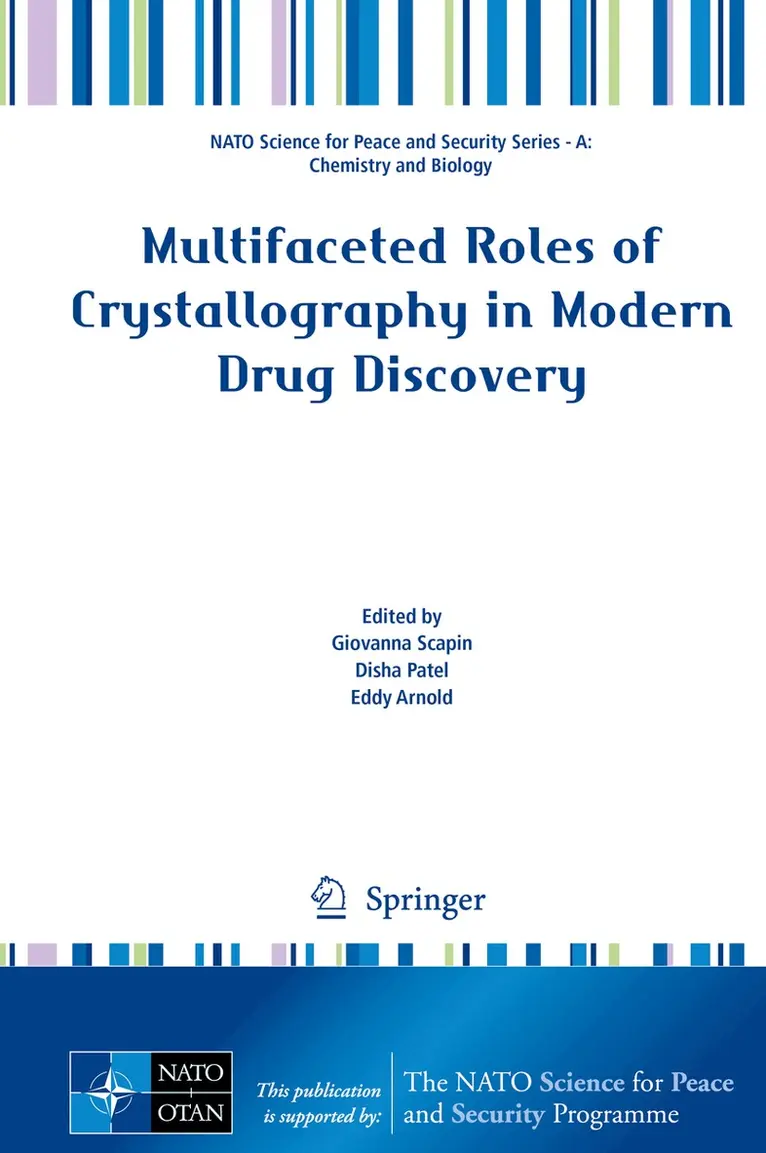
The present work offers a snapshot of the state-of-the-art of crystallographic, analytical, and computational methods used in modern drug design and development. Topics discussed include: drug design against complex systems (membrane proteins, cell surface receptors, epigenetic targets, and ribosomes); modulation of protein-protein interactions; the impact of small molecule structures in drug discovery and the application of concepts such as molecular geometry, conformation, and flexibility to drug design; methodologies for understanding and characterizing protein states and protein-ligand interactions during the drug design process; and monoclonal antibody therapies. These methods are illustrated through their application to problems of medical and biological significance, such as viral and bacterial infections, diabetes, autoimmune disease, and CNS diseases. As approaches to drug discovery have changed over time, so have the methodologies used to solve the varied, new, and difficult problems encountered in drug discovery. In recent years we have seen great progress in the fields of genetics, biology, chemistry, and medicine, but there are still many unmet medical needs, from bacterial infections to cancer to chronic maladies, that require novel, different, or better therapies. This work will be of interest to researchers and policy makers interested in the latest developments in drug design.
1 094 kr
Skickas inom 10-15 vardagar
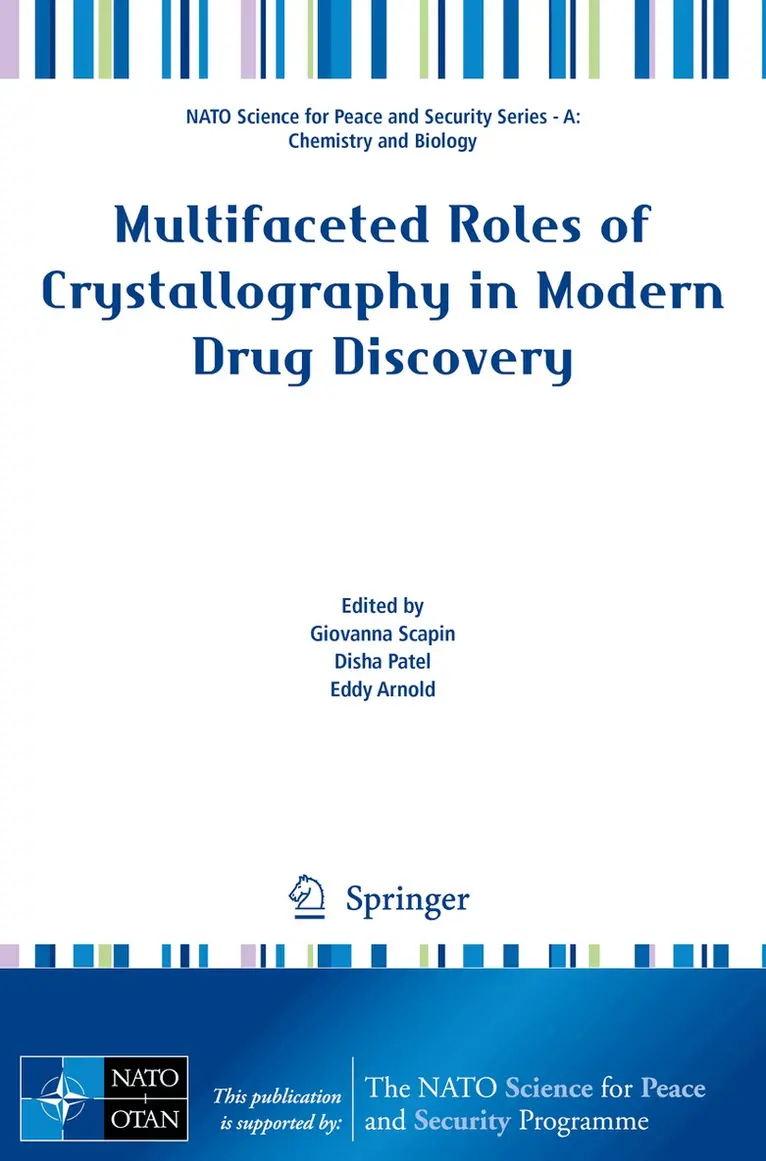
The present work offers a snapshot of the state-of-the-art of crystallographic, analytical, and computational methods used in modern drug design and development. Topics discussed include: drug design against complex systems (membrane proteins, cell surface receptors, epigenetic targets, and ribosomes); modulation of protein-protein interactions; the impact of small molecule structures in drug discovery and the application of concepts such as molecular geometry, conformation, and flexibility to drug design; methodologies for understanding and characterizing protein states and protein-ligand interactions during the drug design process; and monoclonal antibody therapies. These methods are illustrated through their application to problems of medical and biological significance, such as viral and bacterial infections, diabetes, autoimmune disease, and CNS diseases. As approaches to drug discovery have changed over time, so have the methodologies used to solve the varied, new, and difficult problems encountered in drug discovery. In recent years we have seen great progress in the fields of genetics, biology, chemistry, and medicine, but there are still many unmet medical needs, from bacterial infections to cancer to chronic maladies, that require novel, different, or better therapies. This work will be of interest to researchers and policy makers interested in the latest developments in drug design.