Eden Medina – författare
404 kr
Skickas inom 7-10 vardagar
409 kr
Läs direkt efter köp
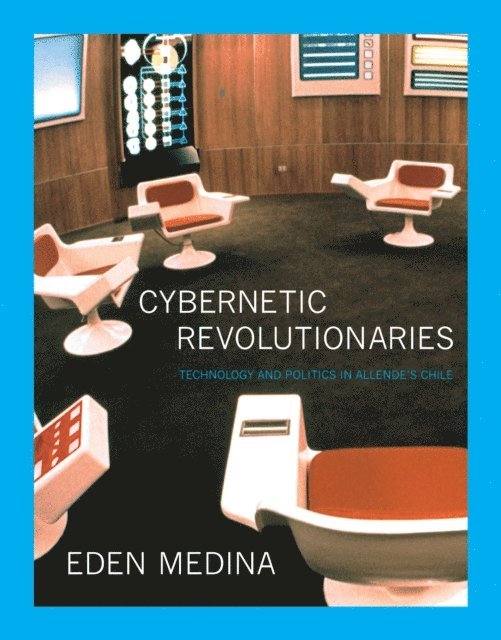
A historical study of Chile''s twin experiments with cybernetics and socialism, and what they tell us about the relationship of technology and politics.
In Cybernetic Revolutionaries, Eden Medina tells the history of two intersecting utopian visions, one political and one technological. The first was Chile''s experiment with peaceful socialist change under Salvador Allende; the second was the simultaneous attempt to build a computer system that would manage Chile''s economy. Neither vision was fully realized—Allende''s government ended with a violent military coup; the system, known as Project Cybersyn, was never completely implemented—but they hold lessons for today about the relationship between technology and politics.
Drawing on extensive archival material and interviews, Medina examines the cybernetic system envisioned by the Chilean government—which was to feature holistic system design, decentralized management, human-computer interaction, a national telex network, near real-time control of the growing industrial sector, and modeling the behavior of dynamic systems. She also describes, and documents with photographs, the network''s Star Trek-like operations room, which featured swivel chairs with armrest control panels, a wall of screens displaying data, and flashing red lights to indicate economic emergencies.
Studying project Cybersyn today helps us understand not only the technological ambitions of a government in the midst of political change but also the limitations of the Chilean revolution. This history further shows how human attempts to combine the political and the technological with the goal of creating a more just society can open new technological, intellectual, and political possibilities. Technologies, Medina writes, are historical texts; when we read them we are reading history.
474 kr
Läs direkt efter köp
Studies challenging the idea that technology and science flow only from global North to South.
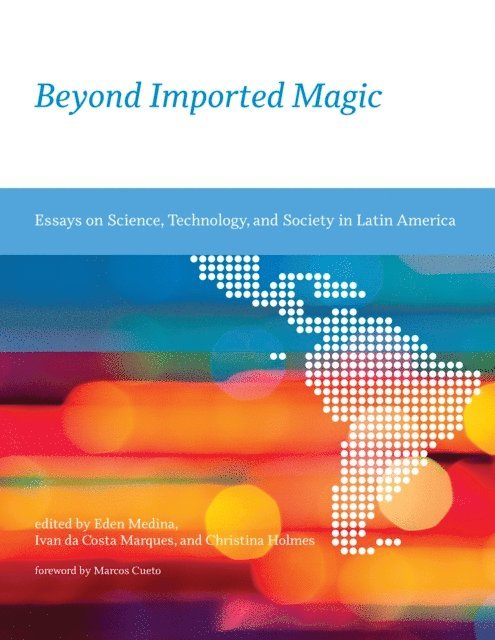
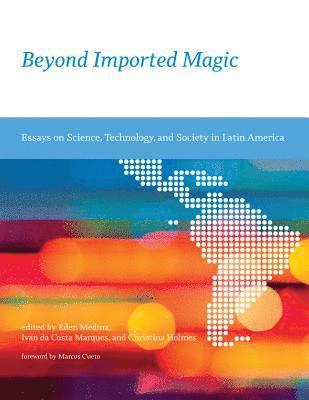
The essays in this volume study the creation, adaptation, and use of science and technology in Latin America. They challenge the view that scientific ideas and technology travel unchanged from the global North to the global South—the view of technology as “imported magic.” They describe not only alternate pathways for innovation, invention, and discovery but also how ideas and technologies circulate in Latin American contexts and transnationally. The contributors'' explorations of these issues, and their examination of specific Latin American experiences with science and technology, offer a broader, more nuanced understanding of how science, technology, politics, and power interact in the past and present.
The essays in this book use methods from history and the social sciences to investigate forms of local creation and use of technologies; the circulation of ideas, people, and artifacts in local and global networks; and hybrid technologies and forms of knowledge production. They address such topics as the work of female forensic geneticists in Colombia; the pioneering Argentinean use of fingerprinting technology in the late nineteenth century; the design, use, and meaning of the XO Laptops created and distributed by the One Laptop per Child Program; and the development of nuclear energy in Argentina, Mexico, and Chile.
ContributorsPedro Ignacio Alonso, Morgan G. Ames, Javiera Barandiarán, João Biehl, Anita Say Chan, Amy Cox Hall, Henrique Cukierman, Ana Delgado, Rafael Dias, Adriana Díaz del Castillo H., Mariano Fressoli, Jonathan Hagood, Christina Holmes, Matthieu Hubert, Noela Invernizzi, Michael Lemon, Ivan da Costa Marques, Gisela Mateos, Eden Medina, María Fernanda Olarte Sierra, Hugo Palmarola, Tania Pérez-Bustos, Julia Rodriguez, Israel Rodríguez-Giralt, Edna Suárez Díaz, Hernán Thomas, Manuel Tironi, Dominique Vinck
446 kr
Skickas inom 5-8 vardagar
366 kr
Tillfälligt slut