Edited by Julius Cha - Böcker
Visar alla böcker från författaren Edited by Julius Cha. Handla med fri frakt och snabb leverans.
2 produkter
2 produkter
756 kr
Skickas inom 7-10 vardagar
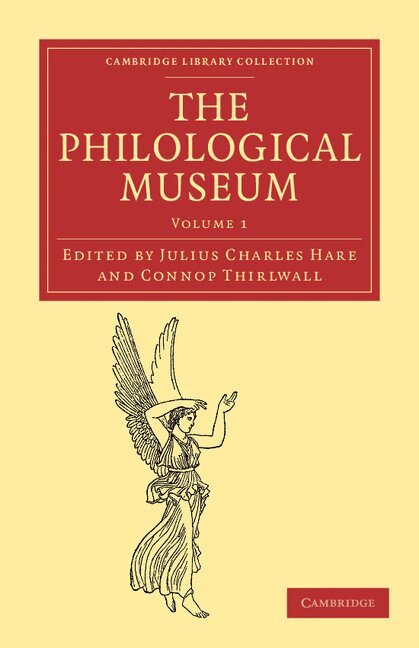
This short-lived classical journal (1831-3), edited by Julius Charles Hare (1795-1855) and Connop Newell Thirlwall (1797-1875), both fellows of Trinity College, Cambridge, disseminated the new comparative philology. Developed primarily in Germany - both editors were fluent German speakers - this approach critiqued biblical and classical texts and was associated with a liberal Christianity which brought the editors into conflict with the university's religious conservatism. Hare left Cambridge in 1832 to take up the family living in Herstmonceaux, Sussex, while Thirlwall was dismissed in 1834 for supporting the admission of dissenters. Both editors nevertheless continued with ecclesiastical careers, Thirlwall becoming bishop of St David's and Hare archdeacon of Lewes. This 1832 volume, containing the journal's first three issues, illuminates the tensions between classical scholarship and Anglicanism as well as the development of specialised journals in an age of general literary reviews.
756 kr
Skickas inom 7-10 vardagar
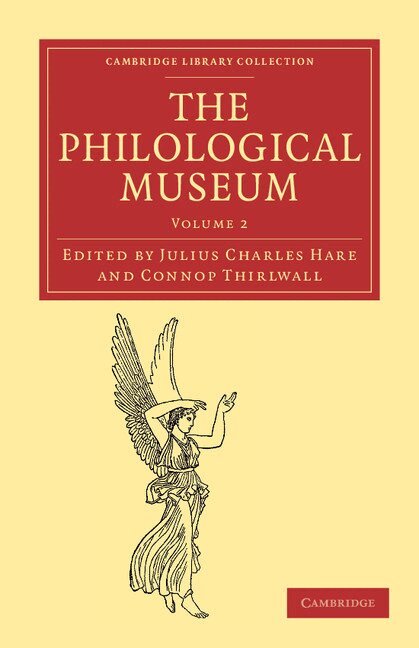
This short-lived classical journal (1831-3), edited by Julius Charles Hare (1795-1855) and Connop Newell Thirlwall (1797-1875), both fellows of Trinity College, Cambridge, disseminated the new comparative philology. Developed primarily in Germany - both editors were fluent German speakers - this approach critiqued biblical and classical texts and was associated with a liberal Christianity which brought the editors into conflict with the university's religious conservatism. Hare left Cambridge in 1832 to take up the family living in Herstmonceaux, Sussex, while Thirlwall was dismissed in 1834 for supporting the admission of dissenters. Both editors nevertheless continued with ecclesiastical careers, Thirlwall becoming bishop of St David's and Hare archdeacon of Lewes. This 1833 volume, containing the journal's last three issues, illuminates the tensions between classical scholarship and Anglicanism as well as the development of specialised journals in an age of general literary reviews.