Edmund Gussmann – författare
Visar alla böcker från författaren Edmund Gussmann. Handla med fri frakt och snabb leverans.
3 produkter
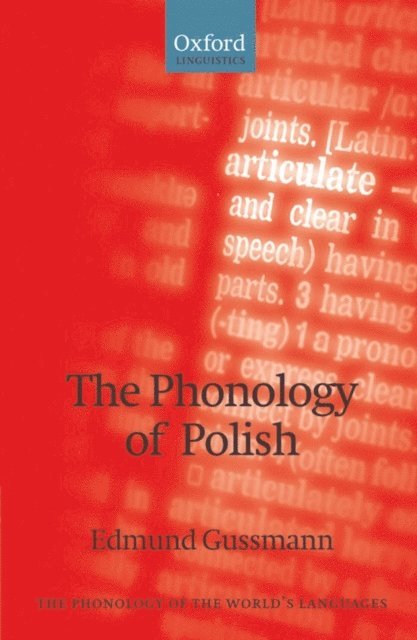
Phonology of Polish
E-bok, 2007
2492 kr
Lägg i varukorg
This book is the most complete phonology of contemporary Polish ever published. It is topic-oriented and presents the fundamental characteristics and problems associated with each topic, among them syllable structure, vowel-zero alternations, palatalizations, and other vowel and consonant changes. …
The Phonology of Polish
Inbunden, 2007
3907 kr
Lägg i varukorg
This book is the most complete phonology of contemporary Polish ever published. It is topic-oriented and presents the fundamental characteristics and problems associated with each topic, among them syllable structure, vowel-zero alternations, palatalizations, and other vowel and consonant changes. …
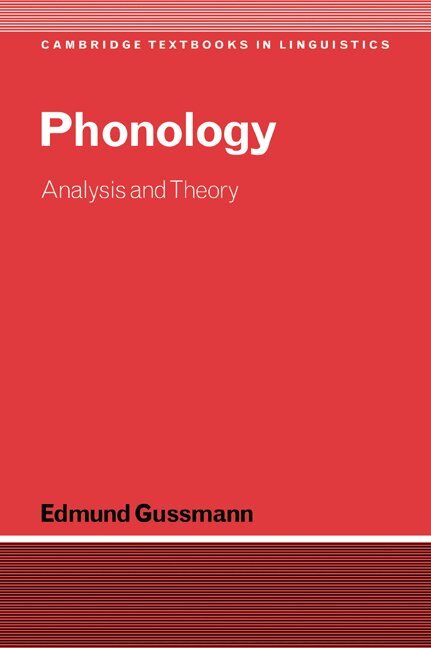
Phonology
Analysis and Theory
Av Edmund Gussmann, S. R. Anderson
Häftad, 2002
606 kr
Lägg i varukorg
Clear and concise, this textbook is an introduction to phonology for students which assumes no prior knowledge of this area of linguistics and provides an overall view of the field which can be covered within one year. The book does not confine itself to any specific theoretical approach and can …