Edmund Hillary – författare
Visar alla böcker från författaren Edmund Hillary. Handla med fri frakt och snabb leverans.
5 produkter
5 produkter
Häftad, Engelska, 2003
304 kr
Skickas inom 3-6 vardagar
Häftad, Engelska, 2000
260 kr
Skickas inom 3-6 vardagar
Häftad, 2003
183 kr
Skickas inom 10-15 vardagar
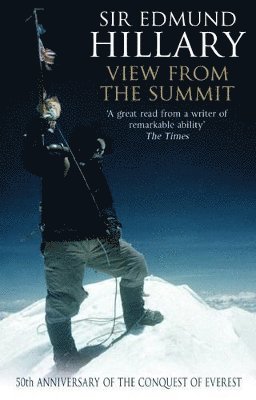
Everest: forbidding, exhilarating, unconquerable. All courageous attempts by man to reach its summit by heading up the northern side from Tibet had failed. The southern approach through Nepal had never before been climbed, due to its impossibly steep ice-covered slopes and the country's policies. But in 1951 Edmund Hillary joined an expedition to find a new route up Everest from the south, which led to a new chapter in mountaineering history. The climbers' determination, endurance and battle against the elements culminated with their famous climb in 1953 as they finally reached the summit of this formidable mountain. This is Hillary's own account of the treacherous and breathtaking journeys.
Inbunden, Engelska, 2017
2 627 kr
Skickas inom 10-15 vardagar
This book considers how and why the field of arts development in community health has come about, the characteristics of its practice and the challenges it poses for evaluation. It summarises what has been learnt from a number of case studies and other forms of research from the UK and elsewhere.
Häftad, Engelska, 2009
573 kr
Skickas inom 10-15 vardagar
Arts in community health is a distinct area of activity that is characterised by the use of participatory arts to promote health. Based on the latest international research, this book considers how and why arts in community health has come about, the characteristics of its practice and the challenges it poses for evaluation. The rapid growth of this field of work in the UK from the mid-1990s has begun to impact on policy in the arts funding system, on multi-sector partnerships for health service delivery, and in local authority cultural strategies, yet the reasons for its emergence and the nature and diversity of the practice itself have gone largely unaccounted for. It encompasses work in primary care, community health and public health. Arts in community health has not evolved simply as a result of the successful advocacy of an arts sector keen to demonstrate its relevance to health, but rather through the wider recognition of a phenomenological connection between engagement in cultural activity and well-being. The pioneering viewpoints in this book promote an holistic approach to arts and public health, focusing on the development of the person and not just the sick or dysfunctional part of that person. Alongside the therapeutic benefits to patients, the book also considers environmental improvements to support staff, and using the arts to produce more creative kinds of health information. This fully referenced guide compares and contrasts the arts in different cultures and healthcare systems, how well it works, why it works, and the factors that determine its success. The case studies examined prove shared creativity aids public health and simultaneously identifies and addresses the local and specific health needs in a community. 'In the last decade health has become a recurrent topic in discussion of the role of the arts in society, fuelled by a growing body of research into connections between culture and well-being. This pioneering practice of arts in community health - began in the UK in the late 1980s through sporadic pilot projects placing local arts development in health promotion and primary care contexts. It has since grown and expanded to embrace community health on a broad front hooking up with multi-agency initiatives to address the social determinants of health through partnership working.' Mike White, in the Introduction