Edmund Neill – författare
Visar alla böcker från författaren Edmund Neill. Handla med fri frakt och snabb leverans.
7 produkter
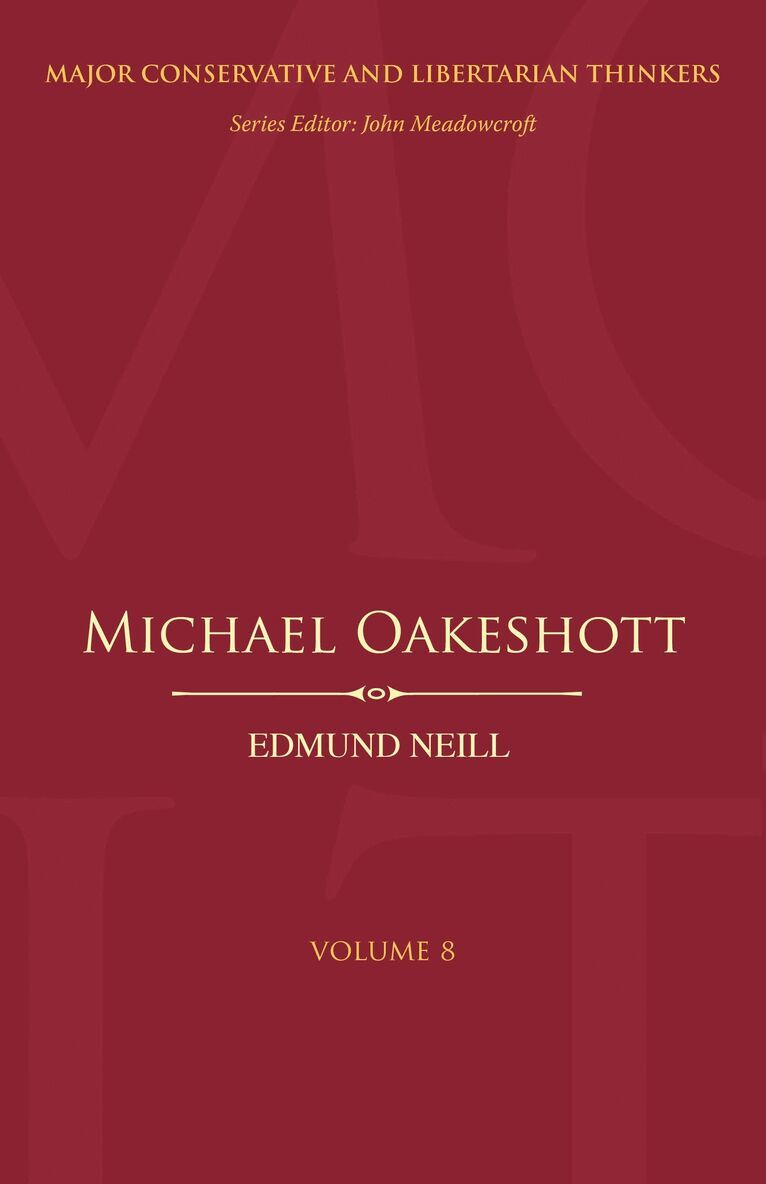
Michael Oakeshott
Av Edmund Neill, John Meadowcroft
Inbunden, 2010
2409 kr
Lägg i varukorg
British philosopher Michael Oakeshott is widely considered as one of the key conservative thinkers of the 20th century. After publishing many works on religion, he became mostly known for his works on political theory. This valuable volume by Edmund Neill sets out to Oakeshott's thought in an …
Michael Oakeshott
Av Edmund Neill, John Meadowcroft
Häftad, 2013
472 kr
Lägg i varukorg
British philosopher Michael Oakeshott is widely considered as one of a key conservative thinkers of the 20th century. After publishing many works on religion, he became mostly known for his works on political theory. This valuable volume by Edmund Neill sets out to Oakeshott's thought in an …
Michael Oakeshott
Av Edmund Neill
E-bok, 2009
534 kr
Lägg i varukorg
British philosopher Michael Oakeshott is widely considered as one of a key conservative thinkers of the 20th century. After publishing many works on religion, he became mostly known for his works on political theory. This valuable volume by Edmund Neill sets out to Oakeshott''s thought in an …
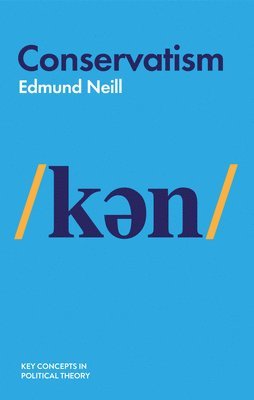
Conservatism
Av Edmund Neill
Inbunden, 2021
635 kr
Lägg i varukorg
Conservatism is often labelled as a ‘disposition’, ‘tradition’, or even a set of knee-jerk reactions, rather than an ideology, and its suspicion of grand theorising has lent itself to this characterization. In this book, leading political theorist Edmund Neill challenges this view.He argues that …
Conservatism
Av Edmund Neill
Häftad, 2021
216 kr
Lägg i varukorg
Conservatism is often labelled as a ‘disposition’, ‘tradition’, or even a set of knee-jerk reactions, rather than an ideology, and its suspicion of grand theorising has lent itself to this characterization. In this book, leading political theorist Edmund Neill challenges this view.He argues that …
Conservatism
Av Edmund Neill
E-bok, 2021
245 kr
Lägg i varukorg
Conservatism is often labelled as a ‘disposition’, ‘tradition’, or even a set of knee-jerk reactions, rather than an ideology, and its suspicion of grand theorising has lent itself to this characterization. In this book, leading political theorist Edmund Neill challenges this view. He argues that …
Michael Oakeshott
Av Edmund Neill
E-bok, 2013
515 kr
Lägg i varukorg
British philosopher Michael Oakeshott is widely considered as one of a key conservative thinkers of the 20th century. After publishing many works on religion, he became mostly known for his works on political theory. This valuable volume by Edmund Neill sets out to Oakeshott's thought in an …