Edna Andrews – författare
Visar alla böcker från författaren Edna Andrews. Handla med fri frakt och snabb leverans.
11 produkter
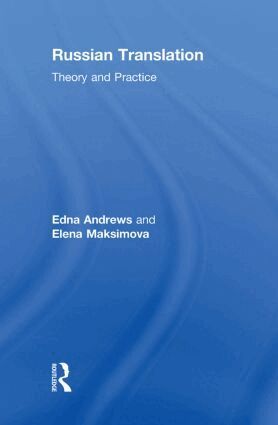
Russian Translation
Theory and Practice
Av Edna Andrews, Elena Maksimova
Inbunden, 2009
2586 kr
Lägg i varukorg
Russian Translation: Theory and Practice is a comprehensive practical course in translation for advanced undergraduate and postgraduate students of Russian. The course aims to provide intensive exposure with a view to mastering translation from Russian into English while carefully analyzing the …
Russian Translation
Theory and Practice
Av Edna Andrews, Elena Maksimova
Häftad, 2009
832 kr
Lägg i varukorg
Russian Translation: Theory and Practice is a comprehensive practical course in translation for advanced undergraduate and postgraduate students of Russian. The course aims to provide intensive exposure with a view to mastering translation from Russian into English while carefully analyzing the …
Markedness Theory
Av Edna Andrews
E-bok, 1990
2013 kr
Lägg i varukorg
Edna Andrews clarifies and extends the work of Roman Jakobson to develop a theory of invariants in language by distinguishing between general and contextual meaning in morphology and semantics. Markedness theory, as Jakobson conceived it, is a qualitative theory of oppositional binary relations. …
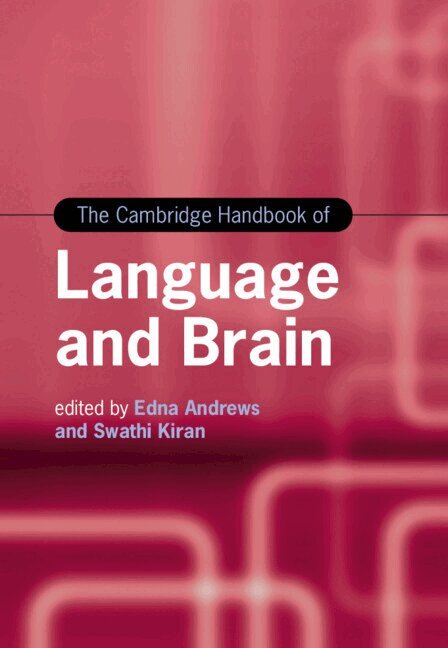
The Cambridge Handbook of Language and Brain
Inbunden, 2025
1994 kr
Lägg i varukorg
The topic of language and brain is a large and significant area of research and study, and this Handbook provides a state-of-the-art survey of the field. Bringing together contributions from an interdisciplinary team of internationally-renowned scholars, it focuses on important theoretical …
Neuroscience and Multilingualism
Av Edna Andrews
Inbunden, 2014
1805 kr
Lägg i varukorg
How are languages represented in the human brain? Ideas from neuroscience have increasingly been applied to the study of language, exploring the neural processes involved in acquisition, maintenance and loss of language and languages, and the interaction between languages in bi- and multilingual …
Neuroscience and Multilingualism
Av Edna Andrews
Häftad, 2019
542 kr
Lägg i varukorg
How are languages represented in the human brain? Ideas from neuroscience have increasingly been applied to the study of language, exploring the neural processes involved in acquisition, maintenance and loss of language and languages, and the interaction between languages in bi- and multilingual …
Russian Translation
Theory and Practice
Av Elena Maksimova, Edna Andrews
E-bok, 2009
981 kr
Lägg i varukorg
Russian Translation: Theory and Practice is a comprehensive practical course in translation for advanced undergraduate and postgraduate students of Russian. The course aims to provide intensive exposure with a view to mastering translation from Russian into English while carefully analyzing the …
Russian Translation
Theory and Practice
Av Elena Maksimova, Edna Andrews
E-bok, 2009
981 kr
Lägg i varukorg
Russian Translation: Theory and Practice is a comprehensive practical course in translation for advanced undergraduate and postgraduate students of Russian. The course aims to provide intensive exposure with a view to mastering translation from Russian into English while carefully analyzing the …
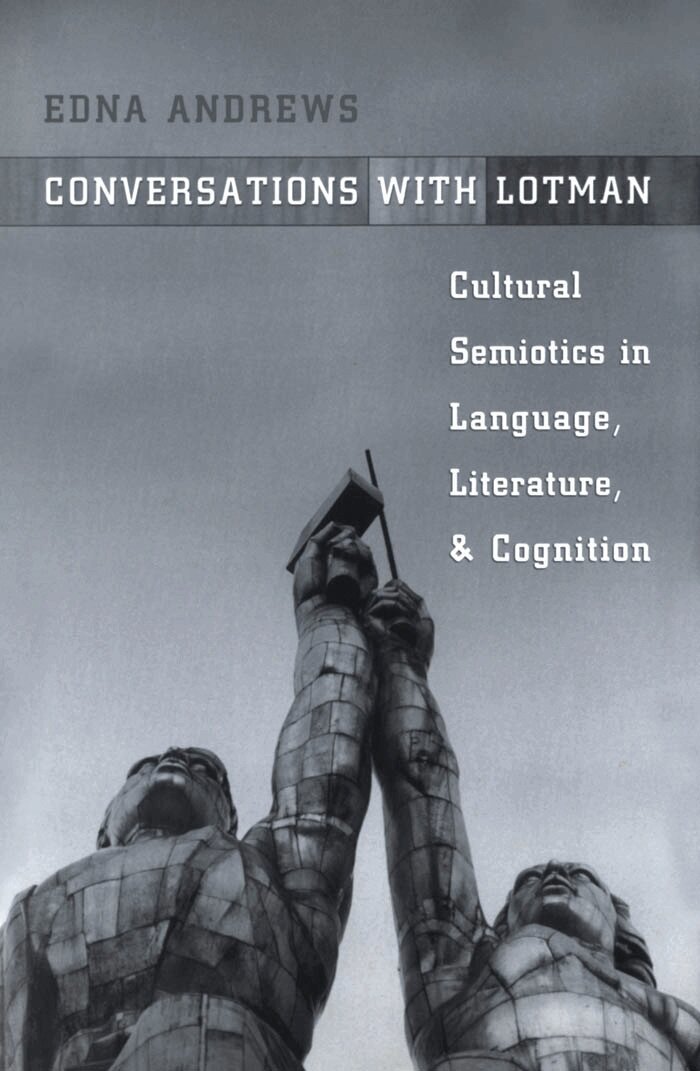
Conversations with Lotman
The Implications of Cultural Semiotics in Language, Literature, and Cognition
Av Edna Andrews
E-bok, 2003
1293 kr
Lägg i varukorg
Conversations with Lotman is a critical analysis of Russian cultural historian and theoretician Jurij Lotman's central contributions to the study of semiotics, including his writings on the "semiotics of culture" and the "semiotics of artistic space," and his efforts to model the production of …