Edouard Kurstak - Böcker
Visar alla böcker från författaren Edouard Kurstak. Handla med fri frakt och snabb leverans.
14 produkter
14 produkter
1 625 kr
Skickas inom 10-15 vardagar
Viral Vaccines Joseph L. Melnick As with history in general, the history of vaccines needs to be reexamined and updated. My task is to look back to see what has been successful and to look forward to see what remains to be accomplished in the prevention of viral diseases by vaccines. Also, I shall refer to the pertinent material discussed at two recent conferences of the Institute of Medicine, National Academy of Sciences, on virus vaccines under development and their target populations in the United States (1985b) and in developing countries (1986). These reports, plus a third on Vaccine Supply and Innovation (1985a), should be required reading for all those in both the public and the private sector who have a responsibility or interest in vaccines for the prevention of human disease. It has been through the development and use of vaccines that many viral diseases have been brought under control. The vaccines consist either of infectious living attenu ated viruses or of noninfectious killed viruses or subviral antigens. When we look at the record, it is the live vaccines that have given the great successes in controlling diseases around the world. Examples are smallpox, yellow fever, poliomyelitis, measles, mumps, and rubella.
2 164 kr
Skickas inom 10-15 vardagar
Virus Variability and Impact on Epidemiology and Control of Diseases E. Kurstak and A. Hossain I. INTRODUCTION An important number of virus infections and their epidemic developments demonstrate that ineffec tiveness of prevention measures is often due to the mutation rate and variability of viruses (Kurstak et al., 1984, 1987). The new human immunodeficiency retroviruses and old influenza viruses are only one among several examples of virus variation that prevent, or make very difficult. the production of reliable vaccines. It could be stated that the most important factor limiting the effectiveness of vaccines against virus infections is apparently virus variation. Not much is, how ever, known about the factors influencing and responsible for the dramatically diverse patterns of virus variability. II. MUTATION RATE AND VARIABILITY OF HUMAN AND ANIMAL VIRUSES Mutation is undoubtedly the primary source of variation, and several reports in the literature suggest that extreme variability of some viruses may be a consequence of an unusually high mutation rate (Holland et al., 1982; Domingo et al., 1985; Smith and Inglis, 1987). The mutation rate of a virus is defined as the probability that during a single replication of the virus genome a particular nucleotide position is altered through substitution, deletion, insertion. or recombination. Different techniques have been utilized to measure virus mutation rates, and these have been noted in the extent of application to different viruses.
2 380 kr
Skickas inom 10-15 vardagar
Volume 3 is devoted to the latest diagnostic technology for virus diseases, particularly molecular methodologies.
2 380 kr
Skickas inom 10-15 vardagar
The recent developments in modern vaccinology are mainly based on: (i) cloning of microbial genes into recombinant vectors containing genetic information for expression of desired neutralizing immunogens; (ii) alternatives of attenuated vectors with deleted genes permitting the insertion of several foreign genes expressing antigens exposed to the host immune system during the abortive replication of such vectors; (iii) combined vaccines with the aim to protect against many diseases with a limited number of administrations; (iv) evidence demonstrating the ability of animals to respond serologically to DNA injections considered as a potential method of vaccination; (v) the possibility to manipulate the immune system with new and improved immunomodulators enhancing the immune response; and (vi) new microcarrier systems for particular immunogens or immunomodulators delivery, either in a single dose or sustained release, and presentation to the immune system for a relevant response. New vaccines being developed are mainly based on viral, bacterial or other vectors modified with genetic engineering technology, to possess and express desired antigens for vaccination against single or multiple infections. Existing combined vaccines like diphtheria, tetanus, pertussis (DTP) are also experimented with new additional components like recombinant hepatitis B virus surface antigen, inactivated poliovirus, and Haemophilus inJluenzae type b immunogens, in order to produce multivalent vaccines. Such types of vaccines permitting the reduction of multiple medical visits is of particular interest to pediatric immuni zation programs, and would benefit especially the developing countries assuring better vaccine compliance with immunization schedules.
3 796 kr
Skickas inom 10-15 vardagar
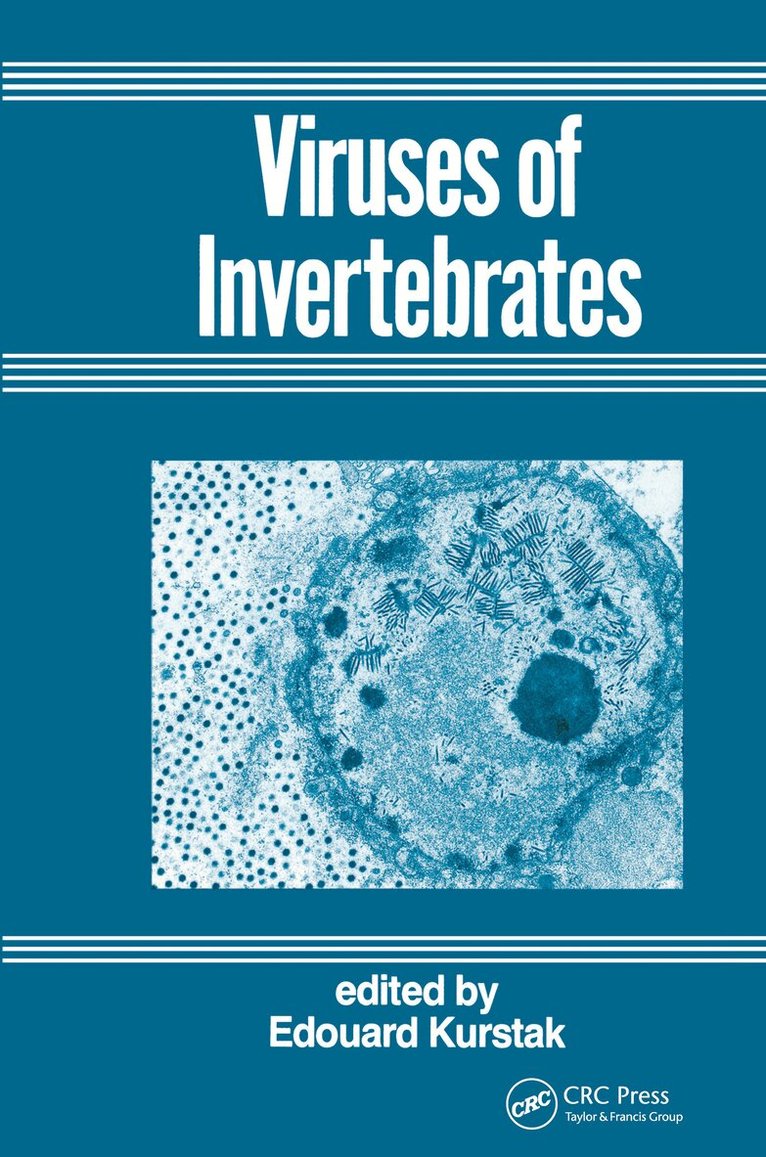
The 300 known viruses that affect invertebrates, mostly insects, are important for research and for pest control. Twelve studies review the advances in the knowledge and use of these viruses made possible by biotechnological processes. Special attention is given to the baculoviridae family, but othe
1 096 kr
Skickas inom 10-15 vardagar
In spite of progress in biomedical research, we know little about the causes, prevention, and treatment of the numerous mental and neurological disorders that afflict up to 15% of all individuals. In the last decade, great advances have been made in the physiopathology of mental and neurological disorders, leading to at least a partial control of Parkinson's disease, epilepsy, certain psychoses, and anxiety syndromes. Despite the fact that an underlying specific neurotransmitter deficiency has been demonstrated in Alzheimer's and Parkinson's diseases, the immune dysfunction and viral hypotheses continue to be attractive for investigators dealing with these degenerative diseases of the aging brain, which afflict 10% of senior citizens. A retrospective epidemiologic study suggests that the encephalitis lethargica and parkinsonism were almost certainly caused by the 1918 influenza virus pandemics. It must be stressed that the etiopathogenesis of many mental disorders is not known, and this ignorance has led to several untenable neurophysiological and biochemical hypotheses. Epidemiologic investigations show a high prevalence of functional psychoses and organic mental disorders. Although many of them are conceptualized as biopsychosocial disorders, recent data indicate that the biological component appears more and more as a major etiologic factor. Among the various biological hypotheses, the viral and im munologic concept has become a significant one. In view of recent discoveries in virology and immunity, it becomes clear that viral and immunologic hypotheses should be inves tigated more systematically concerning the mechanisms of numerous mental and neu rological disorders.
552 kr
Skickas inom 10-15 vardagar
The main purpose of the volume Psychiatry and Biological Factors is to provide a comprehensive, state-of-the-art overview of the current research linked essentially to virus infections, immunity functions, and mental diseases.
2 380 kr
Skickas inom 10-15 vardagar
Volume 3 is devoted to the latest diagnostic technology for virus diseases, particularly molecular methodologies.
1 625 kr
Skickas inom 10-15 vardagar
Viral Vaccines Joseph L. Melnick As with history in general, the history of vaccines needs to be reexamined and updated. My task is to look back to see what has been successful and to look forward to see what remains to be accomplished in the prevention of viral diseases by vaccines. Also, I shall refer to the pertinent material discussed at two recent conferences of the Institute of Medicine, National Academy of Sciences, on virus vaccines under development and their target populations in the United States (1985b) and in developing countries (1986). These reports, plus a third on Vaccine Supply and Innovation (1985a), should be required reading for all those in both the public and the private sector who have a responsibility or interest in vaccines for the prevention of human disease. It has been through the development and use of vaccines that many viral diseases have been brought under control. The vaccines consist either of infectious living attenu ated viruses or of noninfectious killed viruses or subviral antigens. When we look at the record, it is the live vaccines that have given the great successes in controlling diseases around the world. Examples are smallpox, yellow fever, poliomyelitis, measles, mumps, and rubella.
2 164 kr
Skickas inom 10-15 vardagar
Virus Variability and Impact on Epidemiology and Control of Diseases E. Kurstak and A. Hossain I. INTRODUCTION An important number of virus infections and their epidemic developments demonstrate that ineffec tiveness of prevention measures is often due to the mutation rate and variability of viruses (Kurstak et al., 1984, 1987). The new human immunodeficiency retroviruses and old influenza viruses are only one among several examples of virus variation that prevent, or make very difficult. the production of reliable vaccines. It could be stated that the most important factor limiting the effectiveness of vaccines against virus infections is apparently virus variation. Not much is, how ever, known about the factors influencing and responsible for the dramatically diverse patterns of virus variability. II. MUTATION RATE AND VARIABILITY OF HUMAN AND ANIMAL VIRUSES Mutation is undoubtedly the primary source of variation, and several reports in the literature suggest that extreme variability of some viruses may be a consequence of an unusually high mutation rate (Holland et al., 1982; Domingo et al., 1985; Smith and Inglis, 1987). The mutation rate of a virus is defined as the probability that during a single replication of the virus genome a particular nucleotide position is altered through substitution, deletion, insertion. or recombination. Different techniques have been utilized to measure virus mutation rates, and these have been noted in the extent of application to different viruses.
2 380 kr
Skickas inom 10-15 vardagar
The recent developments in modern vaccinology are mainly based on: (i) cloning of microbial genes into recombinant vectors containing genetic information for expression of desired neutralizing immunogens; (ii) alternatives of attenuated vectors with deleted genes permitting the insertion of several foreign genes expressing antigens exposed to the host immune system during the abortive replication of such vectors; (iii) combined vaccines with the aim to protect against many diseases with a limited number of administrations; (iv) evidence demonstrating the ability of animals to respond serologically to DNA injections considered as a potential method of vaccination; (v) the possibility to manipulate the immune system with new and improved immunomodulators enhancing the immune response; and (vi) new microcarrier systems for particular immunogens or immunomodulators delivery, either in a single dose or sustained release, and presentation to the immune system for a relevant response. New vaccines being developed are mainly based on viral, bacterial or other vectors modified with genetic engineering technology, to possess and express desired antigens for vaccination against single or multiple infections. Existing combined vaccines like diphtheria, tetanus, pertussis (DTP) are also experimented with new additional components like recombinant hepatitis B virus surface antigen, inactivated poliovirus, and Haemophilus inJluenzae type b immunogens, in order to produce multivalent vaccines. Such types of vaccines permitting the reduction of multiple medical visits is of particular interest to pediatric immuni zation programs, and would benefit especially the developing countries assuring better vaccine compliance with immunization schedules.
552 kr
Skickas inom 10-15 vardagar
Elimination of measles and poliomyelitis diseases from the globe is a priority goal of the World Health Organization. In this volume, researchers provide a state-of-the-art treatment of these two important viral diseases. The book offers a wide range of new findings and references on the latest advances regarding measles and poliomyelitis: global and molecular genetic epidemiology, characteristics and diseases surveillance; available vaccines and research to produce safer and more potent biotechnology vaccines; immunization programmes; immunity to infections and immunogenicity of vaccines; virus genome organization and antigenic structures related to vaccine characteristics; and the need of global co-operation, using all available resources, vaccines and strategies to achieve the global control of the diseases. The volume addresses mainly all public health professionals concerned with measles and poliomyelities control.
Invertebrate and Fish Tissue Culture
Proceedings of the Seventh International Conference on Invertebrate and Fish Tissue Culture, Japan, 1987
Häftad, Engelska, 2011
1 096 kr
Skickas inom 10-15 vardagar
The development of invertebrate and fish tissue cultures, the characterization and application of new cell lines for the evaluation of physiological and endocrinological cell parameters, cell differentiation, gene expression and pathological and microbiological problems are treated in detail. New techniques for the production of specific proteins in vitro are described. Highlights derive from results of studies on the molecular mechanisms of gene regulation using DNA mediated gene transfer techniques, on the influence of ecdysterone on the differentiation of embryonic cells, and on metabolic processes of cells in culture leading to the identification of functions for individual ribosomal proteins. Data on the establishment of new cell lines, their simplified culture media, and on the special use of cell cultures for the evaluation of the cytotoxicity, accumulation, and metabolization of insecticides are discussed.
1 096 kr
Skickas inom 10-15 vardagar
Attention to viral infections and pathology previously focussed on diseases of economically important fish. In recent years, however, much new information on molecular virology and oncogenicity derives from viruses occurring in amphibians. New insights into the field of zoonosis were gained by studies of lower vertebrates serving as intermediate hosts in multiple human infections. Certain viruses, e.g. the influenza virus or calicivirus, seem capable of bridging species lines and even the land - sea interface. Global developments in aquaculture are indicated in influenza pandemics. These proceedings present research findings on viruses of fish, amphibians and reptiles, including defence mechanisms, zoonoses, evolutionary considerations and diagnostic approaches.