Edris Alam – författare
Visar alla böcker från författaren . Handla med fri frakt och snabb leverans.
2 produkter
2 produkter
Inbunden, Engelska, 2026
1 862 kr
Kommande
This book highlights the urgent need for integrated, multi-sectoral approaches to disaster and crisis management in the MENA region, emphasizing the importance of policy reforms, regional collaboration, and investment in innovative technologies to enhance resilience in one of the world's most hazard-prone areas. The Middle East and North Africa (MENA) region faces a complex interplay of hazards, disasters, crises, and risks driven by both natural and human-induced factors. The region is highly vulnerable to earthquakes, droughts, sandstorms, and extreme heat, compounded by the impacts of climate change, which intensify desertification, water scarcity, and coastal flooding. Additionally, rapid urbanization, population growth, and weak infrastructure exacerbate disaster risks, leaving communities increasingly exposed to environmental and socio-political shocks. Beyond natural hazards, the MENA region grapples with recurrent crises stemming from wars, armed conflicts, political instability, terrorism, and large-scale displacement of populations. These crises not only strain national and regional emergency response mechanisms but also create cascading risks, including economic downturns, food insecurity, and public health emergencies. The ongoing conflicts in Syria, Yemen, and Libya, along with regional geopolitical tensions, further complicate disaster preparedness and recovery efforts, hindering long-term resilience. The governance of disaster risk reduction (DRR) in MENA is challenged by fragmented policies, limited cross-border cooperation, and the need for stronger institutional frameworks. While advancements in technology, such as AI-driven early warning systems and remote sensing, offer promising solutions, the region still requires robust policies, community engagement, and sustainable development strategies to mitigate risks effectively.
Inbunden, Engelska, 2026
2 503 kr
Kommande
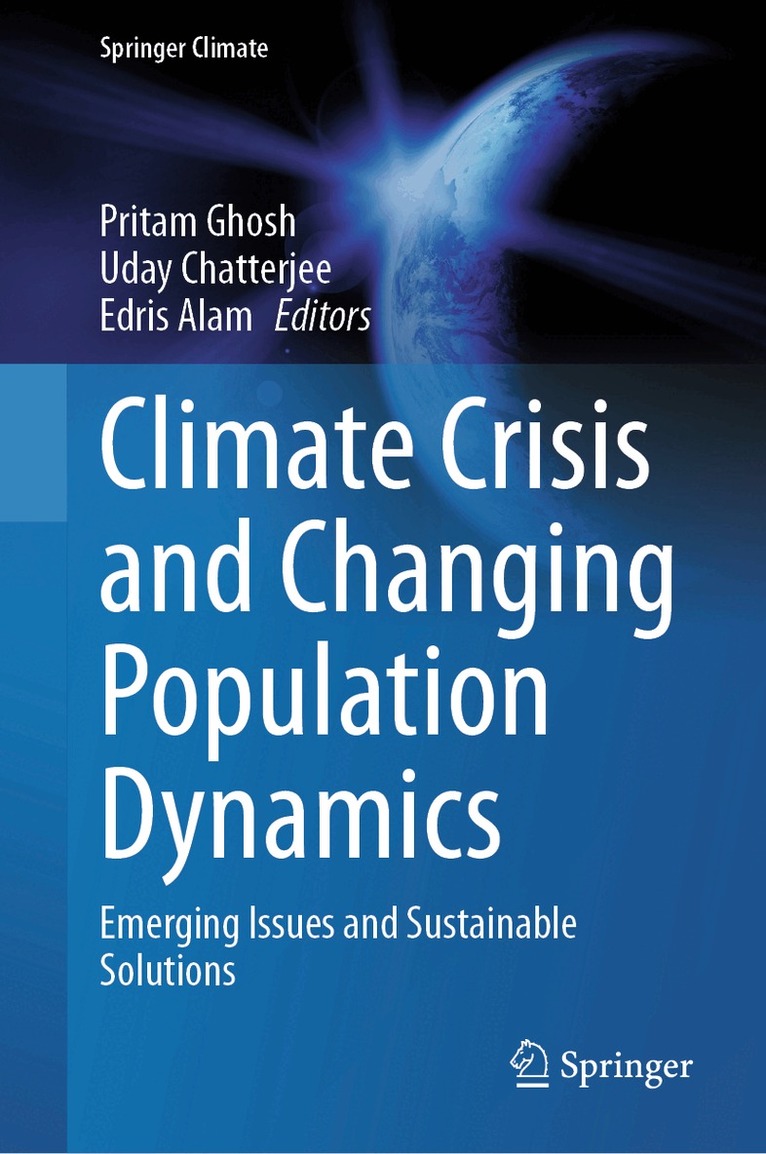
This book reveals the environmental, economic, and social drivers of climate-induced migration, the health impacts of extreme weather events, and the complex interplay between malnutrition, disease diffusion, and mortality in vulnerable populations. By collating cutting-edge research and case studies from leading experts, this edited book offers an in-depth exploration and holistic view of the interconnectedness of climate change and a shift of global population dynamics. By integrating perspectives from climate science, public health, sociology, and migration studies, the book delivers a holistic understanding of the ways in which climatic extremes such as heatwaves, floods, droughts, rise of temperature, sea level rise, and coastline change are reshaping human lives and communities, migration patterns, human displacement, exacerbating health vulnerabilities, affecting morbidity and mortality rates, and challenging public health systems globally. Section I delves into the nexus of climate change and population dynamics, providing ahistorical and contemporary overview of how climatic extremes impact human populations. Section II focuses on migration patterns, featuring case studies and analyses of the environmental, economic, and social drivers behind climate-induced displacement. Section III addresses the critical health impacts of climatic extremes, including the spread of diseases, mental health implications, and the strain on healthcare systems. Section IV presents a statistical and case study analysis of mortality rates in the context of extreme weather events, droughts, and food security crises. Finally, Section V explores policy implications and future directions, offering predictive models and innovative policies aimed at mitigating health impacts and achieving climate resilience in line with sustainable development goals. By providing evidence-based research and policy recommendations, this book aims to inform strategies that enhance resilience and adaptive capacity in vulnerable communities. This book is an invaluable resource for academics, policymakers, and practitioners dedicated to building a more resilient and equitable world.