Eduard Braun – författare
Visar alla böcker från författaren . Handla med fri frakt och snabb leverans.
5 produkter
5 produkter
Inbunden, Engelska, 2026
2 477 kr
Skickas inom 10-15 vardagar
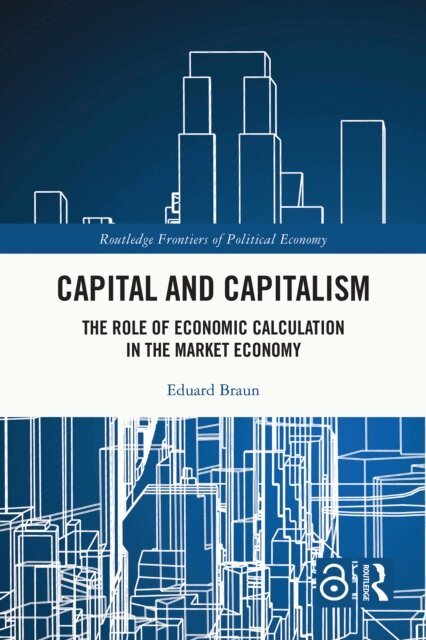
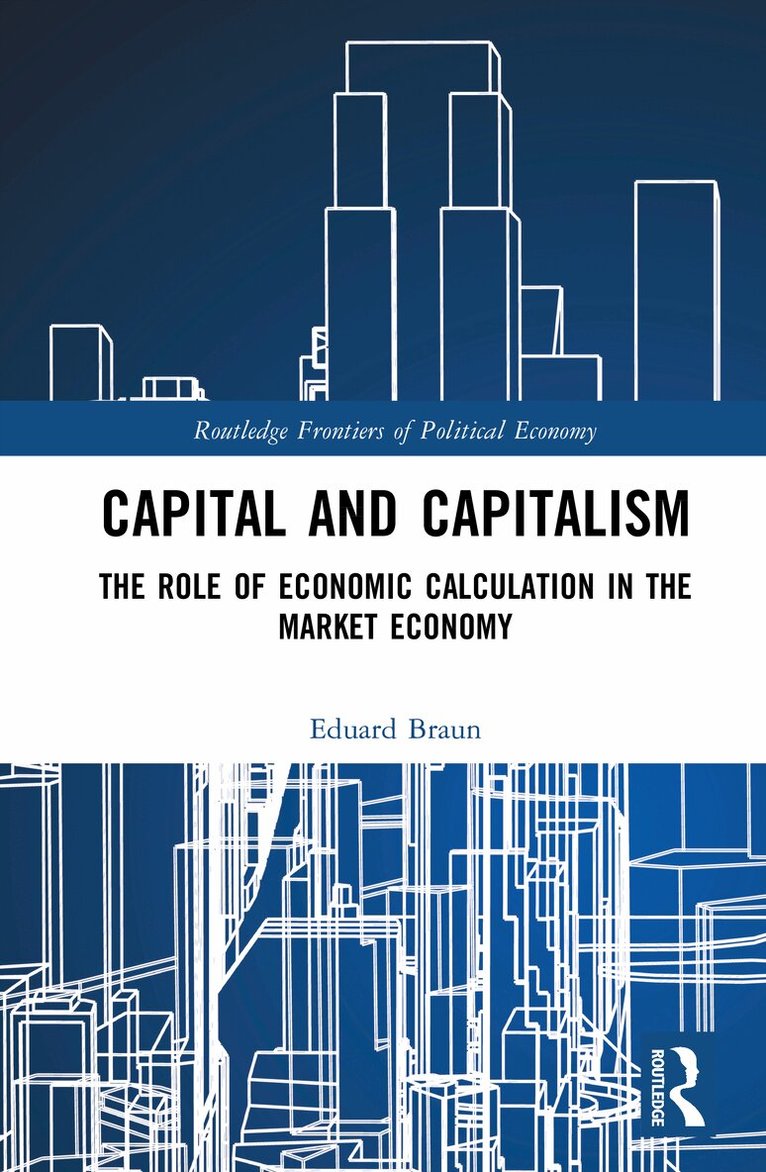
Capitalism is an economic system where almost all production and trade activities are organised by enterprises whose purpose is to maximise the return on the capital that has been invested in them. Economists, however, have almost universally defined capital in a way that makes it impossible for them to analyse important practical and societal aspects of the economic calculations of capital-based enterprises in capitalism.In contrast, this book develops a theory of capital that is, at the same time, a theory of capitalism. Based on the definition of capital provided by the Historical and Institutional Schools, and later developed by Carl Menger and Ludwig von Mises, the theory of capital in this book takes account of the term “capital” as understood and used in actual business life. A theory of capital that is successful in explaining the rationale of economic calculations of profit-oriented enterprises in the market economy will necessarily also explain how the societal production process is organised in capitalism. Starting from the positive analysis of capital and capitalism, the book discusses the fair value and shareholder value revolutions of recent decades. These approaches, sometimes summarised under the label of “value-orientation,” have introduced theoretical neoclassical equilibrium concepts into the practice of enterprises in capitalism. The book argues that this has led to paradoxical and unsustainable results. It does not make sense to reform the institutions of economic calculation on the basis of a theory that does not, in any significant way, deal with these institutions.The book will be of great interest to readers in the areas of Austrian economics, institutional economics, history of economic thought, varieties of capitalism, and financial accounting.The Open Access version of this book, available at http://www.taylorfrancis.com, has been made available under a Creative Commons Attribution (CC-BY) 4.0 International license.

E-bok
PDF, Engelska, 202627 kr
Läs direkt efter köp
Capitalism is an economic system where almost all production and trade activities are organised by enterprises whose purpose is to maximise the return on the capital that has been invested in them. Economists, however, have almost universally defined capital in a way that makes it impossible for them to analyse important practical and societal aspects of the economic calculations of capital-based enterprises in capitalism.In contrast, this book develops a theory of capital that is, at the same time, a theory of capitalism. Based on the definition of capital provided by the Historical and Institutional Schools, and later developed by Carl Menger and Ludwig von Mises, the theory of capital in this book takes account of the term "e;capital"e; as understood and used in actual business life. A theory of capital that is successful in explaining the rationale of economic calculations of profit-oriented enterprises in the market economy will necessarily also explain how the societal production process is organised in capitalism. Starting from the positive analysis of capital and capitalism, the book discusses the fair value and shareholder value revolutions of recent decades. These approaches, sometimes summarised under the label of "e;value-orientation,"e; have introduced theoretical neoclassical equilibrium concepts into the practice of enterprises in capitalism. The book argues that this has led to paradoxical and unsustainable results. It does not make sense to reform the institutions of economic calculation on the basis of a theory that does not, in any significant way, deal with these institutions.The book will be of great interest to readers in the areas of Austrian economics, institutional economics, history of economic thought, varieties of capitalism, and financial accounting.
E-bok
Engelska, 20262 684 kr
Läs direkt efter köp
Capitalism is an economic system where almost all production and trade activities are organised by enterprises whose purpose is to maximise the return on the capital that has been invested in them. Economists, however, have almost universally defined capital in a way that makes it impossible for them to analyse important practical and societal aspects of the economic calculations of capital-based enterprises in capitalism.In contrast, this book develops a theory of capital that is, at the same time, a theory of capitalism. Based on the definition of capital provided by the Historical and Institutional Schools, and later developed by Carl Menger and Ludwig von Mises, the theory of capital in this book takes account of the term "e;capital"e; as understood and used in actual business life. A theory of capital that is successful in explaining the rationale of economic calculations of profit-oriented enterprises in the market economy will necessarily also explain how the societal production process is organised in capitalism. Starting from the positive analysis of capital and capitalism, the book discusses the fair value and shareholder value revolutions of recent decades. These approaches, sometimes summarised under the label of "e;value-orientation,"e; have introduced theoretical neoclassical equilibrium concepts into the practice of enterprises in capitalism. The book argues that this has led to paradoxical and unsustainable results. It does not make sense to reform the institutions of economic calculation on the basis of a theory that does not, in any significant way, deal with these institutions.The book will be of great interest to readers in the areas of Austrian economics, institutional economics, history of economic thought, varieties of capitalism, and financial accounting.
Häftad, Tyska, 2022
136 kr
Skickas inom 3-6 vardagar
E-bok
Tyska, 202297 kr
Läs direkt efter köp
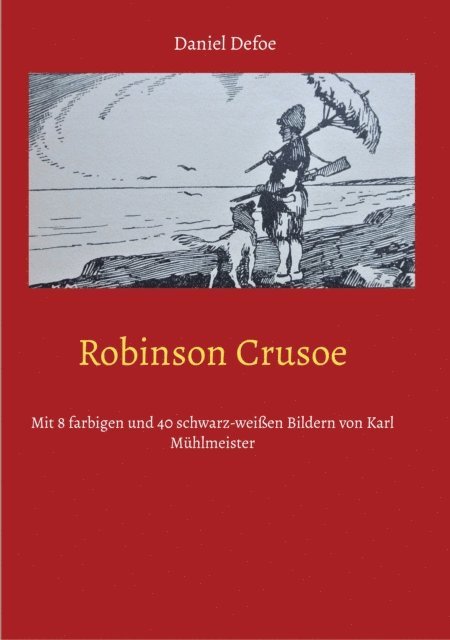
Robinson Crusoe sucht schon als Jugendlicher das Abenteuer. Er hört nicht auf die guten Ratschläge seiner Freunde und ignoriert die schlechten Vorzeichen, die seinen Weg begleiten. Schließlich strandet er auf einer einsamen Insel und verbringt dort viele Jahre allein. Dann bemerkt er zufällig, dass seine Insel regelmäßig auch von Kannibalen besucht wird. Einen jungen Mann rettet er aus ihren Händen und nennt ihn "Freitag".Diese Ausgabe von Robinson Crusoe wartet mit 8 farbigen und 40 schwarz-weißen liebevollen Illustrationen des Künstlers Karl Mühlmeister (1876 - ca. 1942) auf.