Eduard Thurneysen – författare
Visar alla böcker från författaren . Handla med fri frakt och snabb leverans.
12 produkter
12 produkter
Inbunden, Tyska, 2026
362 kr
Skickas inom 5-8 vardagar
Häftad, Tyska, 2026
246 kr
Skickas inom 5-8 vardagar
E-bok
Engelska, 2010505 kr
Läs direkt efter köp
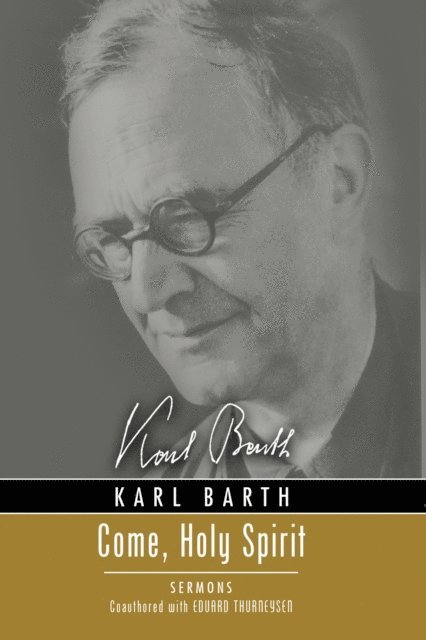
These sermons were prepared from 1920 to 1924. Professor Barth preached some of them while he was minister of the Reformed congregation in Safenwil, Canton Aargau, Switzerland; others in the Reformed Church in Goettingen while he was professor of theology in the University. Pastor Thurneysen at that time preached to the congregation in Bruggen, near St. Gall, Switzerland. The sermons were written not for special occasions but for the regular Sunday morning service, and were addressed to such men and women as one will find in any village or city church--to men and women in the struggle for life, waiting and seeking for God. Pastor Thurneysen selected the sermons and arranged them according to a scheme that may be indicated by the words Promise, Christ, Christian Living. --from the Translator''s Preface
Häftad, Engelska, 2010
319 kr
Skickas inom 5-8 vardagar
Häftad, Engelska, 2010
173 kr
Skickas inom 5-8 vardagar
Häftad, Engelska, 2010
173 kr
Skickas inom 5-8 vardagar
Häftad, Engelska, 2010
409 kr
Skickas inom 5-8 vardagar
E-bok
PDF, Engelska, 2010236 kr
Läs direkt efter köp
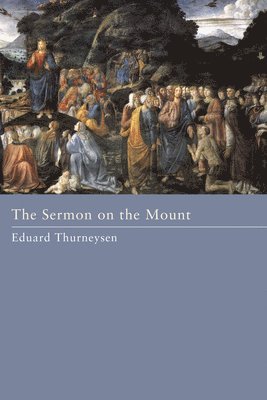
The Sermon on the Mount is often considered a model for the moral and religious conduct of man. Such an interpretation defrauds the Sermon of its real meaning, according to Eduard Thurneysen, and results in a futile legalistic attempt to fulfill the Sermon's commands. Dr. Thurneysen insists that the Sermon on the Mount must be understood in terms of gospel and nothing but gospel. It is to be read with eyes directed only to Jesus and not to the problems of life as such. Then the problems will be set in true perspective, too. He further asserts that the Sermon is gospel in the form of law. Each "e;thou shalt"e; is the future promise--"e;you will"e;--because you have received the promise of the coming kingdom. The gospel demands obedience, but it is always the obedience of disobedient man--an obedience on the basis of grace.
E-bok
PDF, Engelska, 2010228 kr
Läs direkt efter köp
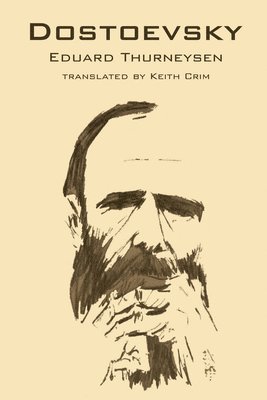
"e;Dostoevsky's thinking has two poles: life as it is, the world as it goes its way, is one, and the beyond, 'resurrection,' eternity, is the other. Here is man, there is God."e; This is the central emphasis of Eduard Thurneysen as he considers the great Russian novelist not primarily as a psychologist, metaphysician, or social philospher, but as a theologian of the highest order. Drawing liberally from characters and incidents in Dostoevsky's books, Dr. Thurneysen shows how the apparent triviality of the lives of the men and women in the novels is latent with the secret of a wholly other life. Their hunger and thirst for the eternal, their passion for the infinite, is the essential trait of man for Dostoevsky. Yet no step leads over from man to God, for how would God still be God if man could become God? But if there is no path from us to God, then all the more certainly a path leads from him to us. If we come to Dostoevsky with the question of man, he answers us with the picture of man as nothing but a single great question, the question of the origin of his life, the question of God. Published in German in 1921, Dostoevsky has been translated into French, Italian, and Japanese. This is the first English edition. An added sidelight: Karl Barth has said that his friend Thurneysen "e;was the one who first put me on the trail of . . . Dostoevsky, without whose discovery I would not have been able to write either the first or second draft of the commentary on Romans."e;
E-bok
PDF, Engelska, 2010673 kr
Läs direkt efter köp
From a thoroughly biblical viewpoint Eduard Thurneysen probes deeply into the nature and practice of pastoral care. His rich understanding of men, his experience in counseling, and his grasp of theological thought infuse his approach with vitality and truth. As he considers the basis of pastoral care, Thurneysen puts forward the thesis that the purpose of counseling is to communicate the Word of God to individuals. Pastoral care is a ministry along with those of sermon and sacrament; its aim is to lead the counselee back to sermon and sacrament in the worship of the church. Although he does little more than hint at rules and techniques for pastoral care, Thurneysen is greatly concerned with its practical aspects. It is his belief that the care of souls occurs through conversation--confident, open-minded conversation which is founded on the Word of God, informed by prayer, and manifested in active listening to, and acceptance of, the counselee. Thurneysen demonstrates the importance of a knowledge of psychology and the principles of psychotherapy. Depth psychology and psychotherapy deeply enrich our understanding of human nature and serve to communicate the message of forgiveness all the more powerfully. This book provides a critical theological study of the whole field of pastoral care. As a work in practical theology, it will be stimulating and useful to professors of counseling as well as to students in the field. Counselors and pastors will find it helpful because it throws light on the fundamental issues involved in problems which they face in their ministries.
E-bok
PDF, Tyska, 2017458 kr
Läs direkt efter köp
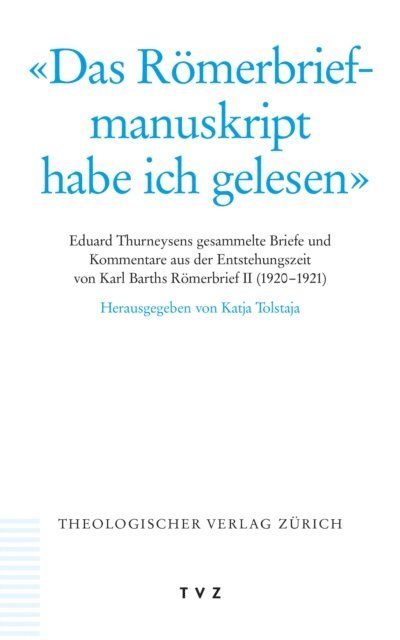
Im Vorwort zu seinem epochalen ''Römerbrief'' (1922) schrieb Karl Barth, Eduard Thurneysen habe ''das ganze im Entstehen begriffene Manuskript gelesen, begutachtet, und sich durch Einschaltung zahlreicher vertiefender, erläuternder und verschärfender Korollarien, die ich meist fast unverändert übernommen habe, in sehr selbstloser Weise ein verborgenes Denkmal gesetzt''. Die hier erstmals vollständig edierten Briefe und Dokumente Thurneysens aus dieser Zeit zeigen, wie intensiv er an Barths Werk beteiligt war und wie er buchstäblich mitgeschrieben hat. Die Edition ergänzt den bereits publizierten Briefwechsel zwischen Karl Barth und Eduard Thurneysen, in dem viele Briefe Thurneysens weggelassen oder stark gekürzt worden sind. Sie wirft damit neues Licht auf die ''Arbeitsgemeinschaft'' der frühen Dialektischen Theologie.
Inbunden, Tyska, 2009
1 969 kr
Tillfälligt slut
In den Briefen, die Karl Barth und Eduard Thurneysen von 1919 bis 1933 mit Friedrich Gogarten wechselten, spiegelt sich die 'Dialektische Theologie' vom Anfang bis zum Ende wider. Ursprünglich durch Barths Römerbrief zusammengeführt, gründeten diese Männer 1922 die Zeitschrift Zwischen den Zeiten, um der "Theologie des Wortes Gottes" ein geeignetes Forum zu schaffen. Hier meldeten sich später auch Emil Brunner und Rudolf Bultmann zu Wort. Ihr gemeinsamer Ausgangspunkt, die sich selbst bezeugende Offenbarung in Jesus Christus, einte sie zugleich in einer doppelten Gegnerschaft: sie traten der 'liberalen' ebenso wie der kirchlich 'positiven' Theologie scharf entgegen. Der ersten warfen sie die Harmonisierung von Vernunft und Offenbarung, von Kultur und Christentum vor, der zweiten die Verwechslung von Gläubigkeit und Glaube und dessen Verwandlung in eine Weltanschauung. Jede der drei Korrespondenzen dieses Bandes zeigt den fortschreitenden Prozeß der inneren Differenzierung dieser Arbeitsgemeinschaft, die am Ende zu ihrer Spaltung führte. Der 1928 offen ausbrechende Streit über die Bedeutung der Anthropologie für die Theologie entzweite Barth und Gogarten fortdauernd, während sich Brunner in dieser Frage an die Seite Gogartens stellte. Die den Briefwechseln dieses Bandes vorausgeschickte Einführung "Zwei Wege zwischen den Zeiten" skizziert schrittweise den wachsenden Zwiespalt zwischen Barth und Gogarten; sie zeichnet ihre Differenzen über das Ende ihrer Korrespondenz hinaus bis zum "Abschied" von Zwischen den Zeiten nach. Das im Anhang erstmals veröffentlichte Protokoll der letzten Beratung über Ende oder Fortsetzung der Zeitschrift zeigt den tiefgreifenden Konflikt ihrer Gründer und erklärt ihre endgültige Trennung.