Eduardo G. Altmann - Böcker
Visar alla böcker från författaren Eduardo G. Altmann. Handla med fri frakt och snabb leverans.
4 produkter
4 produkter
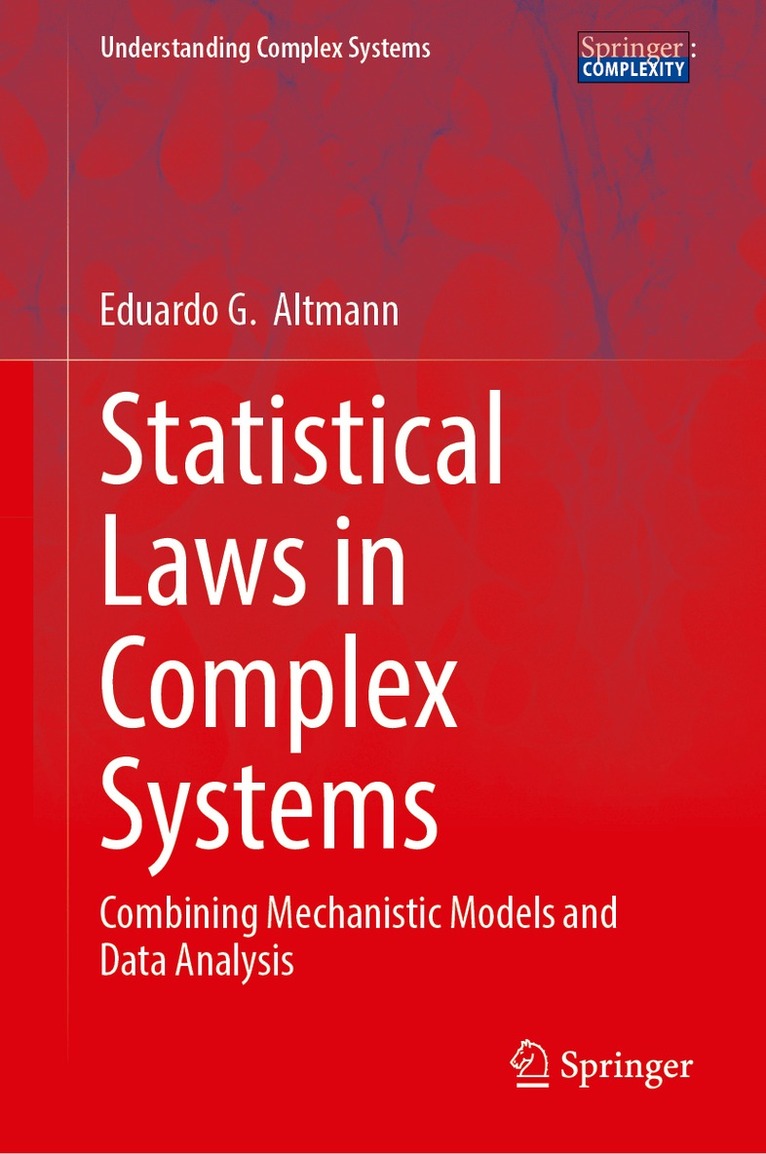
Statistical Laws in Complex Systems
Combining Mechanistic Models and Data Analysis
Inbunden, Engelska, 2024
1 798 kr
Skickas inom 10-15 vardagar
Statistical laws describe regular patterns observed in diverse scientific domains, ranging from the magnitude of earthquakes (Gutenberg-Richter law) and metabolic rates in organisms (Kleiber's law), to the frequency distribution of words in texts (Zipf's and Herdan-Heaps' laws), and productivity metrics of cities (urban scaling laws).
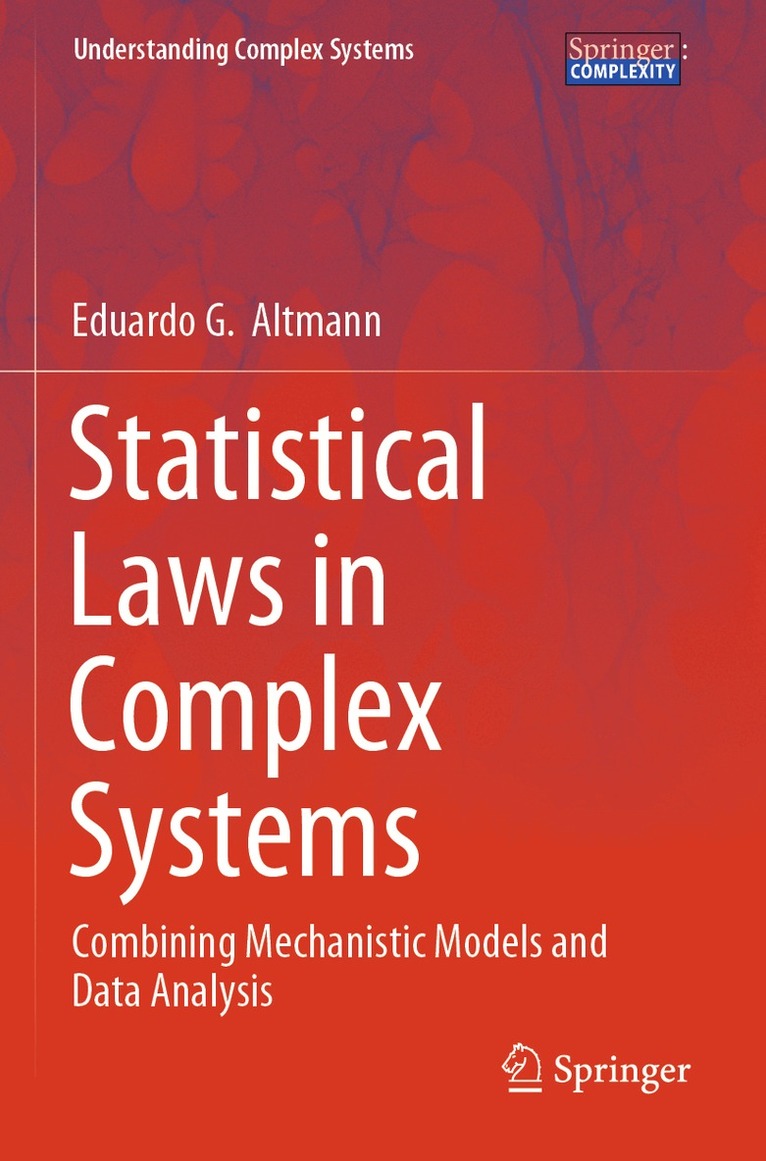
Statistical Laws in Complex Systems
Combining Mechanistic Models and Data Analysis
Häftad, Engelska, 2025
1 798 kr
Skickas inom 10-15 vardagar
This book provides a unifying approach to the study of statistical laws, critically evaluating their role in the theoretical understanding of complex systems and the different data-analysis methods used to evaluate them. Statistical laws describe regular patterns observed in diverse scientific domains, ranging from the magnitude of earthquakes (Gutenberg-Richter law) and metabolic rates in organisms (Kleiber's law), to the frequency distribution of words in texts (Zipf's and Herdan-Heaps' laws), and productivity metrics of cities (urban scaling laws). The origins of these laws, their empirical validity, and the insights they provide into underlying systems have been subjects of scientific inquiry for centuries. Through a historical review and a unified analysis, this book argues that the persistent controversies on the validity of statistical laws are predominantly rooted not in novel empirical findings but in the discordance among data-analysis techniques, mechanistic models, and the interpretations of statistical laws. Starting with simple examples and progressing to more advanced time-series and statistical methods, this book and its accompanying repository provide comprehensive material for researchers interested in analyzing data, testing and comparing different laws, and interpreting results in both existing and new datasets.
550 kr
Skickas inom 10-15 vardagar
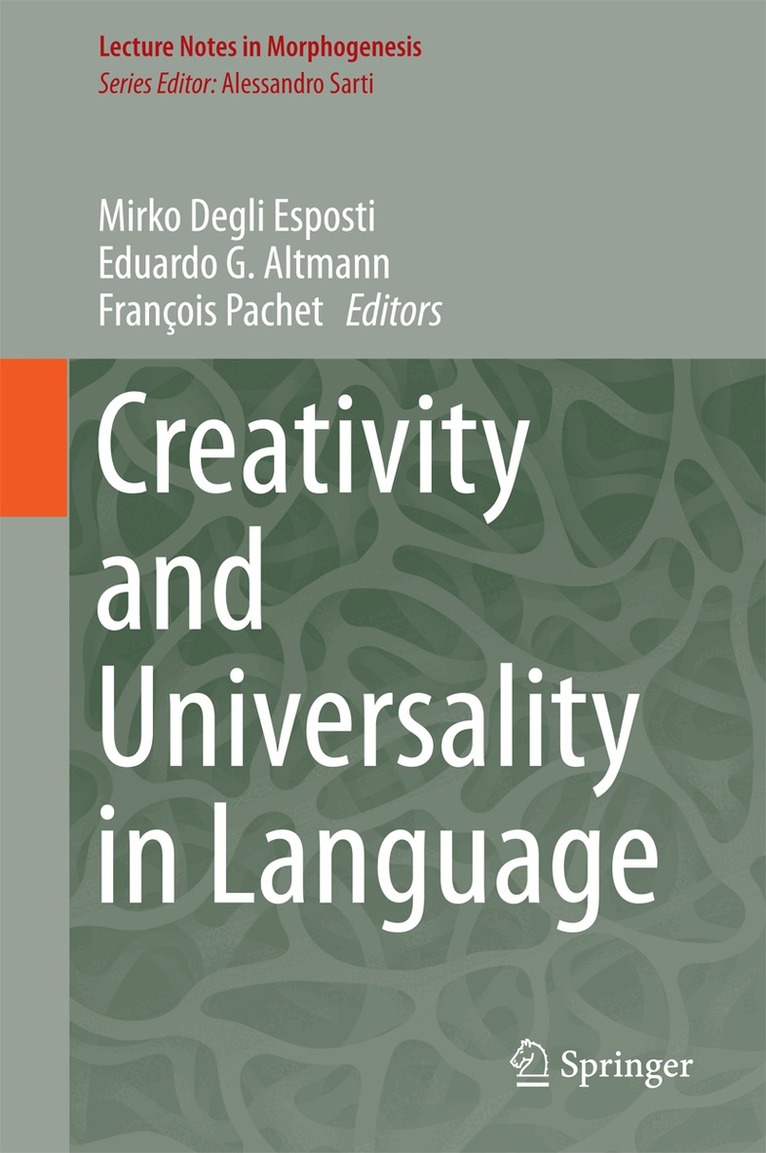
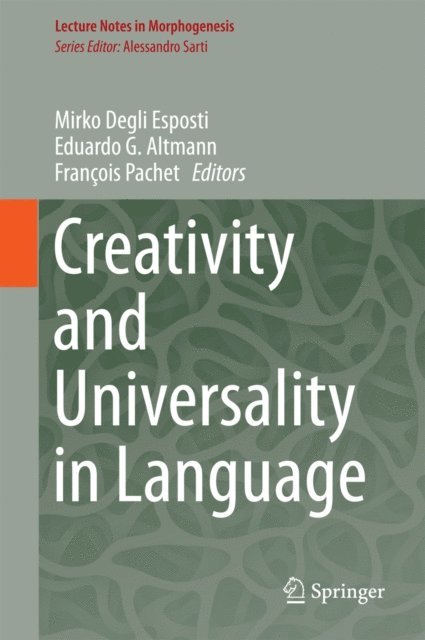
This book collects research contributions concerning quantitative approaches to characterize originality and universality in language. The target audience comprises researchers and experts in the field but the book may also be beneficial for graduate students.Creativity might be considered as a morphogenetic process combining universal features with originality. While quantitative methods applied to text and music reveal universal features of language and music, originality is a highly appreciated feature of authors, composers, and performers.In this framework, the different methods of traditional problems of authorship attribution and document classification provide important insights on how to quantify the unique features of authors, composers, and styles. Such unique features contrast, and are restricted by, universal signatures, such as scaling laws in word-frequency distribution, entropy measures, long-range correlations, among others. This interplay between innovation and universality is also an essential ingredient of methods for automatic text generation.Innovation in language becomes relevant when it is imitated and spread to other speakers and musicians. Modern digital databases provide new opportunities to characterize and model the creation and evolution of linguistic innovations on historical time scales, a particularly important example of the more general problem of spreading of innovations in complex social systems.This multidisciplinary book combines scientists from various different backgrounds interested in quantitative analysis of variations (synchronic and diachronic) in language and music. The aim is to obtain a deeper understanding of how originality emerges, can be quantified, and propagates.
534 kr
Skickas inom 10-15 vardagar
This book collects research contributions concerning quantitative approaches to characterize originality and universality in language. The target audience comprises researchers and experts in the field but the book may also be beneficial for graduate students.Creativity might be considered as a morphogenetic process combining universal features with originality. While quantitative methods applied to text and music reveal universal features of language and music, originality is a highly appreciated feature of authors, composers, and performers.In this framework, the different methods of traditional problems of authorship attribution and document classification provide important insights on how to quantify the unique features of authors, composers, and styles. Such unique features contrast, and are restricted by, universal signatures, such as scaling laws in word-frequency distribution, entropy measures, long-range correlations, among others. This interplay between innovation and universality is also an essential ingredient of methods for automatic text generation.Innovation in language becomes relevant when it is imitated and spread to other speakers and musicians. Modern digital databases provide new opportunities to characterize and model the creation and evolution of linguistic innovations on historical time scales, a particularly important example of the more general problem of spreading of innovations in complex social systems.This multidisciplinary book combines scientists from various different backgrounds interested in quantitative analysis of variations (synchronic and diachronic) in language and music. The aim is to obtain a deeper understanding of how originality emerges, can be quantified, and propagates.