Eduardo Staszowski - Böcker
Visar alla böcker från författaren Eduardo Staszowski. Handla med fri frakt och snabb leverans.
20 produkter
20 produkter
255 kr
Skickas inom 10-15 vardagar
Making hacks into reality. It engages matter in ways that trespass the boundaries between the civic realm and the state-assigned laws. Even with primitive tools and skills, designing and making can break open and repurpose arrangements of power. The proof is that some crafts are so controversial—lock-picking, moonshining, shoplifting, smuggling, sabotage—that they need to be controlled or even outlawed. When designers and makers touch on these contested realms, they run into trouble. This highly original book explores how the material power of design and making can challenge arrangements of agency and domination. Unpacking a series of conflicting cases—from illegal making to the strategic and civic use of crafts to manifest radical alternatives to the current order—it shows how designers and makers can use even basic tools to work towards more.
217 kr
Skickas inom 7-10 vardagar
This important new book argues that at the root of the contemporary crisis of climate, energy, food, inequality, and meaning is a certain core presupposition that structures the ways in which we live, think, act and design: the assumption of dualism, or the fundamental separateness of things.The authors contend that the key to constructing livable worlds lies in the cultivation of ways of knowing and acting based on a profound awareness of the fundamental interdependence of everything that exists – what they refer to as relationality. This shift in paradigm is necessary for healing our bodies, ecosystems, cities, and the planet at large.The book follows two interwoven threads of argumentation: on the one hand, it explains and exemplifies the modes of operation and the dire consequences of non-relational living; on the other, it elucidates the nature of relationality and explores how it is embodied in transformative practices in multiple spheres of life.The authors provide an instructive account of the philosophical, scientific, social, and political sources of relational theory and action, with the aim of illuminating the transition from living within seemingly ineluctable ‘toxic loops’ of unrelational living (based on ontological dualism), to living within ‘relational weaves’ which we might co-create with multiple human and nonhuman others.
224 kr
Kommande
In recent decades, the field of design has expanded. Moreover, there has been a significant historical shift to a world essentially defined by artifice. The onset of the Anthropocene - the epoch in which human impact upon our planet has become irreversible - is the most dramatic symptom of this phenomenon.In these conditions, we are forced to consider the extent to which design should be understood less as a subaltern moment of action, and more as a necessary mode of acting in general. But what then are the characteristics, the advantages, the limits, and the possibilities of understanding acting in general through the model or lens of design? In particular, is the model of “action as design” capable of engaging with the destructive tensions bequeathed to us by the industrial economy, now reinforced by neo-liberalism?This book offers a conception of our times, an examination in what is entailed in this view concerning the character of our century, and explores the implications of design and acting in the 21st century. Its underlying insight is the following: today it is the artificial, and no longer nature, which constitutes the horizon, medium and condition of existence.
547 kr
Kommande
In recent decades, the field of design has expanded. Moreover, there has been a significant historical shift to a world essentially defined by artifice. The onset of the Anthropocene - the epoch in which human impact upon our planet has become irreversible - is the most dramatic symptom of this phenomenon.In these conditions, we are forced to consider the extent to which design should be understood less as a subaltern moment of action, and more as a necessary mode of acting in general. But what then are the characteristics, the advantages, the limits, and the possibilities of understanding acting in general through the model or lens of design? In particular, is the model of “action as design” capable of engaging with the destructive tensions bequeathed to us by the industrial economy, now reinforced by neo-liberalism?This book offers a conception of our times, an examination in what is entailed in this view concerning the character of our century, and explores the implications of design and acting in the 21st century. Its underlying insight is the following: today it is the artificial, and no longer nature, which constitutes the horizon, medium and condition of existence.
217 kr
Skickas inom 7-10 vardagar
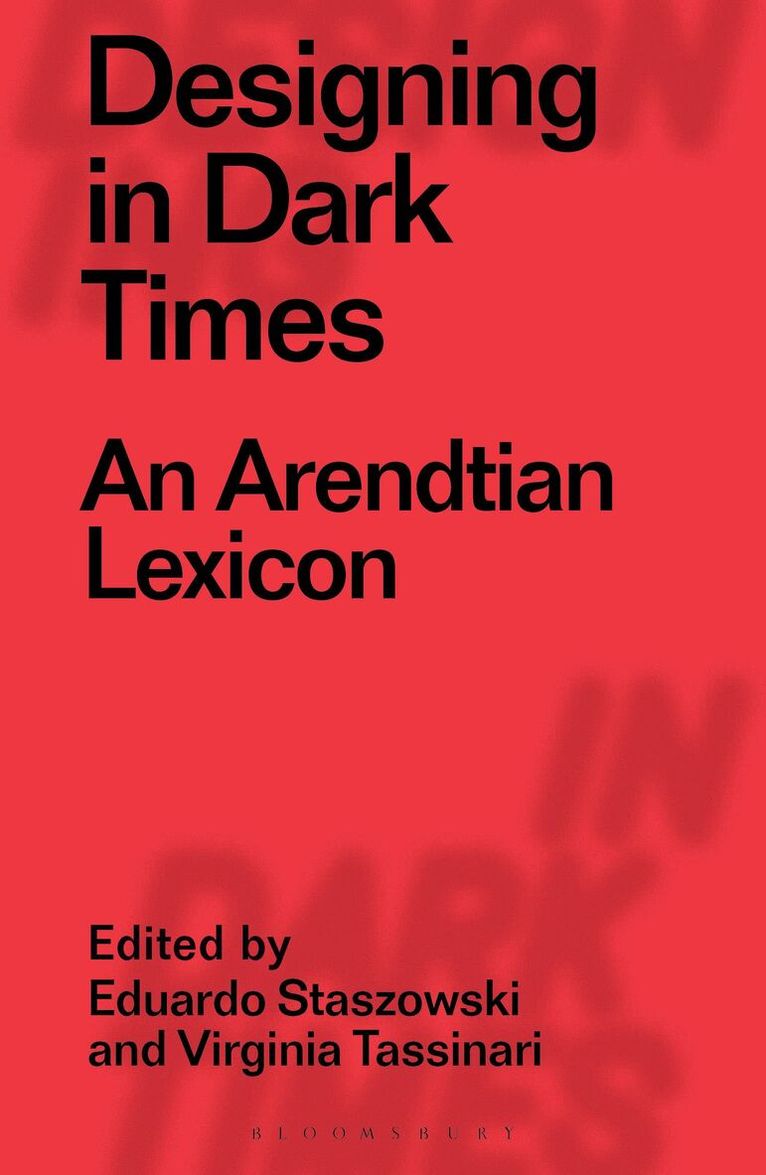
The architectural historian and critic Kenneth Frampton ‘never recovered’ from the force of Hannah Arendt’s teaching at The New School in New York. The philosopher Richard J. Bernstein considers her the most perceptive political theorist and observer of ‘dark times’ (a concept which, drawing from Brecht, she made her own). Building on the revival of interest in Hannah Arendt, and on the increasing turn in design towards the expanded field of the social, this unique book uses insights and quotations drawn from Arendt’s major writings (The Human Condition; The Origins of Totalitarianism, Men in Dark Times) to assemble a new kind of lexicon for politics, designing and acting today. Taking 56 terms – from Action, Beginnings and Creativity through Mortality, Natality, and Play to Superfluity, Technology and Violence – and inviting designers and scholars of design world-wide to contribute, Designing in Dark Times: An Arendtian Lexicon, offers up an extraordinary range of short essays that use moments and quotations from Arendt’s thought as the starting points for reflection on how these terms can be conceived for contemporary design and political praxis. Neither simply dictionary nor glossary, the lexicon brings together designing and political philosophy to begin to create a new language for acting and designing against dark times.
437 kr
Skickas inom 3-6 vardagar
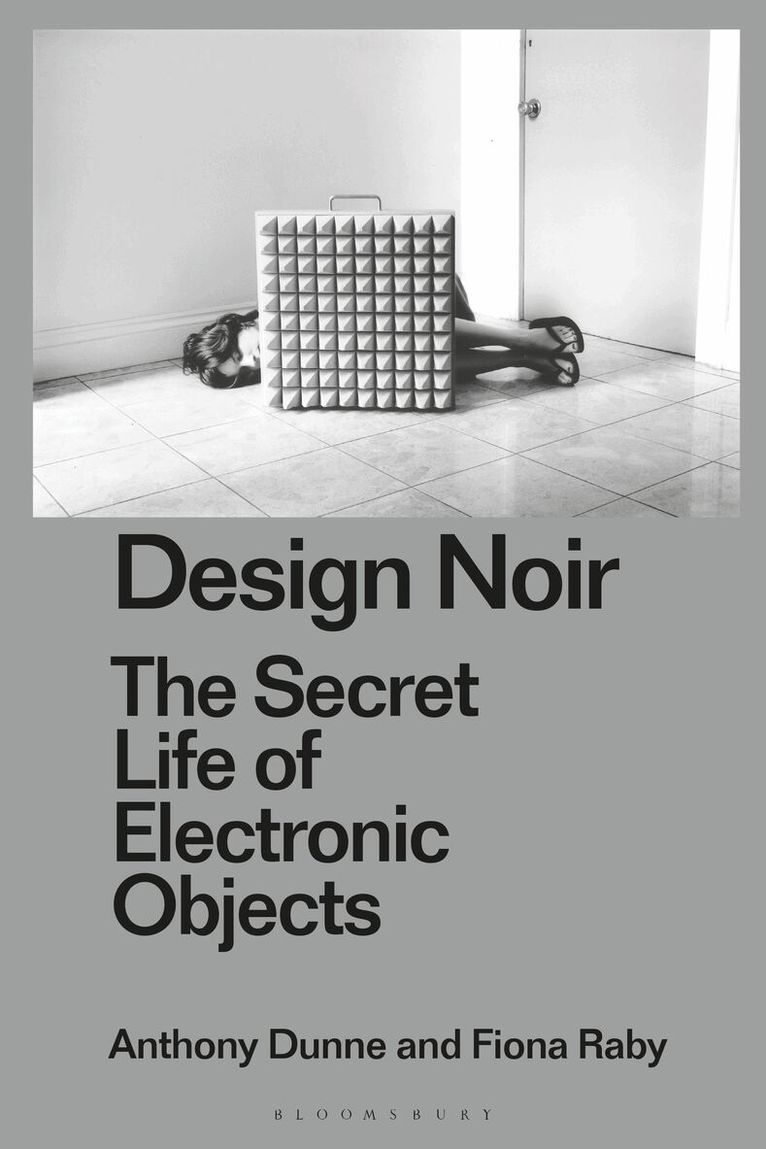
The first book to be published on the work of their partnership (in 2001), Design Noir is the essential primary source for understanding the theoretical and conceptual underpinnings for Dunne & Raby’s work. Consisting of three elements - a ‘manifesto’ on the possibilities of designing with and for the ‘secret life’ of electronic objects; notes for an embryonic network of critical designers and, most famously, the presentation of the Placebo Project – a prototype for a critical design poetics enacted around electronic furniture-objects – Design Noir offers an in-depth exploration of one of the most seminal design projects of the last two decades, one that arguably initiated speculating through design in its contemporary forms. By detailing the logic and character of the objects that were constructed; the involvement of users with these objects over-time, and in the creation of a new kinds of spatially and temporally distributed moments of critique and engagement with things, Design Noir presents the case-study of the Placebo projectas a far more complex and subtler project than is often thought. As a bold and in many ways unprecedented experiment in design writing and book designing, Design Noir is itself an instance of the speculative propositional design it expounds.
332 kr
Skickas inom 7-10 vardagar
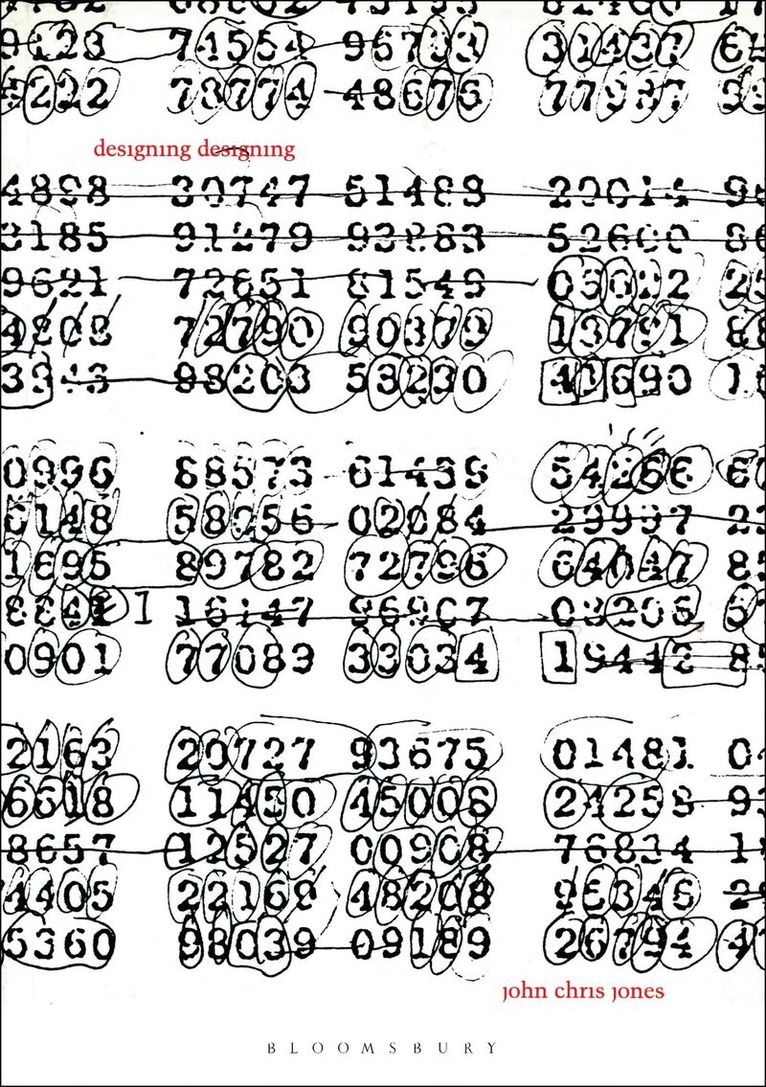
designing designing is one of the most extraordinary books on design ever written. First published in 1984 and reprinted with this title and cover in 1991, the book was the product of ten years of auto-critique, reflection and experimentation on writing on designing. Offering a savage auto-critique of his own work on “methods”, as well as of the wider methods and ends of advanced industrial societies as a whole, this book challenges the traditional product- and progress- orientated focus on design by insisting that the world now coming into being requires designing to be understood as ‘a response to the whole of life.’ But designing designing is also unique in modern design thinking in its exploration of what writing on designing might be. Combining essays, interviews, reflections, performances, plays, poems, chance procedures, photographs, collages and quotes, Jones experiments with both form and content in an attempt to make a book which ‘is not simply about designing but is instead itself an instance of the ideas and processes explored within it.’
1 129 kr
Skickas
349 kr
Skickas inom 7-10 vardagar
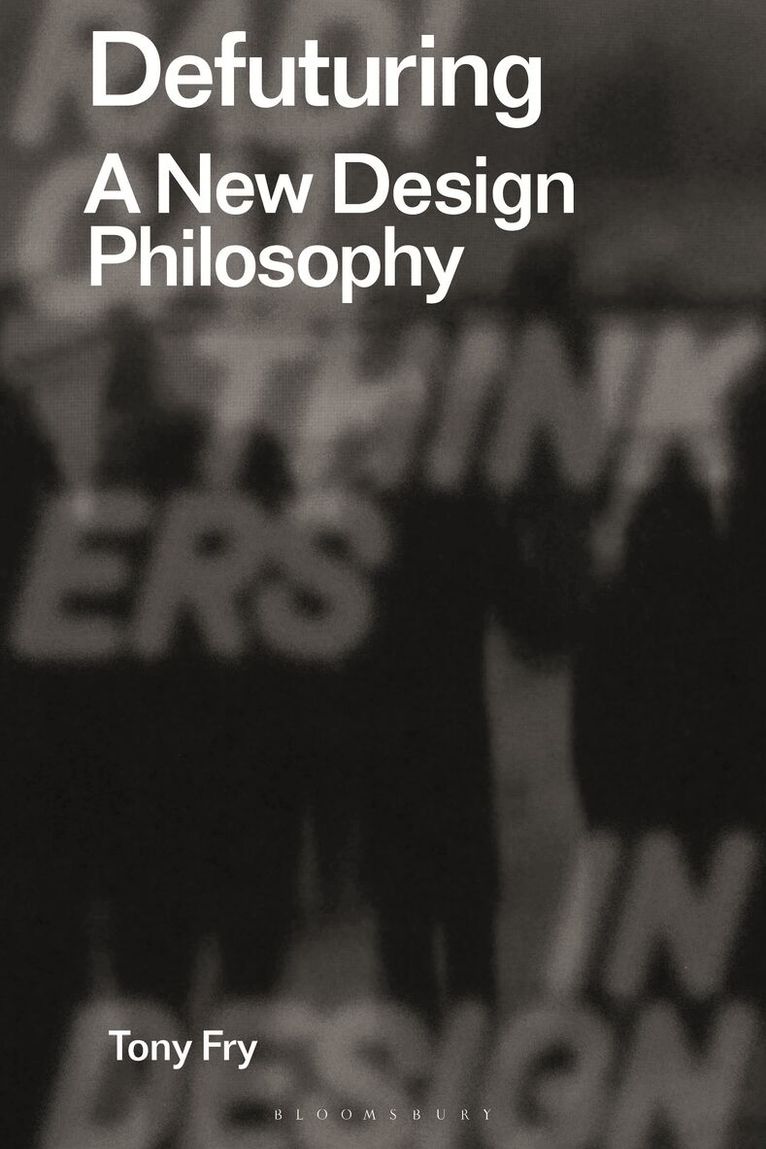
“Once one understands the nature and magnitude of defuturing as the negation of world futures, how one has to account for the history and making of the material world – including design - dramatically changes. Defuturing as our condition forces the generation of a new philosophy of design.” With these thoughts this book presents a radically new understanding of the history, context and futures of designing. First published in 1999, now reissued with a new preface by the author, Defuturing: A New Design Philosophy is a prescient and powerful account of what it means to comprehend that we live in world that is taking away futures for ourselves and non-human others. Arguing that designing is doubly implicated in this process, first in its roles in helping to create the unsustainable, but second, re-thought through the lens of defuturing, as a mode of acting in the world that can help contest the negation of the world, Defuturing transforms our comprehension of designing and of how futures can be constituted. Working not through abstract theorizing but through the analysis of concrete examples, the book uses historical material on design to expose the archaeology of defuturing. Shattering the illusion that the future simply “is”, Defuturing confronts designing with the challenge of remaking while offering the elements of a new practical reasoning of design acting.
237 kr
Kommande
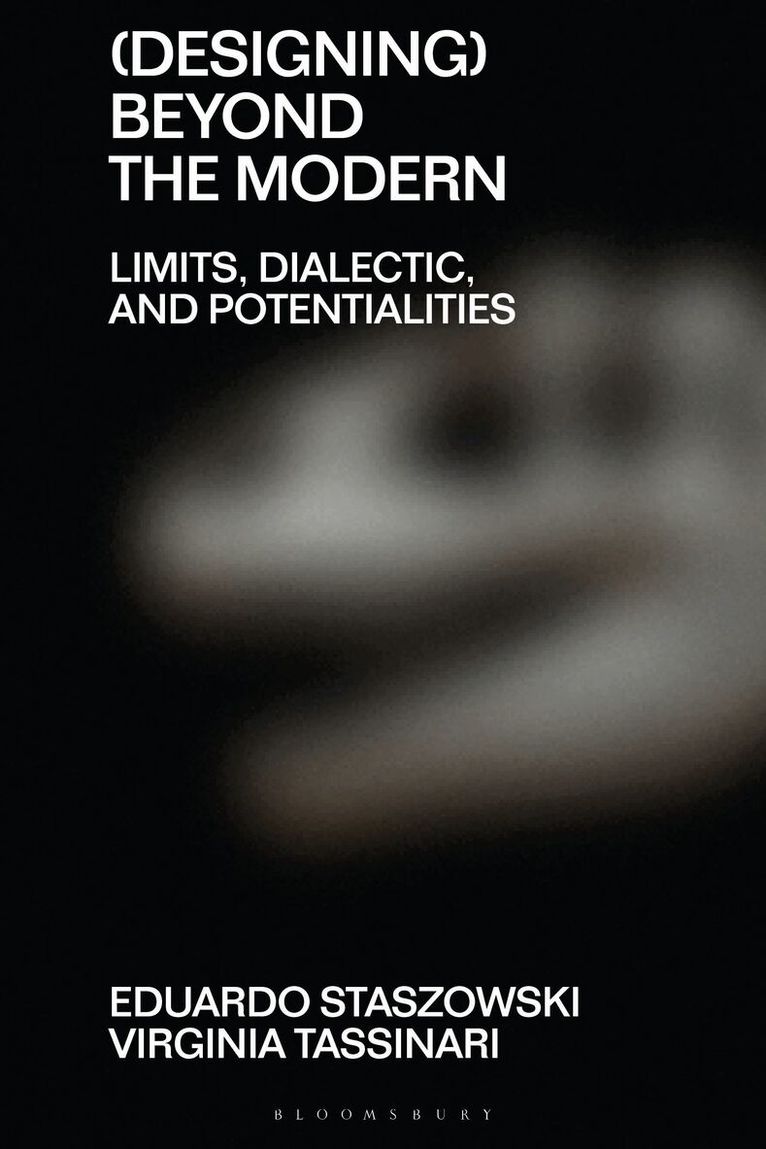
(Designing) Beyond the Modern is the second volume in a trilogy by Eduardo Staszowski and Virginia Tassinari, following Designing in Dark Times: An Arendtian Lexicon (2020).This book is a provocation: how can we begin to move beyond the modern when so much of how we think and make remains entangled in its logic? Among the forces that have both shaped and been shaped by the modern project, design occupies a central role. Rather than treating it as a neutral tool, this book approaches design as a practice deeply implicated in modernity’s extractive, colonial, and anthropocentric foundations. The parenthesis in the title signals an ambivalence about whether “designing” can remain a relevant or viable practice. Without offering a conclusion, the book confronts the legacy of the Modern and calls for a caesura: a rupture, a pause, or an interval where a critical praxis, whether called design or not, might begin to take shape. Drawing on philosophy, decolonial thought, and design theory, it challenges the logics that continue to shape modern institutions and imaginaries. Through essays, fragments, and engagements with the work of Tomás Maldonado, along with a conversation with Arturo Escobar and a contribution from Aílton Krenak, this book traces tensions and potential shifts that emerge when thinking and acting beyond the Modern.
685 kr
Kommande
(Designing) Beyond the Modern is the second volume in a trilogy by Eduardo Staszowski and Virginia Tassinari, following Designing in Dark Times: An Arendtian Lexicon (2020).This book is a provocation: how can we begin to move beyond the modern when so much of how we think and make remains entangled in its logic? Among the forces that have both shaped and been shaped by the modern project, design occupies a central role. Rather than treating it as a neutral tool, this book approaches design as a practice deeply implicated in modernity’s extractive, colonial, and anthropocentric foundations. The parenthesis in the title signals an ambivalence about whether “designing” can remain a relevant or viable practice. Without offering a conclusion, the book confronts the legacy of the Modern and calls for a caesura: a rupture, a pause, or an interval where a critical praxis, whether called design or not, might begin to take shape. Drawing on philosophy, decolonial thought, and design theory, it challenges the logics that continue to shape modern institutions and imaginaries. Through essays, fragments, and engagements with the work of Tomás Maldonado, along with a conversation with Arturo Escobar and a contribution from Aílton Krenak, this book traces tensions and potential shifts that emerge when thinking and acting beyond the Modern.
636 kr
Skickas
This important new book argues that at the root of the contemporary crisis of climate, energy, food, inequality, and meaning is a certain core presupposition that structures the ways in which we live, think, act and design: the assumption of dualism, or the fundamental separateness of things.The authors contend that the key to constructing livable worlds lies in the cultivation of ways of knowing and acting based on a profound awareness of the fundamental interdependence of everything that exists – what they refer to as relationality. This shift in paradigm is necessary for healing our bodies, ecosystems, cities, and the planet at large.The book follows two interwoven threads of argumentation: on the one hand, it explains and exemplifies the modes of operation and the dire consequences of non-relational living; on the other, it elucidates the nature of relationality and explores how it is embodied in transformative practices in multiple spheres of life.The authors provide an instructive account of the philosophical, scientific, social, and political sources of relational theory and action, with the aim of illuminating the transition from living within seemingly ineluctable ‘toxic loops’ of unrelational living (based on ontological dualism), to living within ‘relational weaves’ which we might co-create with multiple human and nonhuman others.
752 kr
Skickas inom 7-10 vardagar
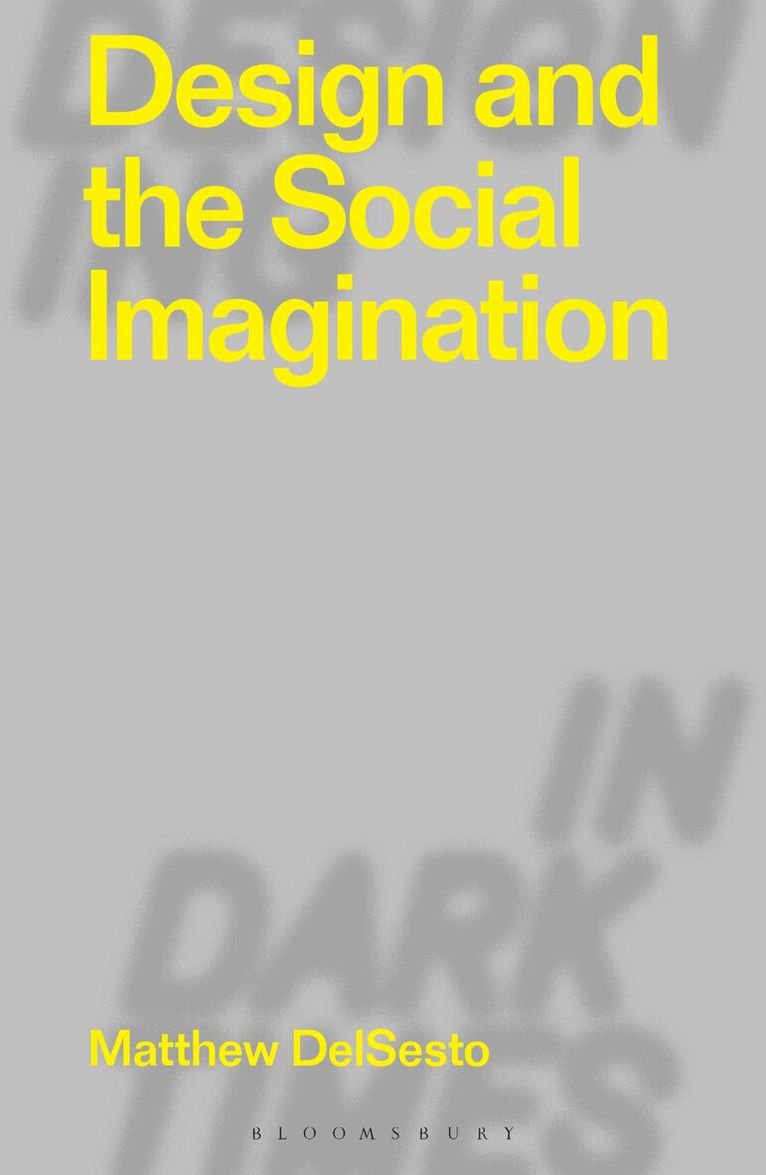
How can social theory help us all design solutions to address the social, political and ecological challenges that confront us, and build more sustainable communities? Design professions have typically been associated with intervention and action, while social science has long been associated with thought and reflection. Design and social thought are too frequently considered distinct in terms of how theories can be applied in practice. Design and the Social Imagination brings together the creative, action-oriented sensibility of design with the reflective, analytical capacities of the social sciences to offer models, ideas and strategies for shaping the future of the world we live in.In a world of global economic inequality, racism, and environmental degradation, designing with an understanding of our social reality is increasingly crucial to our survival. Matthew DelSesto explores current practices and discourses in areas of urban design, design for social innovation, environmental design, co-design, service design, and more, illustrating how thoughtful design can contribute in a more productive way. Drawing on a range of theory and practice from radical social thinkers C. Wright Mills, Patrick Geddes, Jane Addams and W. E. B. Du Bois, his book shows us how design and the social sciences can interact in order to intervene in the crises we face today.
241 kr
Skickas
Challenging the dominant design paradigm that centres humanity in its practice, Designing for Interdependence puts forward an ecocentric mode of designing that privileges a harmonious relationship between all life forms that share our planet. This book is about the practice of designing and design’s capacity to relate (or not) to beings of all kinds, human and others, in ways that are life-affirming. Sensitive to power differentials and the responsibility that this entails, Martín Ávila develops the notion of alter-natives, a concept that exposes the alterity of artificial things and the potential of these things to participate in the sustainment of natural environments. He proposes a design practice that encompasses humans, artificial things and other-than-human species in a 'poetics of relating', and provides methods that support the rewilding necessary for maintaining cultural and biological diversity and the stabilization of planetary dynamics. The book features real-life project case studies that illustrate some of the political-ecological implications of an ecocentric paradigm, which can help us to imagine alternative modes of relating to local environments and alternative modes of inter-species cohabitation.Avoiding dualistic thinking and the dichotomies harmful-benefit, construction-destruction, natural-artificial and life-death, Ávila pursues the work of caring for how our mattering through design can become constructive in creating more-than-human ecologies.
1 125 kr
Skickas inom 7-10 vardagar
In a world of endless predictions and precision algorithms, The Power of Maybes offers a daring new way forward. What if uncertainty isn’t a problem to solve, but a gift? This book reclaims hesitation, ambiguity and not-knowing as powerful tools to resist the rigid control of digital systems. Where machines seek to lock down knowledge, capture potential, dictate futures and foreclose possibilities, The Power of Maybes presents the radical idea that embracing uncertainty is essential in our age of planetary computation and offers ways of cultivating it as a form of resistance.By reframing the unknown as a powerful resource, Marenko offers a bold approach to living and thinking alongside machines without surrendering to their grip. Blending philosophy, design and critical tech studies, it challenges dystopian fears and utopian hopes about technology, and champions new ways of being—open, ungridded, unscaled. It’s a call to cultivate the unknown and nurture potential. For those ready to reclaim their agency in an algorithmic age, The Power of Maybes is a guide to living with oceanic uncertainty—and finding power in it.
303 kr
Kommande
In a world of endless predictions and precision algorithms, The Power of Maybes offers a daring new way forward. What if uncertainty isn’t a problem to solve, but a gift? This book reclaims hesitation, ambiguity and not-knowing as powerful tools to resist the rigid control of digital systems. Where machines seek to lock down knowledge, capture potential, dictate futures and foreclose possibilities, The Power of Maybes presents the radical idea that embracing uncertainty is essential in our age of planetary computation and offers ways of cultivating it as a form of resistance.By reframing the unknown as a powerful resource, Marenko offers a bold approach to living and thinking alongside machines without surrendering to their grip. Blending philosophy, design and critical tech studies, it challenges dystopian fears and utopian hopes about technology, and champions new ways of being—open, ungridded, unscaled. It’s a call to cultivate the unknown and nurture potential. For those ready to reclaim their agency in an algorithmic age, The Power of Maybes is a guide to living with oceanic uncertainty—and finding power in it.
665 kr
Skickas inom 7-10 vardagar
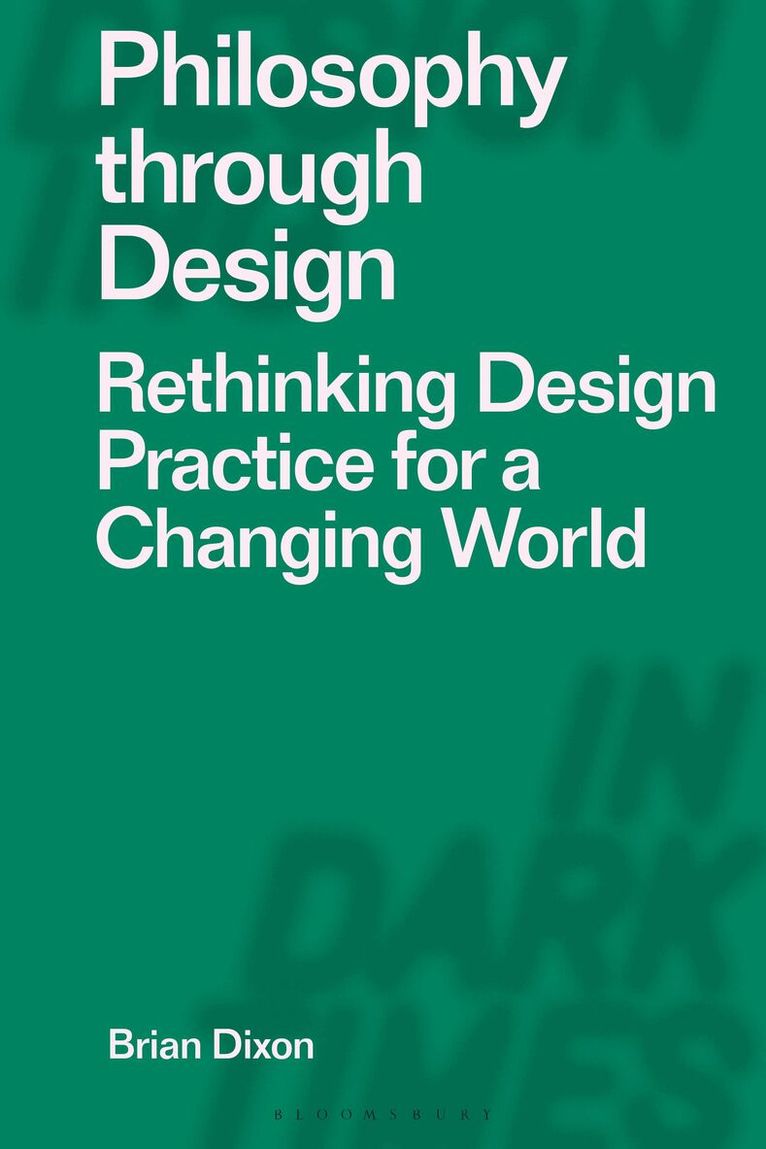
Philosophy through Design proposes a new approach to design practice grounded in a philosophical reflection in and on action, with alignments being drawn to the democratic pragmatism of John Dewey and Jane Addams as well as key contemporary philosophic perspectives. Throughout, Dixon stresses the need for designers to engage critically, ethically and reflectively as they seek to meet the complex challenges of the 21st century. The key argument is that design practice can itself become a mode of philosophical inquiry, supporting designers’ efforts to experiment, reflect and act responsibly and make and remake the ever-evolving future as potential ‘designer philosophers’.
237 kr
Kommande
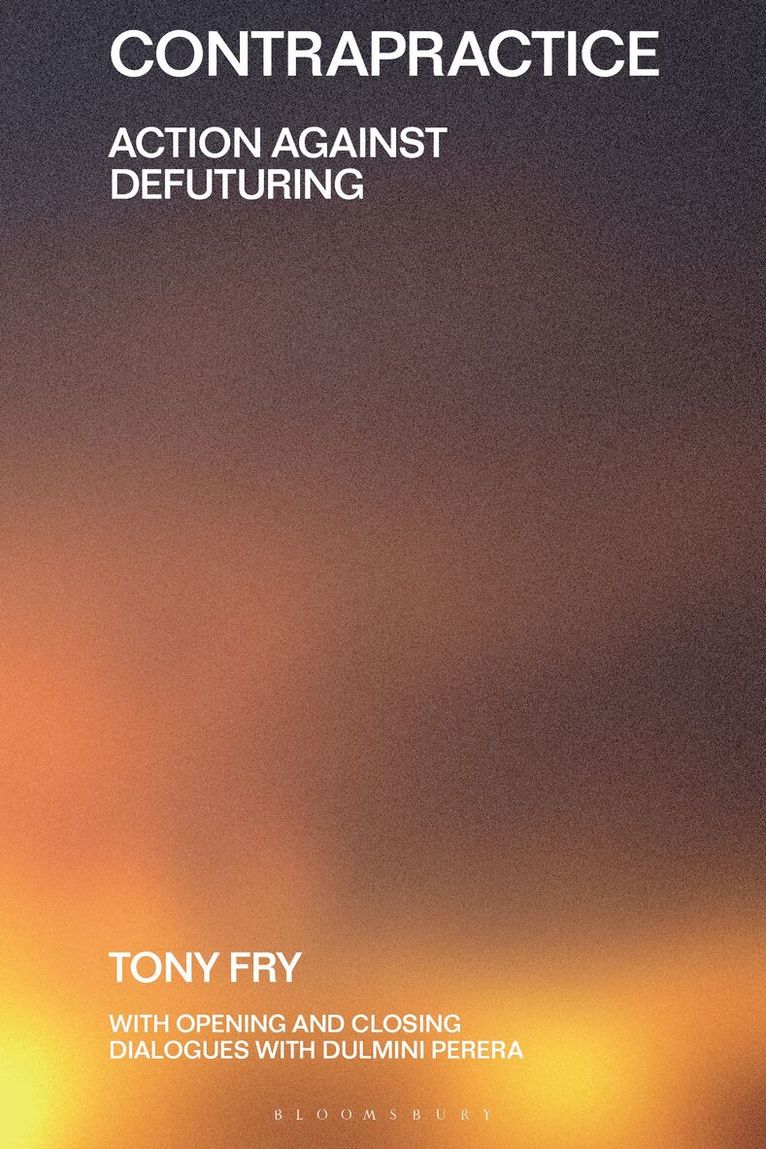
Building on his foundational work on ‘defuturing,’ a deconstructive method that exposes historically the unsustainability of a great deal of design practice and its products, Tony Fry now offers a powerful response.There is no shortage of analysis of the current state of the world. Climate change impacts are increasing, environmental destruction will follow, populations and settlements will be displaced, food security will become critical, geopolitical instability and escalating dangers of conflict will grow. Such an entangled complexity threatens life itself more seriously than at any time since the Ice Age. Against the real threats to life on Earth, what are the world’s political leaders doing? The answers sit between nothing and very little.So, what is to be done? There is no immediate or simple answer. But what Contrapractice acknowledges is that nothing changes unless practices change. The intent is for the process to take on a life of its own by the many people who care about securing a viable future. It does not provide template solutions, but the ability to act. Every reader is viewed as a communicator of its message and a change agent of their own practice. Fry’s dialogue in the book with Dulmini Perera is a prompt for the book to be an object of discussion.
1 140 kr
Kommande
372 kr
Kommande