Edward Baring - Böcker
Visar alla böcker från författaren Edward Baring. Handla med fri frakt och snabb leverans.
7 produkter
7 produkter
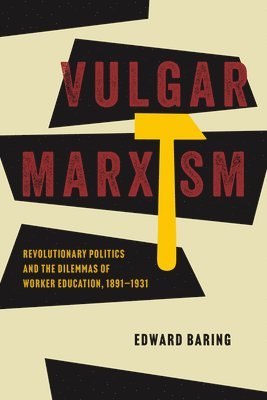
Vulgar Marxism
Revolutionary Politics and the Dilemmas of Worker Education, 1891–1931
Inbunden, Engelska, 2025
943 kr
Skickas inom 7-10 vardagar
Offers a transformative reading of the Marxist tradition by uncovering its connections to the institutions and practices of worker education. For the past hundred years, “vulgar Marxism” has been the go-to insult among socialist and communist intellectuals, a shorthand for the ways Marxist theory could go wrong. But why would thinkers advocating for working-class emancipation use “vulgarity” as an epithet? In Vulgar Marxism, Edward Baring seeks an answer by delving into debates over Marxism in the first decades of the twentieth century. He shows that this common phrase wasn’t aimed primarily at popular understandings of Marx. Rather, it was used to attack intellectuals for failing to teach Marx’s theory to the working masses correctly. His history of “vulgar Marxism” homes in on the project of mass worker education at a time when the project was both widely pursued and fiercely contested. Worker education offered a mechanism through which Marxist theory was meant to promote large-scale social and political change, and it drew on a massive infrastructure of schools, publishing houses, and educational bureaus that stretched across Europe and reached millions. By centering this project, Baring radically recasts the history of Marxism from the Second International to World War II. He challenges classic oppositions between “economistic” and “cultural” versions of Marxism; rereads many of the most significant Marxist theorists of the time, including Karl Kautsky, Rosa Luxemburg, Georg Lukács, and Antonio Gramsci; and offers new resources for understanding how Marxist ideas transformed as they traveled around Europe and then spread throughout the world.
Vulgar Marxism
Revolutionary Politics and the Dilemmas of Worker Education, 1891–1931
Häftad, Engelska, 2025
251 kr
Offers a transformative reading of the Marxist tradition by uncovering its connections to the institutions and practices of worker education. For the past hundred years, “vulgar Marxism” has been the go-to insult among socialist and communist intellectuals, a shorthand for the ways Marxist theory could go wrong. But why would thinkers advocating for working-class emancipation use “vulgarity” as an epithet? In Vulgar Marxism, Edward Baring seeks an answer by delving into debates over Marxism in the first decades of the twentieth century. He shows that this common phrase wasn’t aimed primarily at popular understandings of Marx. Rather, it was used to attack intellectuals for failing to teach Marx’s theory to the working masses correctly. His history of “vulgar Marxism” homes in on the project of mass worker education at a time when the project was both widely pursued and fiercely contested. Worker education offered a mechanism through which Marxist theory was meant to promote large-scale social and political change, and it drew on a massive infrastructure of schools, publishing houses, and educational bureaus that stretched across Europe and reached millions. By centering this project, Baring radically recasts the history of Marxism from the Second International to World War II. He challenges classic oppositions between “economistic” and “cultural” versions of Marxism; rereads many of the most significant Marxist theorists of the time, including Karl Kautsky, Rosa Luxemburg, Georg Lukács, and Antonio Gramsci; and offers new resources for understanding how Marxist ideas transformed as they traveled around Europe and then spread throughout the world.
526 kr
Skickas inom 10-15 vardagar
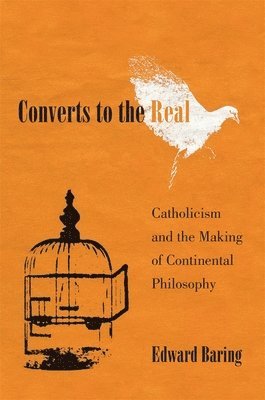
In the most wide-ranging history of phenomenology since Herbert Spiegelberg’s The Phenomenological Movement over fifty years ago, Baring uncovers a new and unexpected force—Catholic intellectuals—behind the growth of phenomenology in the early twentieth century, and makes the case for the movement’s catalytic intellectual and social impact.Of all modern schools of thought, phenomenology has the strongest claim to the mantle of “continental” philosophy. In the first half of the twentieth century, phenomenology expanded from a few German towns into a movement spanning Europe. Edward Baring shows that credit for this prodigious growth goes to a surprising group of early enthusiasts: Catholic intellectuals. Placing phenomenology in historical context, Baring reveals the enduring influence of Catholicism in twentieth-century intellectual thought.Converts to the Real argues that Catholic scholars allied with phenomenology because they thought it mapped a path out of modern idealism—which they associated with Protestantism and secularization—and back to Catholic metaphysics. Seeing in this unfulfilled promise a bridge to Europe’s secular academy, Catholics set to work extending phenomenology’s reach, writing many of the first phenomenological publications in languages other than German and organizing the first international conferences on phenomenology. The Church even helped rescue Edmund Husserl’s papers from Nazi Germany in 1938. But phenomenology proved to be an unreliable ally, and in debates over its meaning and development, Catholic intellectuals contemplated the ways it might threaten the faith. As a result, Catholics showed that phenomenology could be useful for secular projects, and encouraged its adoption by the philosophical establishment in countries across Europe and beyond.Baring traces the resonances of these Catholic debates in postwar Europe. From existentialism, through the phenomenology of Paul Ricoeur and Maurice Merleau-Ponty, to the speculative realism of the present, European thought bears the mark of Catholicism, the original continental philosophy.
918 kr
Skickas inom 10-15 vardagar
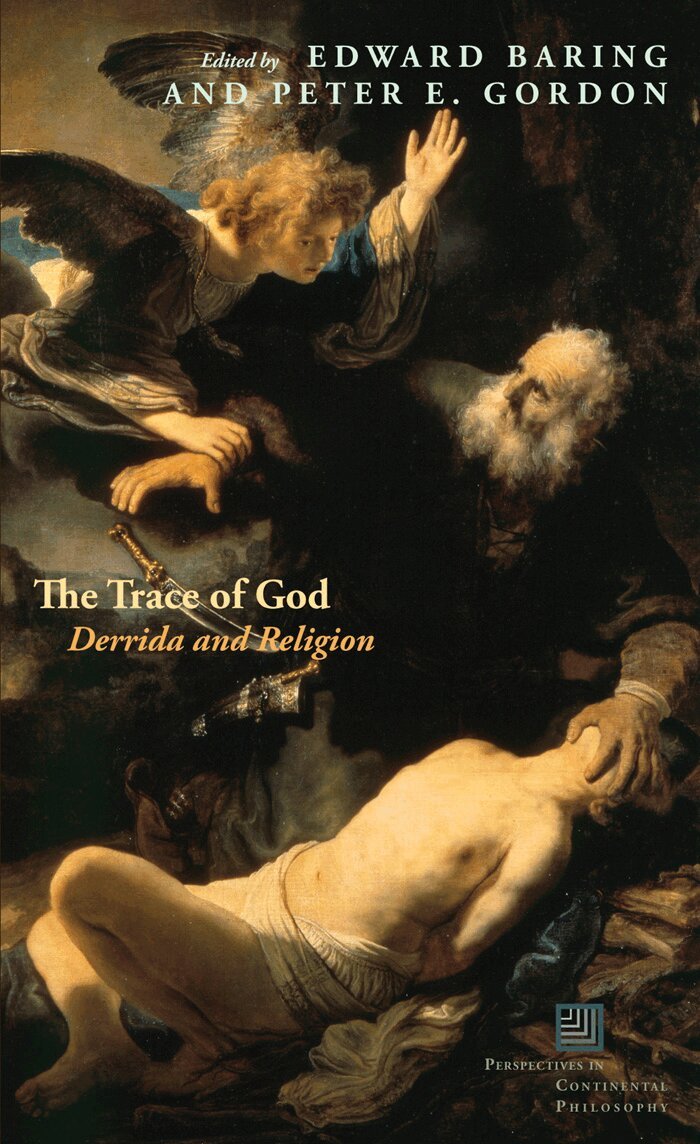
Derrida's writings on the question of religion have played a crucial role in the transformation of scholarly debate across the globe. The Trace of God provides a compact introduction to this debate. It considers Derrida's fraught relationship to Judaism and his Jewish identity, broaches the question of Derrida's relation to the Western Christian tradition, and examines both the points of contact and the silences in Derrida's treatment of Islam.
329 kr
Skickas inom 10-15 vardagar
Derrida's writings on the question of religion have played a crucial role in the transformation of scholarly debate across the globe. The Trace of God provides a compact introduction to this debate. It considers Derrida's fraught relationship to Judaism and his Jewish identity, broaches the question of Derrida's relation to the Western Christian tradition, and examines both the points of contact and the silences in Derrida's treatment of Islam.
1 245 kr
Skickas inom 7-10 vardagar
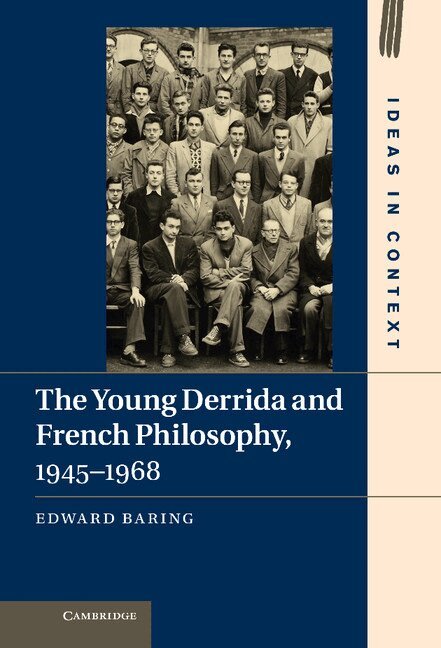
In this powerful study Edward Baring sheds fresh light on Jacques Derrida, one of the most influential yet controversial intellectuals of the twentieth century. Reading Derrida from a historical perspective and drawing on new archival sources, The Young Derrida and French Philosophy shows how Derrida's thought arose in the closely contested space of post-war French intellectual life, developing in response to Sartrian existentialism, religious philosophy and the structuralism that found its base at the École Normale Supérieure. In a history of the philosophical movements and academic institutions of post-war France, Baring paints a portrait of a community caught between humanism and anti-humanism, providing a radically new interpretation of the genesis of deconstruction and of one of the most vibrant intellectual moments of modern times.
360 kr
Skickas inom 7-10 vardagar
In this powerful study Edward Baring sheds fresh light on Jacques Derrida, one of the most influential yet controversial intellectuals of the twentieth century. Reading Derrida from a historical perspective and drawing on new archival sources, The Young Derrida and French Philosophy shows how Derrida's thought arose in the closely contested space of post-war French intellectual life, developing in response to Sartrian existentialism, religious philosophy and the structuralism that found its base at the École Normale Supérieure. In a history of the philosophical movements and academic institutions of post-war France, Baring paints a portrait of a community caught between humanism and anti-humanism, providing a radically new interpretation of the genesis of deconstruction and of one of the most vibrant intellectual moments of modern times.