Edward Furimsky – författare
Visar alla böcker från författaren Edward Furimsky. Handla med fri frakt och snabb leverans.
12 produkter
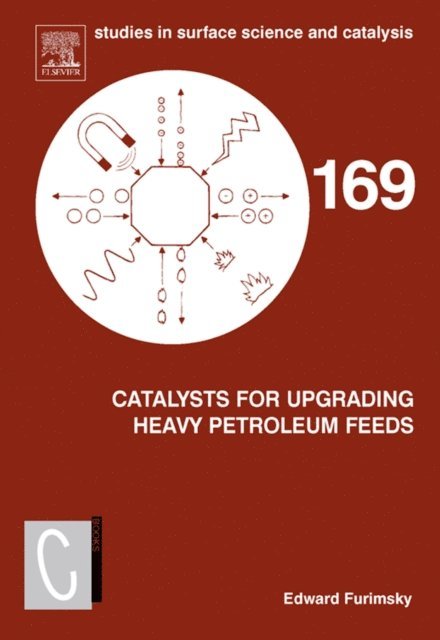
Catalysts for Upgrading Heavy Petroleum Feeds
E-bok, 2007
2363 kr
Lägg i varukorg
The book provides the most up-to-date information on testing and development of hydroprocessing catalysts with the aim to improve performance of the conventional and modified catalysts as well as to develop novel catalytic formulations. Besides diverse chemical composition, special attention is …
Catalysts for Upgrading Heavy Petroleum Feeds
Inbunden, 2007
3315 kr
Lägg i varukorg
The book provides the most up-to-date information on testing and development of hydroprocessing catalysts with the aim to improve performance of the conventional and modified catalysts as well as to develop novel catalytic formulations. Besides diverse chemical composition, special attention is …
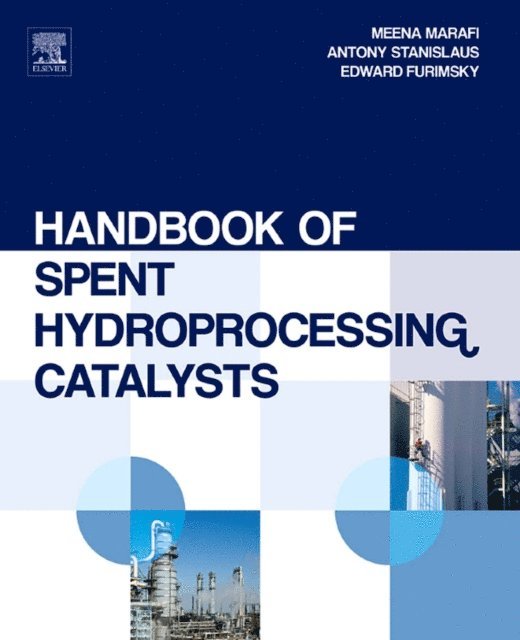
Handbook of Spent Hydroprocessing Catalysts
Regeneration, Rejuvenation, Reclamation, Environment and Safety
Av Edward Furimsky, Anthony Stanislaus m. fl.
E-bok, 2010
2445 kr
Lägg i varukorg
This handbook serves scientists and researchers interested in any aspect of spent hydroprocessing catalysts. Its aim is to assist in the analysis and assessment of refined catalyst byproducts and processing options, to determine whether spent catalysts can be processed into productive resources. …
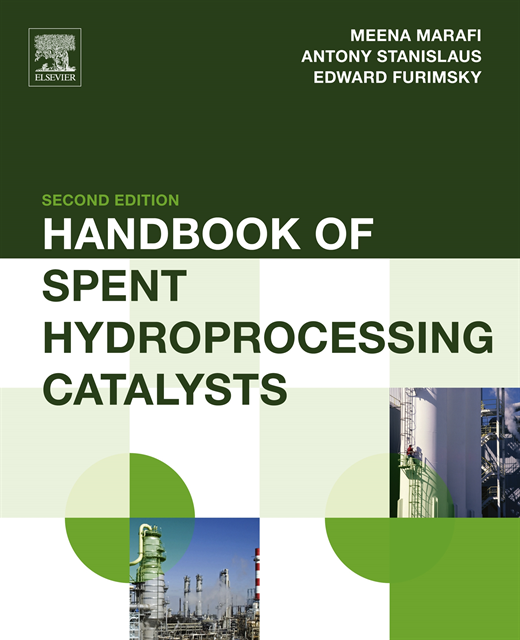
Handbook of Spent Hydroprocessing Catalysts
Av Meena Marafi, Anthony Stanislaus m. fl.
Häftad, 2017
2060 kr
Lägg i varukorg
Handbook of Spent Hydroprocessing Catalysts, Second Edition, covers all aspects of spent hydroprocessing catalysts, both regenerable and non-regenerable. It contains detailed information on hazardous characteristics of spent and regenerated catalysts. The information forms a basis for determining …
Handbook of Spent Hydroprocessing Catalysts
Av Edward Furimsky, Anthony Stanislaus m. fl.
E-bok, 2017
2511 kr
Lägg i varukorg
Handbook of Spent Hydroprocessing Catalysts, Second Edition, covers all aspects of spent hydroprocessing catalysts, both regenerable and non-regenerable. It contains detailed information on hazardous characteristics of spent and regenerated catalysts. The information forms a basis for determining …
Carbons and Carbon Supported Catalysts in Hydroprocessing
Inbunden, 2008
1848 kr
Lägg i varukorg
Carbon materials have, in recent years, been attracting attention as potential supports in heterogeneous catalysis. In 2006, the number of articles dealing with various types of catalysts supported on carbon approached 1000, however only a fraction of those were devoted to hydroprocessing …
Carbon Nanomaterials in Hydrogenation Catalysis
Inbunden, 2019
2716 kr
Lägg i varukorg
Hydrogenation is a key reaction in both the food and petrochemical industries, where it is used to reduce carbon–carbon double bonds. Without a catalyst, hydrogenation reactions require extreme temperatures to occur, meaning catalysts are essential for the reaction to be industrially useful. During …
Carbon Nanomaterials in Hydrogenation Catalysis
E-bok, 2019
2428 kr
Lägg i varukorg
Hydrogenation is a key reaction in both the food and petrochemical industries, where it is used to reduce carbon–carbon double bonds. Without a catalyst, hydrogenation reactions require extreme temperatures to occur, meaning catalysts are essential for the reaction to be industrially useful. During …
Carbon Nanomaterials in Hydrogenation Catalysis
E-bok, 2019
2428 kr
Lägg i varukorg
Hydrogenation is a key reaction in both the food and petrochemical industries, where it is used to reduce carbon–carbon double bonds. Without a catalyst, hydrogenation reactions require extreme temperatures to occur, meaning catalysts are essential for the reaction to be industrially useful. During …
Carbons and Carbon Supported Catalysts in Hydroprocessing
E-bok, 2008
1630 kr
Lägg i varukorg
Carbon materials have, in recent years, been attracting attention as potential supports in heterogeneous catalysis. In 2006, the number of articles dealing with various types of catalysts supported on carbon approached 1000, however only a fraction of those were devoted to hydroprocessing …
Catalysis in the Refining of Fischer-Tropsch Syncrude
Av Arno de Klerk, Edward Furimsky
Inbunden, 2010
2180 kr
Lägg i varukorg
Fischer-Tropsch Synthesis (FTS) has been used on a commercial scale for more than eighty years. It was initially developed for strategic reasons because it offered a source of transportation fuels that was independent from crude oil. Unlike crude, Fischer-Tropsch synthetic crude is rich in olefins …
Catalysis in the Refining of Fischer-Tropsch Syncrude
Av Edward Furimsky, Arno de Klerk
E-bok, 2010
1988 kr
Lägg i varukorg
Fischer-Tropsch Synthesis (FTS) has been used on a commercial scale for more than eighty years. It was initially developed for strategic reasons because it offered a source of transportation fuels that was independent from crude oil. Unlike crude, Fischer-Tropsch synthetic crude is rich in olefins …