Edward Hill - Böcker
Visar alla böcker från författaren Edward Hill. Handla med fri frakt och snabb leverans.
6 produkter
6 produkter
191 kr
Skickas inom 5-8 vardagar
204 kr
Skickas inom 5-8 vardagar
1 529 kr
Skickas inom 10-15 vardagar
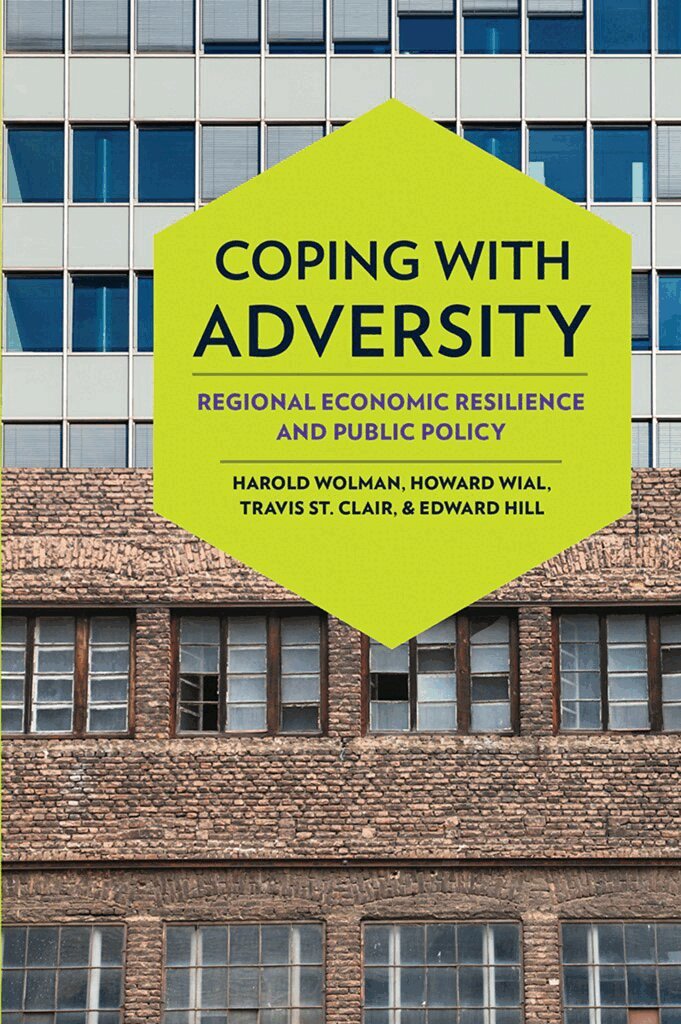
Coping with Adversity addresses the question of why some metropolitan-area regional economies are resilient in the face of economic shocks and chronic distress while others are not. It is particularly concerned with what public policies make a difference in whether a region is resilient. The authors employ a wide range of techniques to examine the experience of all metropolitan area economies from 1978–2014. They then look closely at six American metropolitan areas to determine what strategies were employed, which of these contributed to regional economic resilience, and which did not. Charlotte, North Carolina, Seattle, Washington, and Grand Forks, North Dakota, are cases of economic resilience, while Cleveland, Ohio, Hartford, Connecticut, and Detroit, Michigan, are cases of economic nonresilience. The six case studies include hard data on employment, production, and demographics, as well as material on public policies and actions. The authors conclude that there is little that can done in the short term to counter economic shocks; most regions simply rebound naturally after a relatively short period of time. However, they do find that many regions have successfully emerged from periods of prolonged economic distress and that there are policies that can be applied to help them do so. Coping with Adversity will be important reading for all those concerned with local and regional economic development, including public officials, urban planners, and economic developers.
437 kr
Skickas inom 10-15 vardagar
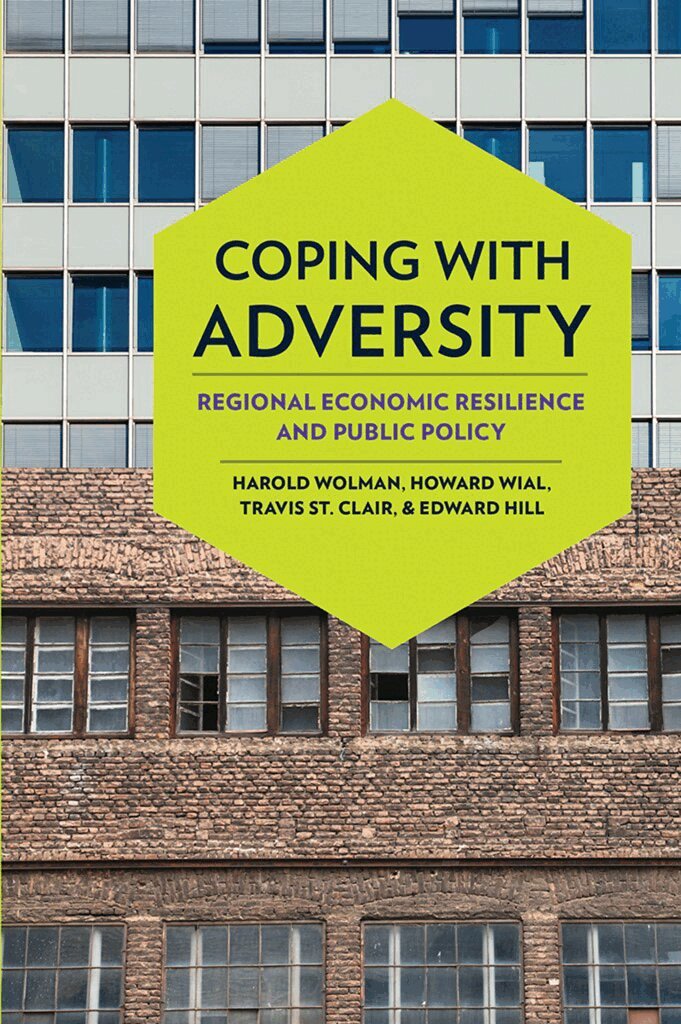
Coping with Adversity addresses the question of why some metropolitan-area regional economies are resilient in the face of economic shocks and chronic distress while others are not. It is particularly concerned with what public policies make a difference in whether a region is resilient. The authors employ a wide range of techniques to examine the experience of all metropolitan area economies from 1978–2014. They then look closely at six American metropolitan areas to determine what strategies were employed, which of these contributed to regional economic resilience, and which did not. Charlotte, North Carolina, Seattle, Washington, and Grand Forks, North Dakota, are cases of economic resilience, while Cleveland, Ohio, Hartford, Connecticut, and Detroit, Michigan, are cases of economic nonresilience. The six case studies include hard data on employment, production, and demographics, as well as material on public policies and actions. The authors conclude that there is little that can done in the short term to counter economic shocks; most regions simply rebound naturally after a relatively short period of time. However, they do find that many regions have successfully emerged from periods of prolonged economic distress and that there are policies that can be applied to help them do so. Coping with Adversity will be important reading for all those concerned with local and regional economic development, including public officials, urban planners, and economic developers.
3 016 kr
Skickas inom 3-6 vardagar
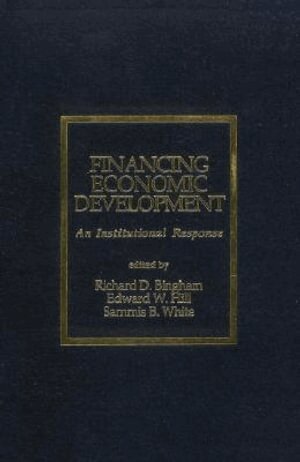
The recession and concerns over industrial competitiveness in the 1980s generated public concern with job retention and creation, leading to state and local programs designed to stimulate local economic development. As a new, rapidly growing field, local economic development literature proliferated, but has not provided a comprehensive source for the field. Several questions are of particular concern: What are the major financing mechanisms for economic development? How do they actually work? How does one evaluate their effectiveness? Financing Economic Development is a comprehensive resource which describes the major mechanisms available for financing economic development. The chapters describe financing tools or programs in some detail; provide one or more examples of how they work; classify the tool according to various approaches; and come to an evaluative conclusion about the utility and effectiveness of the mechanism for economic development. A documentation of institutional innovation by state and local government, this volume shows how governments--across the United Statesùare working with private sector financiers, thereby allowing private intermediaries to invest in new enterprises. With contributions by highly qualified practitioners and academics, this volume is appropriate for professionals as well as for upper division undergraduate and graduate students in urban studies, public administration, and policy studies. "The book provides useful information by presenting a considerable number of institutional arrangements and showing the immense variety of approaches to economic development on the state and local level. The latter aspect is particularly fascinating for readers from countries with a less fragmented government than the United States." --Journal of Evolutionary Economics "Although there have been a plethora of publications on economic development, this book is a useful addition to the body of literature on the subject. The book provides some useful examples and case studies of private-sector participation, which, of course, is the goal of most economic development programs." --Government Finance Review
177 kr
Skickas inom 5-8 vardagar