Edward Hubbard - Böcker
Visar alla böcker från författaren Edward Hubbard. Handla med fri frakt och snabb leverans.
5 produkter
5 produkter
477 kr
Tillfälligt slut
Clwyd, covering the former counties of Denbighshire and Flintshire, is exceptionally rewarding in architecture. the medieval period has left a fine legacy, including castles of the time of Edward I as sophisticated as any in Europe, the monastic ruins of Basingwerk and Valle Crucis, and the distinctive local 'double-nave' type of Perpendicular church. Country houses range in size and ambition from Erddig, Kinmel and Chirk Castle to a host of lesser buildings, humbler but still of quality. Towns such as Denbigh and Ruthin, village groups and Victorian seaside resorts all add to the pattern of styles and materials, a pattern further enriched by relics of the Industrial revolution and the striking diversity of vernacular styles.
1 233 kr
Skickas inom 10-15 vardagar
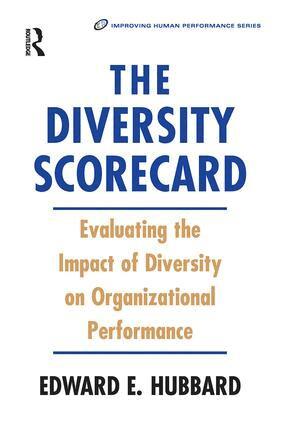
'The Diversity Scorecard' is designed to provide step-by-step instructions, worksheets and examples to help diversity executives and managers analyze and track the impact of their diversity initiatives to mobilize the organization for strategic culture change. Diversity is not a program; it is a systemic process of organizational change that requires measurement for organizational improvement and success.Measuring the progress and results of diversity initiatives is a key strategic requirement to demonstrate its contribution to organizational performance. Diversity executives, professionals and managers know they must begin to show how diversity is linked to the bottom-line in hard numbers or they will have difficulty maintaining funds, gaining support, and obtaining resources to generate progress.Many organizations collect some type of diversity-related data today, even if it focuses only on Affirmative Action statistics. "The Diversity Scorecard" focuses on tools and techniques to make sure diversity professionals are collecting and measuring the right type of data that will help ensure the organization"s success both now and in the future. This book helps the reader spend some time thinking about what they currently measure and adding new measures to a database to track progress towards their diversity vision. The basic premises of this book are that it is important to develop measures that focus on the past, present, and future; and that measures need to consider the needs of the organization"s diverse workforce, its work climate, diverse customers, the community, and shareholders.Part I of "The Diversity Scorecard" identifies the need for diversity measurement highlighting a business case for diversity and providing an introduction to diversity measurement. Part II of the book outlines the diversity return on investment (DROI) process taking you through step-by-step processes and techniques. Part III teaches you how to use measures in six key categories - Diversity Leadership Commitment, Workforce Profile Representation, Workplace Climate, Learning & Growth, Diverse Customer / Community Partnerships, and Financial Impact - to build a diversity scorecard that is aligned and linked with the business strategy of the organization. Finally, in Part IV, Dr. Hubbard discusses implementation issues involving strategic change procedures and techniques to avoid the pitfalls inherent in a diversity-based cultural transition process.
274 kr
Skickas inom 3-6 vardagar
2 027 kr
Skickas inom 10-15 vardagar
'The Diversity Scorecard' is designed to provide step-by-step instructions, worksheets and examples to help diversity executives and managers analyze and track the impact of their diversity initiatives to mobilize the organization for strategic culture change. Diversity is not a program; it is a systemic process of organizational change that requires measurement for organizational improvement and success.Measuring the progress and results of diversity initiatives is a key strategic requirement to demonstrate its contribution to organizational performance. Diversity executives, professionals and managers know they must begin to show how diversity is linked to the bottom-line in hard numbers or they will have difficulty maintaining funds, gaining support, and obtaining resources to generate progress.Many organizations collect some type of diversity-related data today, even if it focuses only on Affirmative Action statistics. "The Diversity Scorecard" focuses on tools and techniques to make sure diversity professionals are collecting and measuring the right type of data that will help ensure the organization"s success both now and in the future. This book helps the reader spend some time thinking about what they currently measure and adding new measures to a database to track progress towards their diversity vision. The basic premises of this book are that it is important to develop measures that focus on the past, present, and future; and that measures need to consider the needs of the organization"s diverse workforce, its work climate, diverse customers, the community, and shareholders.Part I of "The Diversity Scorecard" identifies the need for diversity measurement highlighting a business case for diversity and providing an introduction to diversity measurement. Part II of the book outlines the diversity return on investment (DROI) process taking you through step-by-step processes and techniques. Part III teaches you how to use measures in six key categories - Diversity Leadership Commitment, Workforce Profile Representation, Workplace Climate, Learning & Growth, Diverse Customer / Community Partnerships, and Financial Impact - to build a diversity scorecard that is aligned and linked with the business strategy of the organization. Finally, in Part IV, Dr. Hubbard discusses implementation issues involving strategic change procedures and techniques to avoid the pitfalls inherent in a diversity-based cultural transition process.
240 kr
Skickas inom 7-10 vardagar
The third edition of a best-selling book on the Port Sunlight Village, with a new chapter on the Lady Lever Art Gallery, further information on key individuals and an increase in the number of illustrations. The model industrial village of Port Sunlight was founded by the soap manufacturer W. H. Lever (later Lord Leverhulme) in 1888 for the factory workers of the firm of Lever Brothers. The village was acclaimed from the first as exemplifying the best in English town planning and house design, and greatly influenced subsequent industrial villages such as the later parts of Bournville, and the garden city movement more generally. This guide considers the village in its historical context, with particular emphasis on the planning and architectural aspects. It explains the social and visual significance of Port Sunlight and the reasons for its being unique in the history of town planning, as well as looking at the way its development was influenced by changing fashions in urban design. The relevance of Lever’s own character and interests – his social conscience, his love of art and beauty and his architectural enthusiasms – are also examined. Two tours, one for pedestrians and one for car drivers, which include and describe the most significant buildings of the village, are an additional feature of the guide.