Edward Luce - Böcker
Visar alla böcker från författaren Edward Luce. Handla med fri frakt och snabb leverans.
12 produkter
12 produkter
365 kr
Skickas inom 7-10 vardagar
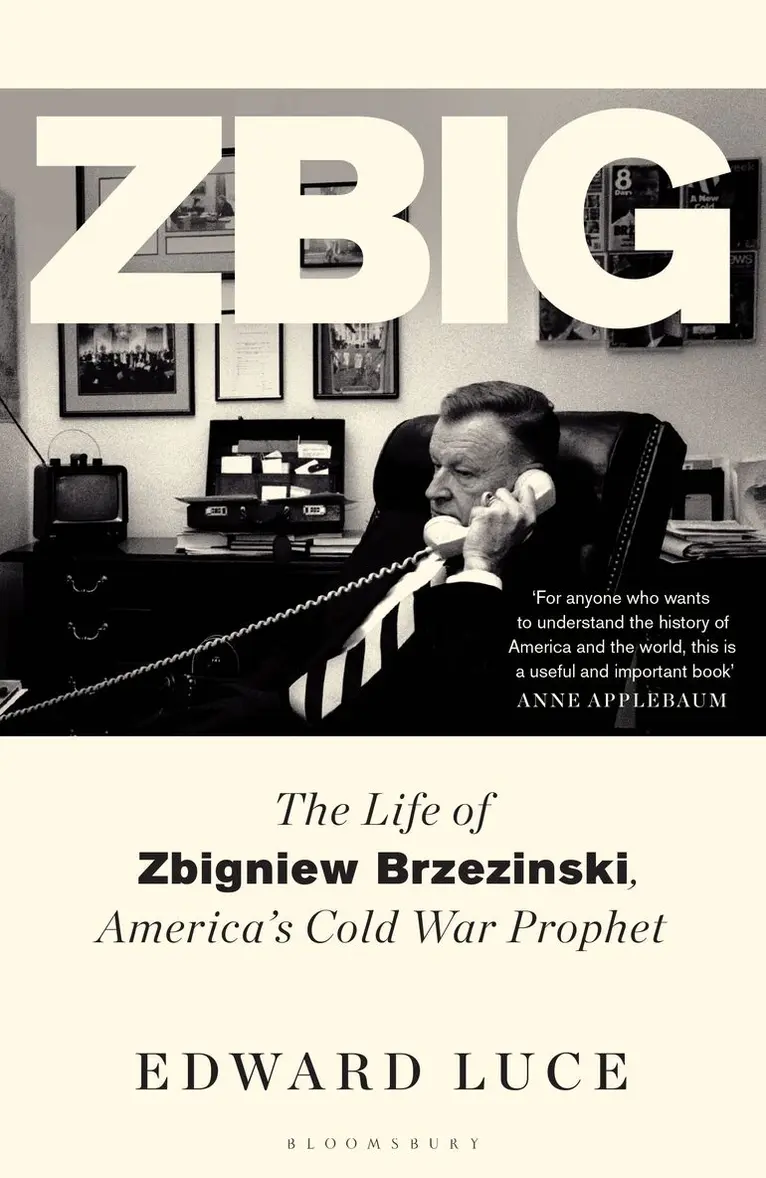
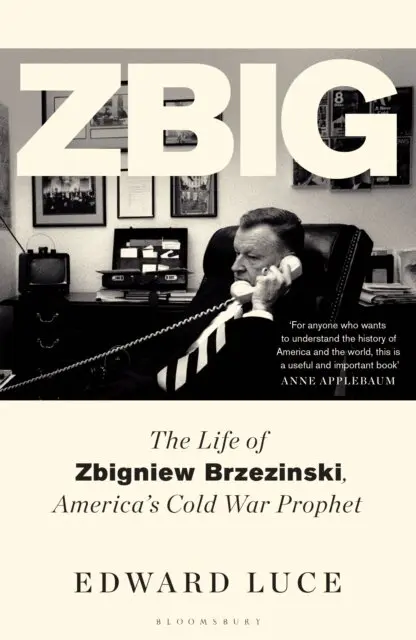
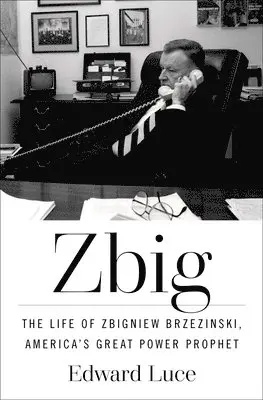
*A FINANCIAL TIMES AND ECONOMIST BOOK OF THE YEAR 2025*'For anyone who wants to understand the history of America and the world, this is a useful and important book' ANNE APPLEBAUM'A biographer of genius ... One of the sharpest political pens of our day' WILLIAM DALRYMPLE'A towering achievement. A book which is founded on deep scholarship, yet so accessible and readable from the very beginning that it feels more like a historical detective story' RAGEH OMAARZbigniew Brzezinski was a political strategist who rose to prominence as an intellectual architect of US foreign policy during the Cold War. As National Security Advisor to President Jimmy Carter and a trusted advisor to US presidents from John F. Kennedy onwards, Brzezinski’s expertise helped shape global strategy at critical moments - most significantly as a key figure in the downfall of the Soviet Union.A Polish émigré who witnessed the devastation of his homeland during both Nazi and Soviet occupations, Brzezinski became one of the West’s foremost scholars of totalitarianism. His nuanced understanding of the importance of ‘speaking the enemy’s language’, coupled with his close friendship with Pope John Paul II was instrumental in preventing a Soviet invasion of Poland. While Nixon and Kissinger, his lifelong rival, famously opened China to the West in the early 1970s, it was Brzezinski and Carter who strengthened US-China relations, further shifting the global balance of power away from Moscow. Beyond the Cold War, Brzezinski continued to influence foreign policy, notably in shaping the nation’s response to the 9/11 attacks. Yet his legacy remains underreported, leaving gaps in our understanding of Cold War history and its aftermath.Edward Luce, celebrated columnist and political writer, restores Brzezinski’s rightful place in history. Through a sweeping narrative that spans much of the 20th century, Zbig offers a gripping account of Brzezinski’s life and, in doing so, narrates a compelling re-examination of the end of the Cold War.
137 kr
Skickas inom 7-10 vardagar
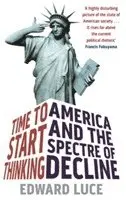
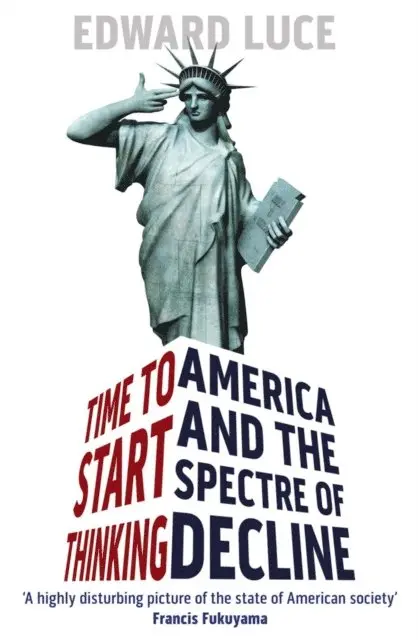
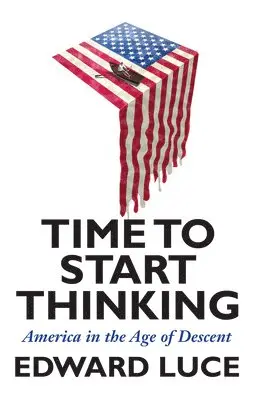
On its present course, the US faces a world of rising new countries that will compete with it ever more fiecely as its own power is declining. In order to slow and improve this steady leakage of power, the US must change course internationally, economically and domestically. It must also restructure to remain the world's most competitive economy. And it must address quality of life issues and fairness at home. But American politics is broken - competing forces and interests have led to stasis. With change so tough, where now for a country where the middle classes are suffering as they have never suffered before, the pensions crisis is growing, the deficit out of sight, and radicalism waiting in the wings?
147 kr
Skickas inom 7-10 vardagar
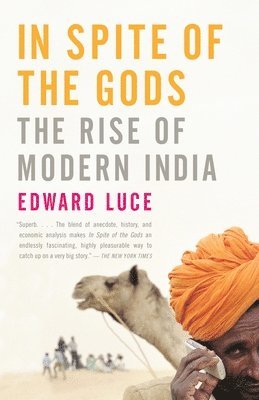
India is poised to become one of the world's three largest economies in the next generation and to overtake China as the world's most populous country by 2032. Well before then India's incipient nuclear deterrent will have acquired intercontinental range and air, sea and land capabilities. India's volatile relationship with its nuclear-armed neighbour, Pakistan, may prove to be the source of the world's next major conflict. And if you call anyone- from your bank to rail enquiries- your query may well be dealt with by a graduate in Gujarat. Any way one looks at it, India's fate matters. Edward Luce, one of the most incisive and talented journalists of his generation, assesses the forces that are forging the new nation. Cutting through the miasma that still clouds thinking about India, this extraordinarily accomplished book takes the measure of a society that is struggling to come to grips with modernity. Drawing on historical research, existing literature and his own unparalleled access as the New Delhi-based, South Asia correspondent of the FT, this is a book that will enthral as well as educate and will remain the definitive book on the country for many years.
137 kr
Skickas inom 7-10 vardagar
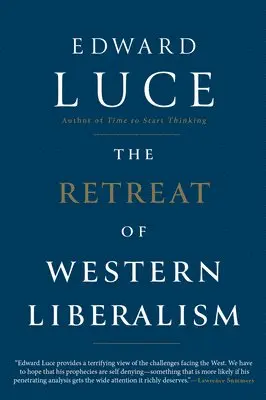
'A panorama of the unravelling world order as riveting as any beach read' New Yorker'Read this book: in the three hours it takes you will get a new, bracing and brilliant understanding of the dangers we in the democratic West now face. Luce is one of the smartest journalists working today, and his perceptions are priceless' Jane Mayer, staff writer on the New Yorker'No one was more prescient about the economic malaise and popular resentment that has hit the United States than Ed Luce in his previous book, Time to Start Thinking. His new book, Retreat of Western Liberalism, broadens that picture to cover the Western world. It is a must read for anyone trying to make sense of the waves of populism and nationalism we face today' Liaquat AhamedIn his widely acclaimed book Time to Start Thinking, Financial Times columnist and commentator Edward Luce charted the course of American economic and geopolitical decline, proving to be a prescient voice on our current social and political turmoil.In The Retreat of Western Liberalism, Luce makes a larger statement about the weakening of western hegemony and the crisis of democratic liberalism - of which Donald Trump and his European counterparts are not the cause, but a symptom. Luce argues that we are on a menacing trajectory brought about by ignorance of what it took to build the West, arrogance towards society's losers, and complacency about our system's durability - attitudes that have been emerging since the fall of the Berlin Wall, treated by the West as an absolute triumph over the East. We cannot move forward without a clear diagnosis of what has gone wrong. Luce contrasts Western democratic and economic ideals, which rest on an assumption of linear progress, with more cyclical views of economic strength - symbolized by the nineteenth-century fall and present-day rise of the Chinese and Indian economies - and with the dawn of a new multipolar age.Combining on-the-ground reporting with intelligent synthesis of the vast literature already available, Luce offers a detailed projection of the consequences of the Trump administration and a forward-thinking analysis of what those who believe in enlightenment values must do to defend them from the multiple onslaughts they face in the coming years.
250 kr
Skickas inom 3-6 vardagar
284 kr
Skickas inom 3-6 vardagar
250 kr
Skickas inom 3-6 vardagar
305 kr
Skickas inom 3-6 vardagar
176 kr
Skickas inom 7-10 vardagar
In his widely acclaimed book Time to Start Thinking, Financial Times columnist and commentator Edward Luce charted the course of American economic and geopolitical decline, proving to be a prescient voice on our current social and political turmoil.In The Collapse of Western Liberalism, Luce makes a larger statement about the weakening of western hegemony and the crisis of democratic liberalism - of which Donald Trump and his European counterparts are not the cause, but a symptom. Luce argues that we are on a menacing trajectory brought about by ignorance of what it took to build the West, arrogance towards society's losers, and complacency about our system's durability - attitudes that have been emerging since the fall of the Berlin Wall, treated by the West as an absolute triumph over the East. We cannot move forward without a clear diagnosis of what has gone wrong. Luce contrasts Western democratic and economic ideals, which rest on an assumption of linear progress, with more cyclical views of economic strength - symbolized by the nineteenth-century fall and present-day rise of the Chinese and Indian economies - and with the dawn of a new multipolar age.Combining on-the-ground reporting with intelligent synthesis of the vast literature already available, Luce offers a detailed projection of the consequences of the Trump administration and a forward-thinking analysis of what those who believe in enlightenment values must do to defend them from the multiple onslaughts they face in the coming years.
134 kr
Kommande
'For anyone who wants to understand the history of America and the world, this is a useful and important book' ANNE APPLEBAUM'A biographer of genius ... One of the sharpest political pens of our day' WILLIAM DALRYMPLE'A towering achievement. A book which is founded on deep scholarship, yet so accessible and readable from the very beginning that it feels more like a historical detective story' RAGEH OMAARZbigniew Brzezinski was a political strategist who rose to prominence as an intellectual architect of US foreign policy during the Cold War. As National Security Advisor to President Jimmy Carter and a trusted advisor to US presidents from John F. Kennedy onwards, Brzezinski’s expertise helped shape global strategy at critical moments - most significantly as a key figure in the downfall of the Soviet Union.A Polish émigré who witnessed the devastation of his homeland during both Nazi and Soviet occupations, Brzezinski became one of the West’s foremost scholars of totalitarianism. His nuanced understanding of the importance of ‘speaking the enemy’s language’, coupled with his close friendship with Pope John Paul II was instrumental in preventing a Soviet invasion of Poland. While Nixon and Kissinger, his lifelong rival, famously opened China to the West in the early 1970s, it was Brzezinski and Carter who strengthened US-China relations, further shifting the global balance of power away from Moscow. Beyond the Cold War, Brzezinski continued to influence foreign policy, notably in shaping the nation’s response to the 9/11 attacks. Yet his legacy remains underreported, leaving gaps in our understanding of Cold War history and its aftermath.Edward Luce, celebrated columnist and political writer, restores Brzezinski’s rightful place in history. Through a sweeping narrative that spans much of the 20th century, Zbig offers a gripping account of Brzezinski’s life and, in doing so, narrates a compelling re-examination of the end of the Cold War.
400 kr
Skickas inom 3-6 vardagar
1 928 kr
Skickas inom 10-15 vardagar
This book offers a comprehensive curriculum on plastic surgery, centered on adult learning principles. The pedagogical structure includes a base of cognitive knowledge that consists of the entire spectrum of plastic surgery; reconstructive and aesthetic; a guide for an interactive discussion of each component of the knowledge base; a set of multiple-choice questions with a syllabus of explanation of correct and incorrect responses; and clinical cases to illustrate each element. Over one hundred modules constitute the curriculum, all of which are grouped into thirteen general categories. Each module includes a selected bibliography of relevant and contemporary readings, a discussion guide of broad questions and answers for a faculty member to drive an interactive discussion of the module, a set of multiple-choice questions for each module to serve as a short written quiz, and 1-3 cases that are utilized in a case-base conference to discuss the practical application of cognitive knowledge to problem-solving of a clinical scenario. Finally, a several-page review of the particular case provides an optimal approach to diagnosis and treatment. A Curriculum for Plastic Surgery provides an encyclopedic yet facile vehicle to deliver a comprehensive, contemporary, and interactive curriculum. The curriculum reflects the author’s four decade long career in academic practice and teaching within this field.