Edward McGushin - Böcker
Visar alla böcker från författaren Edward McGushin. Handla med fri frakt och snabb leverans.
2 produkter
2 produkter
312 kr
Skickas inom 7-10 vardagar
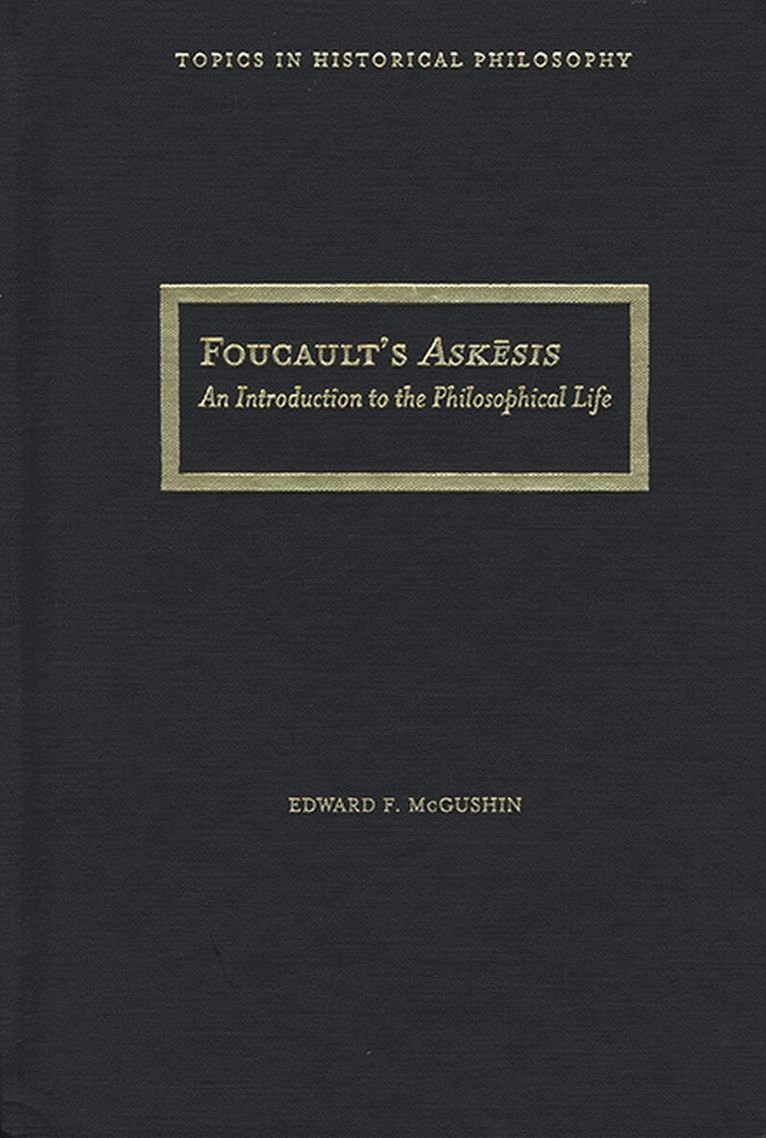
In his renowned courses at the Collège de France from 1982 to 1984, Michel Foucault devoted his lectures to meticulous readings and interpretations of the works of Plato, Epictetus, Seneca, and Marcus Aurelius, among others. In this his aim was not, Edward F. McGushin contends, to develop a new knowledge of the history of philosophy; rather, it was to let himself be transformed by the very activity of thinking. Thus, this work shows us Foucault in the last phase of his life in the act of becoming a philosopher. Here we see how his encounter with ancient philosophy allowed him to experience the practice of philosophy as, to paraphrase Nietzsche, a way of becoming who one is: the work of self-formation that the Greeks called askesis.Through a detailed study of Foucault's last courses, McGushin demonstrates that this new way of practicing philosophical askesis evokes Foucault's ethical resistance to modern relations of power and knowledge. In order to understand Foucault's later project, then, it is necessary to see it within the context of his earlier work. If his earlier projects represented an attempt to bring to light the relations of power and knowledge that narrowed and limited freedom, then this last project represents his effort to take back that freedom by redefining it in terms of care of the self. Foucault always stressed that modern power functions by producing individual subjects. This book shows how his excavation of ancient philosophical practices gave him the tools to counter this function-with a practice of self-formation, an askesis.
1 209 kr
Skickas inom 10-15 vardagar
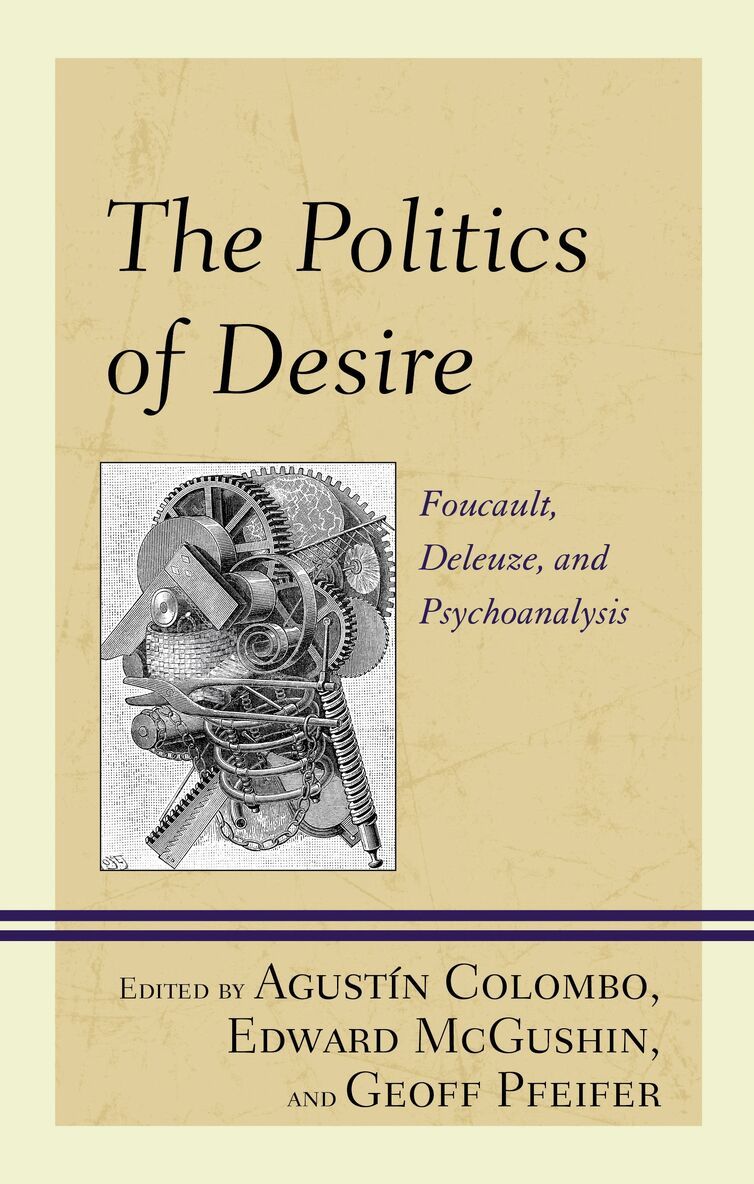
In his preface to Deleuze and Guattari’s Anti-Oedipus, Michel Foucault notes that in the late sixties, there is a turn away from Freud anda movement toward what he calls an “experience and technology of desire that is no longer Freudian”. Foucault, Deleuze, and Guattari were interested in, and engaged with this shift and their collective work in these areas spawned a larger post-Freudian literature. This book gathers contributions from international scholars with the aim of exploring the social, political, and philosophical dimension of Deleuze and Guattari’s, and Foucault’s critical encounters with psychoanalytic thought: Their possible connections, their divergences, the fields of reflection that these encounters open, and the problems and debates that led Foucault and Deleuze and Guattari to engage with psychoanalysis in the ways that they did. In doing so, the main goal of the book is not to engage in a critique of the discipline of Psychoanalysis as such, but to investigate how Foucault’s and Deleuze’s critique of Psychoanalysis gives rise to a political reflection that draws on some of Psychoanalysis key notions. Among these, the concept of Desire is central as it allows us to grasp the different ways in which Foucault and Deleuze politically engage with Psychoanalysis: for Deleuze, Desire is the element through which Revolution becomes possible, whereas for Foucault Desire is a cornerstone of the modern mechanisms of subjection. Drawing both on new material like Confessions of the Flesh, the 4th volume of Foucault’s History of Sexuality and on Foucault and Deleuze main work, the book covers a variety of topics including the contrast between Foucault’s and Deleuze political understanding of desire and pleasure; the genealogy of desire as a way to investigate the historical shaping of psychoanalysis; the relationship between psychoanalysis and the normalizing mechanisms of power (e.g. biopolitics and disciplinary regimes); the ways in which psychoanalysis and neoliberalism come together in particular moments, the status and role of desire in revolt, resistance, and transformation; Foucault and Deleuze’s different approaches to the unconscious; the role of desire in the formation of identity; etc.,. In the 50th anniversary of Deleuze and Guattari’s Anti-Oedipus, one of the major references that inspires the many chapters in this book, we aim to pay homage to these two important figures of contemporary thought by enriching and opening new lines of thought and problematization of the political reflection on Desire that Foucault and Deleuze developed.