Edward Ott - Böcker
Visar alla böcker från författaren Edward Ott. Handla med fri frakt och snabb leverans.
3 produkter
3 produkter
1 019 kr
Skickas inom 7-10 vardagar
Over the past two decades scientists, mathematicians, and engineers have come to understand that a large variety of systems exhibit complicated evolution with time. This complicated behavior is known as chaos. In the new edition of this classic textbook Edward Ott has added much new material and has significantly increased the number of homework problems. The most important change is the addition of a completely new chapter on control and synchronization of chaos. Other changes include new material on riddled basins of attraction, phase locking of globally coupled oscillators, fractal aspects of fluid advection by Lagrangian chaotic flows, magnetic dynamos, and strange nonchaotic attractors. This new edition will be of interest to advanced undergraduates and graduate students in science, engineering, and mathematics taking courses in chaotic dynamics, as well as to researchers in the subject.
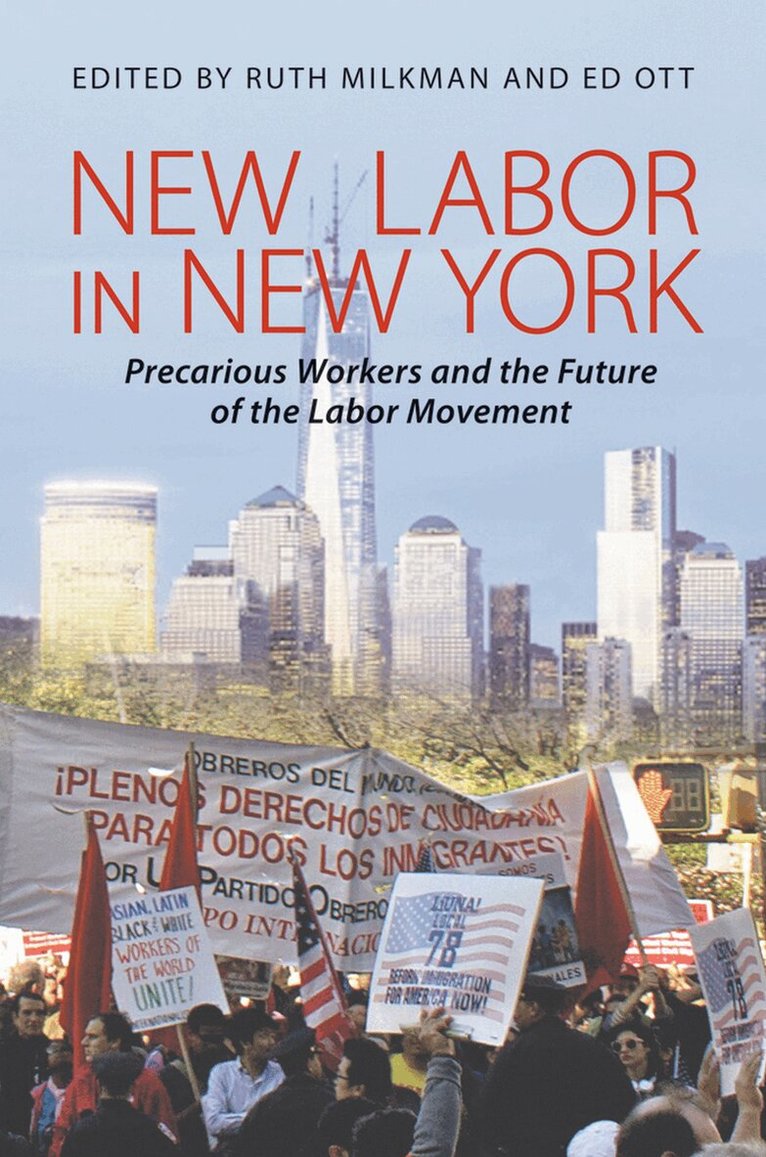
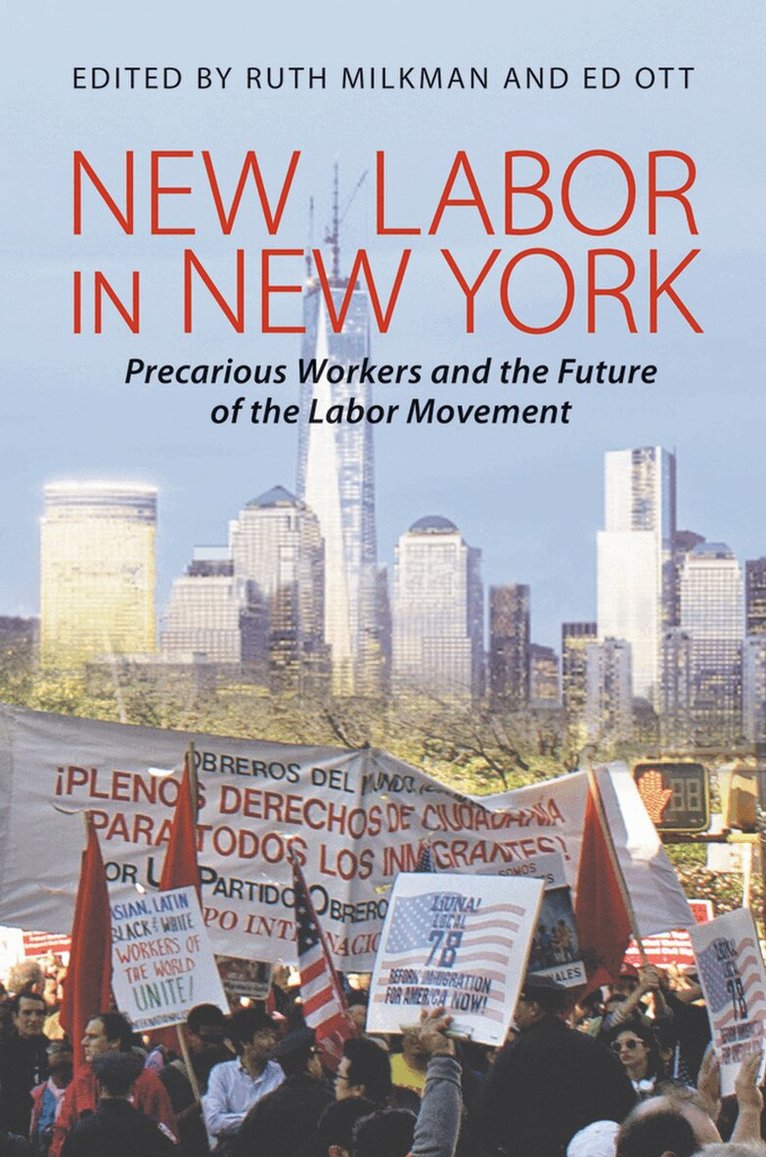
New Labor in New York
Precarious Workers and the Future of the Labor Movement
Inbunden, Engelska, 2014
1 571 kr
Skickas inom 10-15 vardagar
New York City boasts a higher rate of unionization than any other major U.S. city—roughly double the national average—but the city's unions have suffered steady and relentless decline, especially in the private sector. With higher levels of income inequality than any other large city in the nation, New York today is home to a large and growing precariat—workers with little or no employment security who are often excluded from the basic legal protections that unions struggled for and won in the twentieth century. Community-based organizations and worker centers have developed the most promising approach to organizing the new precariat and to addressing the crisis facing the labor movement. Home to some of the nation's very first worker centers, New York City today has the single largest concentration of these organizations in the United States, yet until now no one has documented their efforts. New Labor in New York includes thirteen fine-grained case studies of recent campaigns by worker centers and unions, each of which is based on original research and participant observation. Some of the campaigns documented here involve taxi drivers, street vendors, and domestic workers, as well as middle-strata freelancers—all of whom are excluded from basic employment laws. Other cases focus on supermarket, retail, and restaurant workers, who are nominally covered by such laws but who often experience wage theft and other legal violations; still other campaigns are not restricted to a single occupation or industry. This book offers a richly detailed portrait of the new labor movement in New York City, as well as several recent efforts to expand that movement from the local to the national scale.
380 kr
Skickas inom 10-15 vardagar
New York City boasts a higher rate of unionization than any other major U.S. city—roughly double the national average—but the city's unions have suffered steady and relentless decline, especially in the private sector. With higher levels of income inequality than any other large city in the nation, New York today is home to a large and growing precariat—workers with little or no employment security who are often excluded from the basic legal protections that unions struggled for and won in the twentieth century. Community-based organizations and worker centers have developed the most promising approach to organizing the new precariat and to addressing the crisis facing the labor movement. Home to some of the nation's very first worker centers, New York City today has the single largest concentration of these organizations in the United States, yet until now no one has documented their efforts. New Labor in New York includes thirteen fine-grained case studies of recent campaigns by worker centers and unions, each of which is based on original research and participant observation. Some of the campaigns documented here involve taxi drivers, street vendors, and domestic workers, as well as middle-strata freelancers—all of whom are excluded from basic employment laws. Other cases focus on supermarket, retail, and restaurant workers, who are nominally covered by such laws but who often experience wage theft and other legal violations; still other campaigns are not restricted to a single occupation or industry. This book offers a richly detailed portrait of the new labor movement in New York City, as well as several recent efforts to expand that movement from the local to the national scale.