Edward Timms – författare
Visar alla böcker från författaren Edward Timms. Handla med fri frakt och snabb leverans.
10 produkter
10 produkter
Häftad, Engelska, 1989
670 kr
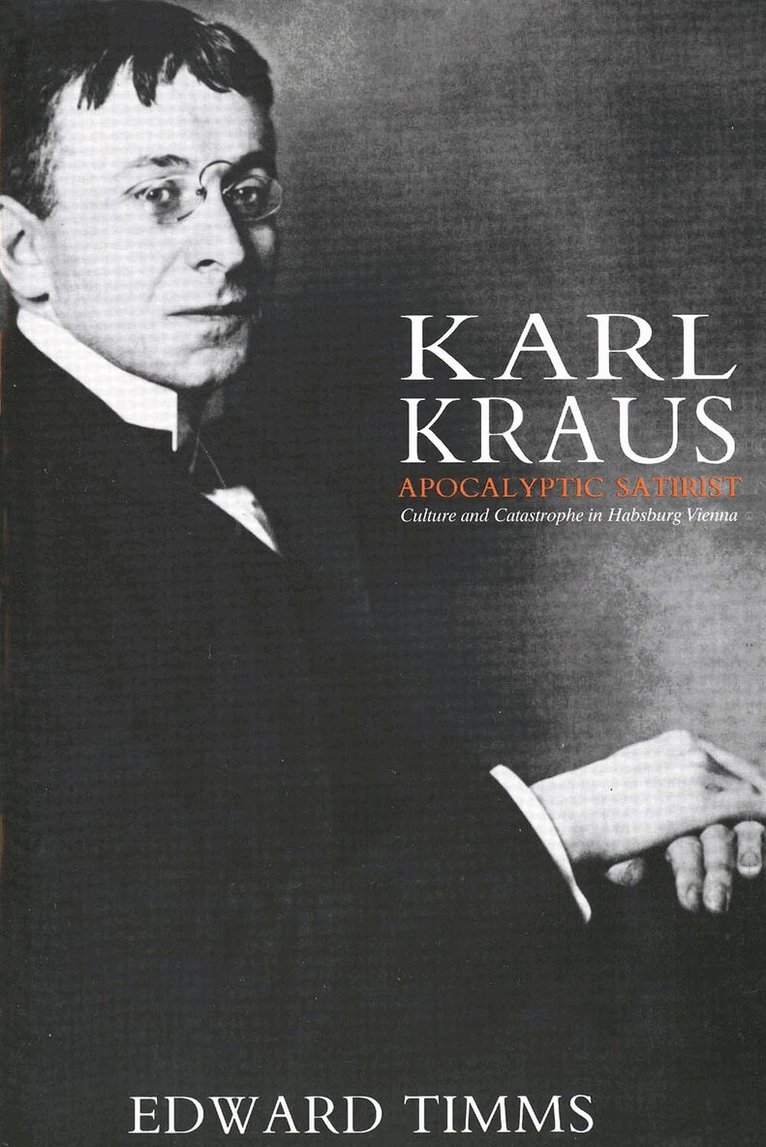
A fascinating study of the life and work of Karl Kraus, the Austrian satirist whose critiques of the mass media, the military-industrial complex, and technology running out of control have earned him a following fifty years after his death. Drawing on unfamiliar sources, Edward Timms analyzes Kraus's involvement in fundamental ideological issues of his time, such as psychoanalysis, social morality, design and architecture, the role of the artist, Zionism, anti-semitism, and war, and shows that Kraus' political position—caught between traditional Habsburg loyalties and new democratic commitments—was far more complex than has previously been suspected. "Dr. Timms' book is a major landmark in Kraus' studies, and an important contribution to our understanding of the culture of the early 20th century. It abounds in discoveries and insights."—W.E. Yeats, Times Literary Supplement "Timm's lucid prose, his masterly organization of the voluminous material he treats, his excellent translations of the documents he cites and his broad, readable portrayal of Viennese fin-de-siecle culture make this study accessible to the average reader and a pleasure for the literary professional. . . . An example of German studies at its best."—James Knowlton, European Studies Journal "Timms successfully weaves a colorful, and thoroughly researched and documented, account of essential cultural currents in Habsburg Vienna around his central figure. Copious illustrations and photographs enhance a most enjoyable text, making this an ideal introduction to Kraus and his work."—Choice
Häftad, Engelska, 2013
927 kr
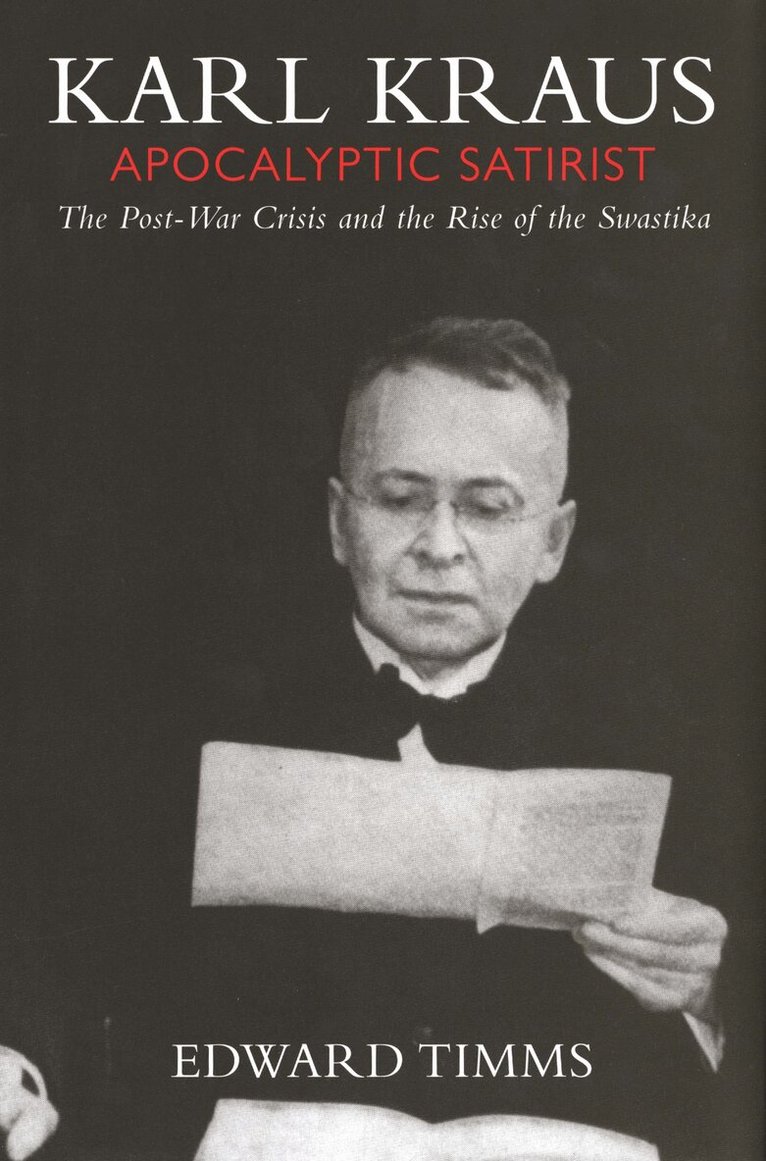
In this second volume of Karl Kraus: Apocalyptic Satirist, Edward Timms takes up Kraus’s story in November 1918, when the satirist responded to the creation of the new republics with a defiant hope, invoking international law against the dual threat of reactionary politics and irresponsible media. While contemporaries like Walter Benjamin regarded Kraus as heroically isolated, this book places him within a dynamic field of cultural production. Timms highlights the court cases Kraus pursued with his lawyer Oskar Samek and the theatrical projects that earned him Brecht’s friendship.In the final section of the book, the author refutes the legend that Kraus responded with stunned silence to Hitler’s seizure of power. His career culminated in Third Walpurgis Night, an analysis of Nazi ideology that has proved enduringly influential. Timms concludes that Kraus’s lifelong critique of the media, combining Orwell’s political radicalism with Joyce’s linguistic playfulness, incisively anticipates the propaganda techniques of our own age.
Inbunden, Engelska, 1988
823 kr
Skickas inom 5-8 vardagar
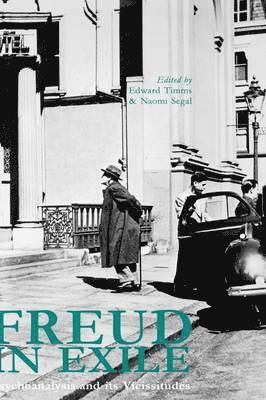
This book, featuring contributions from some of the world’s most eminent Freud scholars, marks the fiftieth anniversary of Freud’s arrival in London as an exile from occupied Austria—an event regarded by many as a decisive turning point in modern cultural history [or for psych. media: in the history of psychoanalysis]. Based on a broad range of documentation, and using illustrations from the Freud archives (many of them reproduced here for the first time), this volume demonstrates how Freud’s exile stimulated the growth of psychoanalysis in the English-speaking world and provides an important reassessment of Freud’s contribution to twentieth-century thought.
Häftad, Engelska, 2012
402 kr
Skickas inom 5-8 vardagar
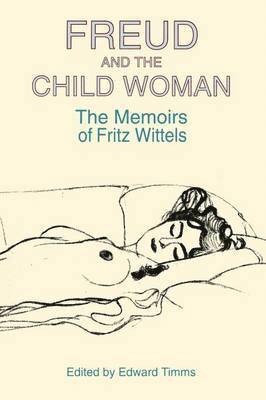
Fritz Wittels (1880-1950) was a pioneering Viennese psychoanalyst, the first biographer of Freud, and friend and rival of Freud and of the great critic of psychoanalysis, the Viennese satirist Karl Kraus. Toward the end of his life, while living and practicing as an analyst in the United States, Wittels wrote a memoir of his early life and career in Vienna and his first impressions of America. Those memoirs are now published here for the first time, edited and introduced by Edward Timms, whose valuable explanatory notes reveal the identification of the "child woman" of the title, Irma Karczewska. In his memoirs Wittels writes frankly and vividly about the erotic subculture of fin-de-siècle Vienna, early controversies within the Psychoanalytic Society, and the interactions between the two. Freud himself plays a crucial role in the story, and the erotic triangle in which Kraus, Wittels, and Irma Karczewska were involved is shown to have impinged directly on the activities of the famous Society. In his final chapters, Wittels reflects on the controversies that erupted in the New York Psychoanalytic Society during the late 1930s, especially his own opposition to the feminist psychology of Karen Horney.Generously illustrated with a range of little-known photographs, this book sheds startling new light on the origins of psychoanalysis. It will appeal to historians of psychoanalysis, students of Freud, and anyone interested in the Viennese artistic avant-garde.
Inbunden, Engelska, 2009
2 215 kr
Skickas inom 10-15 vardagar
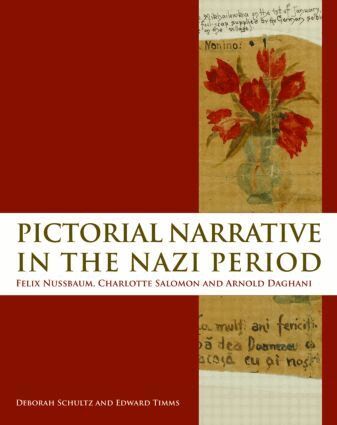
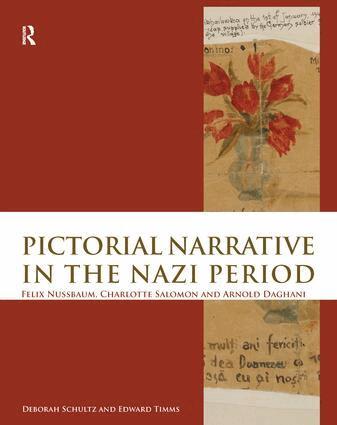
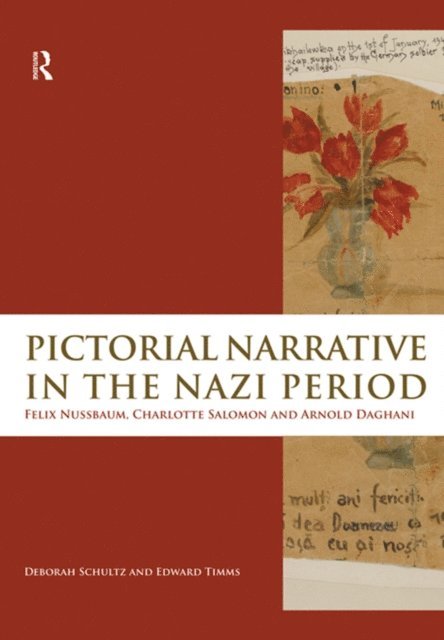
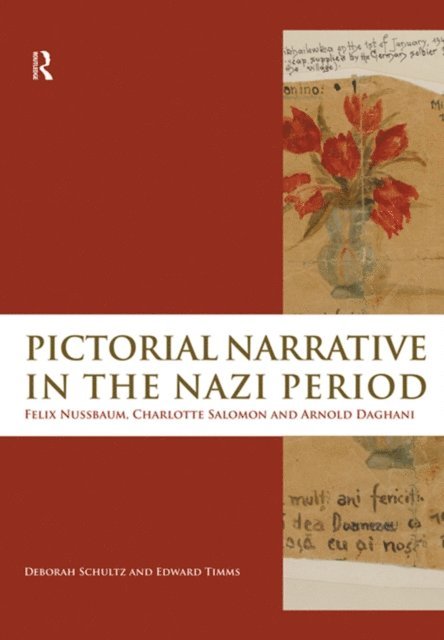
This book investigates creative responses to the Nazi period in the work of three artists, Felix Nussbaum, Charlotte Salomon and Arnold Daghani, focusing on their use of pictorial narrative. It analyses their contrasting aesthetic strategies and their innovative forms of artistic production. In contrast with the autonomous, modernist art object, their works were explicitly linked with the historical conditions under which they were produced – the pressures of persecution and exile. Conditions in the slave labour camps and ghettos in the Ukraine, which shaped the paintings and drawings of Daghani, are contrasted with the experiences of exile in Belgium and France, which inspired Nussbaum and Salomon. In defiance of conventional artistic practice, they produced word-image combinations that can be read as narrative sequences, incorporating specific references to political events. While there has been a wealth of literary, philosophical and historical studies relating to the Holocaust, aesthetic debate has developed less extensively. This is the first comparative study of three artists who are only belatedly achieving recognition and the recent reception of their work is evaluated. By identifying the aesthetic principles and narrative strategies underlying their work, the book reassesses their achievement in creating new forms of modernism with an unmistakable political momentum.This book was published as a special issue of Word & Image.
Häftad, Engelska, 2016
691 kr
Skickas inom 10-15 vardagar
This book investigates creative responses to the Nazi period in the work of three artists, Felix Nussbaum, Charlotte Salomon and Arnold Daghani, focusing on their use of pictorial narrative. It analyses their contrasting aesthetic strategies and their innovative forms of artistic production. In contrast with the autonomous, modernist art object, their works were explicitly linked with the historical conditions under which they were produced – the pressures of persecution and exile. Conditions in the slave labour camps and ghettos in the Ukraine, which shaped the paintings and drawings of Daghani, are contrasted with the experiences of exile in Belgium and France, which inspired Nussbaum and Salomon. In defiance of conventional artistic practice, they produced word-image combinations that can be read as narrative sequences, incorporating specific references to political events. While there has been a wealth of literary, philosophical and historical studies relating to the Holocaust, aesthetic debate has developed less extensively. This is the first comparative study of three artists who are only belatedly achieving recognition and the recent reception of their work is evaluated. By identifying the aesthetic principles and narrative strategies underlying their work, the book reassesses their achievement in creating new forms of modernism with an unmistakable political momentum.This book was published as a special issue of Word & Image.
Häftad, Engelska, 2012
456 kr
Skickas inom 10-15 vardagar
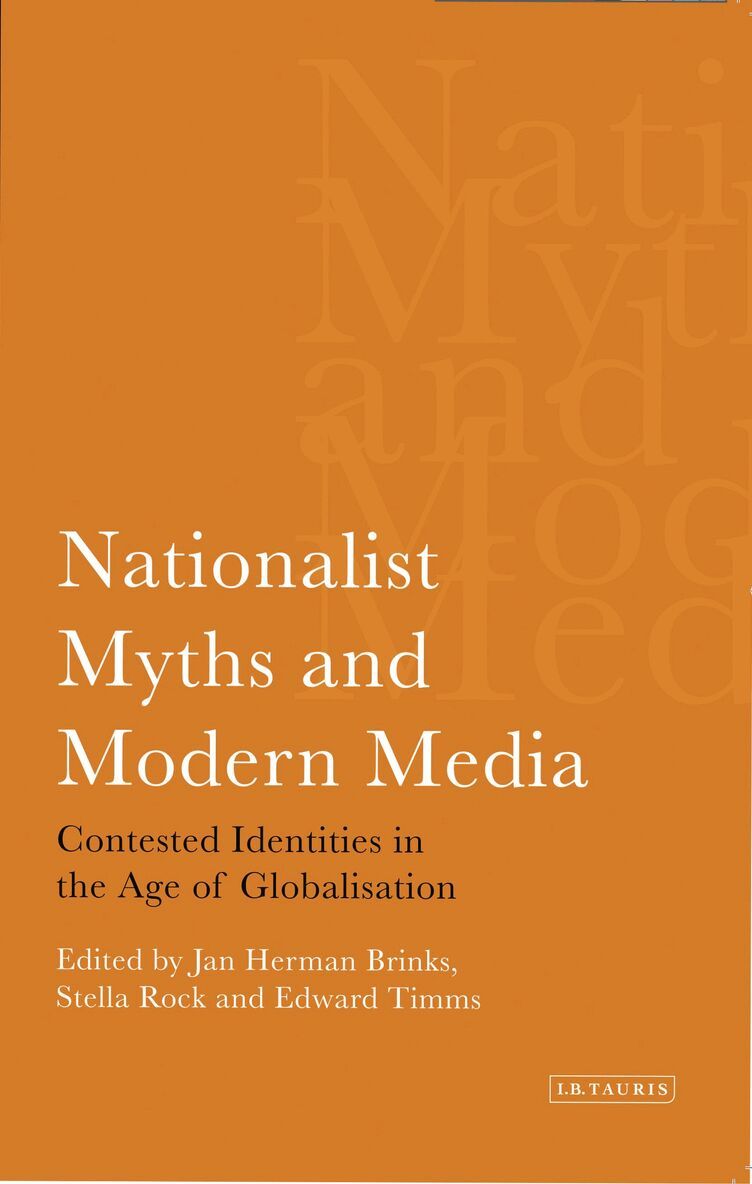
Does patriotic pride inevitably develop into nationalistic aggression? Is this exacerbated by the global outreach of the media? And what is the relationship between mainstream politics and increasingly vocal anti-immigrant and far-right groups? This book tackles these thorny questions, from Europe, the US and post-Soviet Russia, to probe the overlaps between national and racial pride, propaganda, political power and the press. Its findings explore diverse topics ranging from the 'War on Terror' to Holocaust denial, from the 'sanctity' of Rasputin to the 'martyrdom' of Rudolf Hess. It gives vital insight into the way the press can be used to propagate nationalist agendas and how old myths can gain new currency through modern forms of media.
Häftad, Engelska, 2023
711 kr
Skickas inom 5-8 vardagar
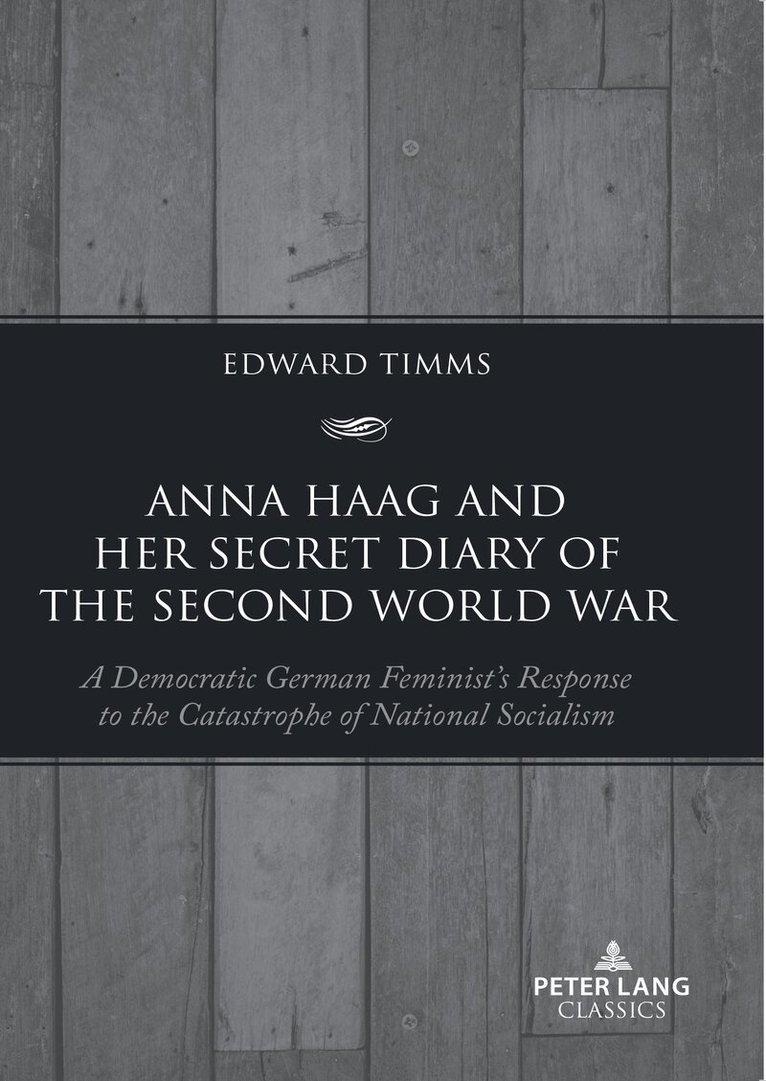
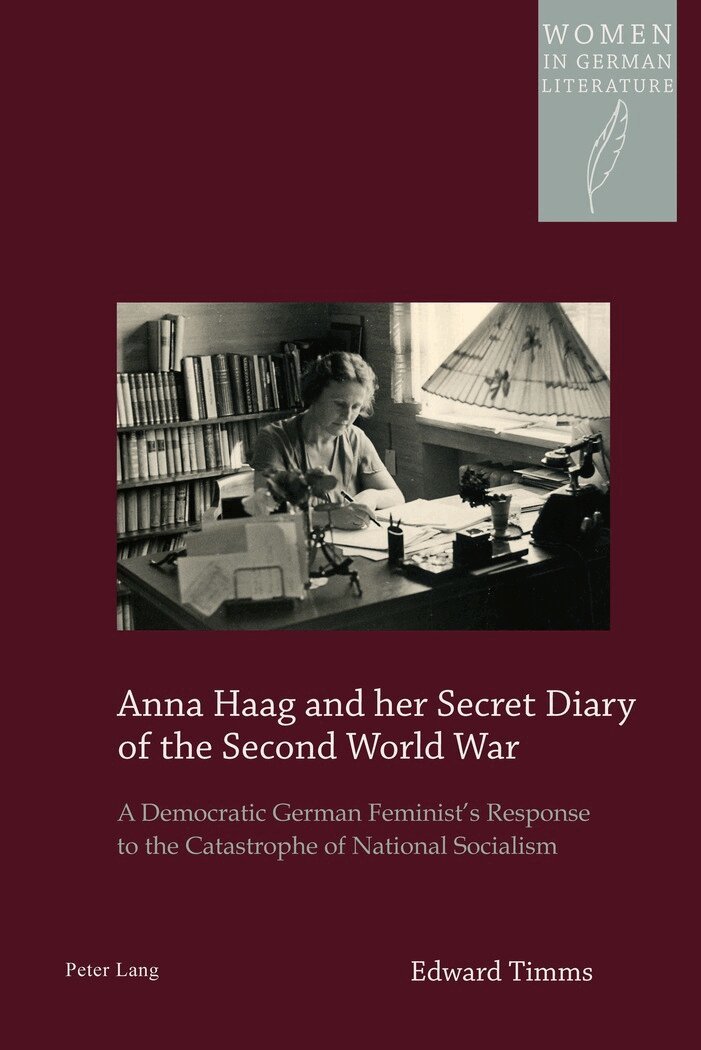
How was it possible for a well-educated nation to support a regime that made it a crime to think for yourself? This was the key question for the Stuttgart-based author Anna Haag (1888–1982), the democratic feminist whose anti-Nazi diaries are analysed in this book. Like Victor Klemperer, she deconstructed German political propaganda day by day, giving her critique a gendered focus by challenging the ethos of masculinity that sustained the Nazi regime. This pioneering study interprets her diaries, secretly written in twenty notebooks now preserved at the Stuttgart City Archive, as a fascinating source for the study of everyday life in the Third Reich. The opening sections sketch the paradigms that shaped Haag’s creativity, analysing the impact of the First World War and the feminist and pacifist commitments that influenced her literary and journalistic writings. Extensive quotations from the diaries are provided, with English translations, to illustrate her responses to the cataclysms that followed the rise of Hitler, from the military conquests and Jewish deportations to the devastation of strategic bombing. The book concludes with a chapter that traces the links between Haag’s critique of military tyranny and her contribution to post-war reconstruction.
Inbunden, Engelska, 2005
1 913 kr
Skickas inom 10-15 vardagar
A fascinating look at the role of the media in fostering nationalism, with a comparative approach that shows the interactions between American, Russian and German nationalism. Extreme nationalism is a subject of enormous contemporary significance today. Does patriotic pride inevitably develop into nationalistic aggression? Is this exacerbated by the global outreach of the media? And what is the relationship between mainstream politics and increasingly vocal far-right groups in Britain, the US, Germany and Russia? This book addresses these questions from a variety of angles, exploring topics ranging from the War on Terror to Holocaust denial, from the 'sanctity' of Rasputin to the 'martyrdom' of Rudolf Hess.
Del 20 - Women, Gender and Sexuality in German Literature and Culture
Anna Haag and her Secret Diary of the Second World War
A Democratic German Feminist’s Response to the Catastrophe of National Socialism
Häftad, Engelska, 2016
785 kr
Skickas inom 5-8 vardagar
How was it possible for a well-educated nation to support a regime that made it a crime to think for yourself? This was the key question for the Stuttgart-based author Anna Haag (1888–1982), the democratic feminist whose anti-Nazi diaries are analysed in this book. Like Victor Klemperer, she deconstructed German political propaganda day by day, giving her critique a gendered focus by challenging the ethos of masculinity that sustained the Nazi regime. This pioneering study interprets her diaries, secretly written in twenty notebooks now preserved at the Stuttgart City Archive, as a fascinating source for the study of everyday life in the Third Reich. The opening sections sketch the paradigms that shaped Haag’s creativity, analysing the impact of the First World War and the feminist and pacifist commitments that influenced her literary and journalistic writings. Extensive quotations from the diaries are provided, with English translations, to illustrate her responses to the cataclysms that followed the rise of Hitler, from the military conquests and Jewish deportations to the devastation of strategic bombing. The book concludes with a chapter that traces the links between Haag’s critique of military tyranny and her contribution to post-war reconstruction.