Ehren Helmut Pflugfelder - Böcker
Visar alla böcker från författaren Ehren Helmut Pflugfelder. Handla med fri frakt och snabb leverans.
4 produkter
4 produkter
586 kr
Skickas inom 7-10 vardagar
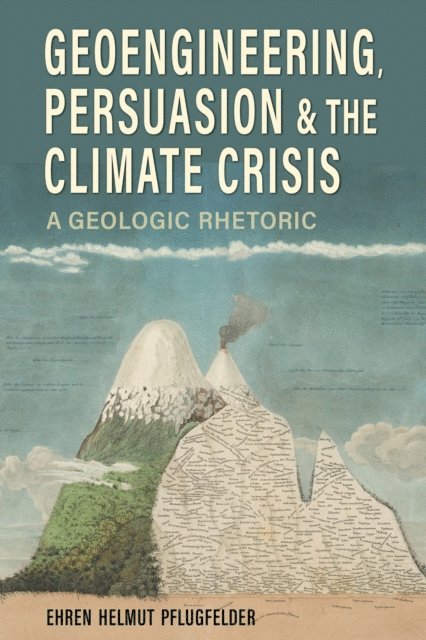
A rhetorical exploration of an underexamined side of climate change—the ongoing research into and development of geoengineering strategiesGeoengineering, Persuasion, and the Climate Crisis: A Geologic Rhetoric exposes the deeply worrying state of discourse over geoengineering—the intentional manipulation of the earth’s climate as means to halt or reverse global warming. These climate-altering projects, which range from cloud-whitening to carbon dioxide removal and from stratospheric aerosol injection to enhanced weathering, are all technological solutions to more complex geosocial problemsGeoengineering represents one of the most alarming forms of deliberative discourse in the twenty-first century. Yet geoengineering could easily generate as much harm as the environmental traumas it seeks to cure. Complicating these deliberations is the scarcity of public discussion. Most deliberations transpire within policy groups, behind the closed doors of climate-oriented startups, between subject-matter experts at scientific conferences, or in the disciplinary jargon of research journals. Further, much of this conversation occurs primarily in the West.Ehren Helmut Pflugfelder makes clear how the deliberative rhetorical strategies coming from geoengineering advocates have been largely deceptive, hegemonic, deterministic, and exploitative. In this volume, he investigates how geoengineering proponents marshal geologic actors into their arguments—and how current discourse could lead to a greater exploitation of the earth in the future.Pflugfelder’s goal is to understand the structure, content, purpose, and effect of these discourses, raise the alarm about their deliberative directions, and help us rethink our approach to the climate. In highlighting both the inherent problems of the discourses and the ways geologic rhetoric can be made productive, he attempts to give “the geologic” a place at the table to better understand the roles that all earth systems continue to play in our lives, now and for years to come.
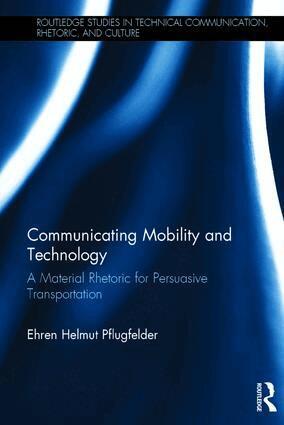
Communicating Mobility and Technology
A Material Rhetoric for Persuasive Transportation
Häftad, Engelska, 2018
685 kr
Skickas inom 10-15 vardagar
Winner of the 2018 CCCC Technical and Scientific Communication Award in the category of Best Book in Technical or Scientific CommunicationResponding to the effects of human mobility and crises such as depleting oil supplies, Ehren Helmut Pflugfelder turns specifically to automobility, a term used to describe the kinds of mobility afforded by autonomous, automobile-based movement technologies and their ramifications. Thus far, few studies in technical communication have explored the development of mobility technologies, the immense power that highly structured, environmentally significant systems have in the world, or the human-machine interactions that take place in such activities. Applying kinaesthetic rhetoric, a rhetoric that is sensitive to and developed from the mobile, material context of these technologies, Pflugfelder looks at transportation projects such as electric taxi cabs from the turn of the century to modern day, open-source vehicle projects, and a large case study of an autonomous, electric pod car network that ultimately failed. Kinaesthetic rhetoric illuminates how mobility technologies have always been persuasive wherever and whenever linguistic symbol systems and material interactions enroll us, often unconsciously, into regimes of movement and ways of experiencing the world. As Pflugfelder shows, mobility technologies involve networks of sustained arguments that are as durable as the bonds between the actors in their networks.
Communicating Mobility and Technology
A Material Rhetoric for Persuasive Transportation
Inbunden, Engelska, 2016
2 357 kr
Skickas inom 10-15 vardagar
Winner of the 2018 CCCC Technical and Scientific Communication Award in the category of Best Book in Technical or Scientific CommunicationResponding to the effects of human mobility and crises such as depleting oil supplies, Ehren Helmut Pflugfelder turns specifically to automobility, a term used to describe the kinds of mobility afforded by autonomous, automobile-based movement technologies and their ramifications. Thus far, few studies in technical communication have explored the development of mobility technologies, the immense power that highly structured, environmentally significant systems have in the world, or the human-machine interactions that take place in such activities. Applying kinaesthetic rhetoric, a rhetoric that is sensitive to and developed from the mobile, material context of these technologies, Pflugfelder looks at transportation projects such as electric taxi cabs from the turn of the century to modern day, open-source vehicle projects, and a large case study of an autonomous, electric pod car network that ultimately failed. Kinaesthetic rhetoric illuminates how mobility technologies have always been persuasive wherever and whenever linguistic symbol systems and material interactions enroll us, often unconsciously, into regimes of movement and ways of experiencing the world. As Pflugfelder shows, mobility technologies involve networks of sustained arguments that are as durable as the bonds between the actors in their networks.
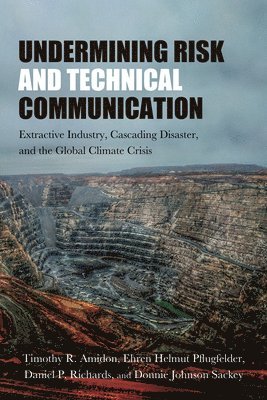
Undermining Risk and Technical Communication
Extractive Industry, Cascading Disaster, and the Global Climate Crisis
Inbunden, Engelska, 2026
1 193 kr
Kommande
Changes the conversation about risk by exposing the field's historical complicity with extractive industries and building new methodologies for future risk communication research.Technical and professional communication has a problem with how the concept of risk has been considered alongside extractive technologies. Throughout its history, the practice, teaching, and research of technical and professional communication has been embedded within, complicit with, and indebted to these industries. These industries have also created massive global harm to people and ecosystems, both through accidents as well as the slow violence of pollution and climate change. In response, this book seeks to "undermine" how technical and professional communication works with risk by reconsidering implications that traverse a greater span of time and geography. It revises the field's risk methodology and encourages future researchers to navigate the scope and scale of their projects. Along with new theoretical framing, the text presents three detailed case studies illustrating how careful consideration of scope and scale can impact how technical and professional communication engages extraction and risk, showcasing to new and experienced technical communication researchers alike how risk communication is about to enter a new era.