
Einat Lavee – författare
Visar alla böcker från författaren Einat Lavee. Handla med fri frakt och snabb leverans.
3 produkter
3 produkter
Häftad, Engelska, 2022
237 kr
Skickas inom 7-10 vardagar
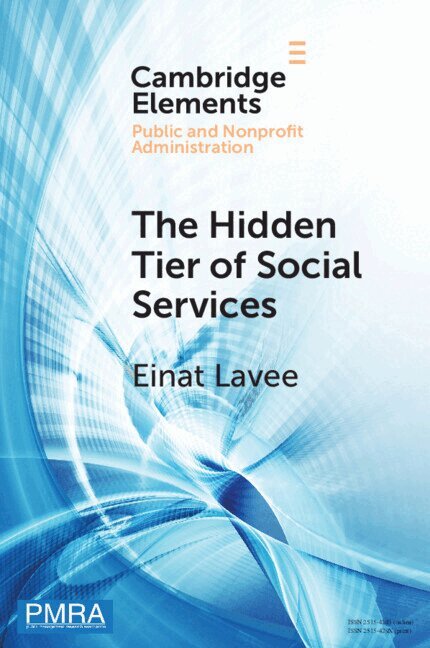
What do frontline social service providers do during client interactions when they lack adequate formal organizational resources to respond to clients' needs? To answer this question, this Element presents two large-scale qualitative studies of Israeli frontline providers of social services. Drawing on interviews of public-sector workers (Study 1, N=214), it introduces a widespread phenomenon, where the vast majority of frontline workers regularly provide a large range of informal personal resources (IFRs) to clients. Study 2 (N=84) then compares IFR provision between workers from the public, nonprofit and private sectors. The comparative analysis demonstrates how workers' rationale for providing personal resources to clients is shaped by particular role perceptions embedded in values, norms and behavioral expectations that vary by employment sector. The Element concludes by presenting ramifications of the phenomenon of IFR provision in terms of citizens' wellbeing, social inequality, gender relations and the future of work in public administration.
E-bok
PDF, Engelska, 2022283 kr
Läs direkt efter köp
What do frontline social service providers do during client interactions when they lack adequate formal organizational resources to respond to clients'' needs? To answer this question, this Element presents two large-scale qualitative studies of Israeli frontline providers of social services. Drawing on interviews of public-sector workers (Study 1, N=214), it introduces a widespread phenomenon, where the vast majority of frontline workers regularly provide a large range of informal personal resources (IFRs) to clients. Study 2 (N=84) then compares IFR provision between workers from the public, nonprofit and private sectors. The comparative analysis demonstrates how workers'' rationale for providing personal resources to clients is shaped by particular role perceptions embedded in values, norms and behavioral expectations that vary by employment sector. The Element concludes by presenting ramifications of the phenomenon of IFR provision in terms of citizens'' wellbeing, social inequality, gender relations and the future of work in public administration.
E-bok
Engelska, 2022283 kr
Läs direkt efter köp
What do frontline social service providers do during client interactions when they lack adequate formal organizational resources to respond to clients'' needs? To answer this question, this Element presents two large-scale qualitative studies of Israeli frontline providers of social services. Drawing on interviews of public-sector workers (Study 1, N=214), it introduces a widespread phenomenon, where the vast majority of frontline workers regularly provide a large range of informal personal resources (IFRs) to clients. Study 2 (N=84) then compares IFR provision between workers from the public, nonprofit and private sectors. The comparative analysis demonstrates how workers'' rationale for providing personal resources to clients is shaped by particular role perceptions embedded in values, norms and behavioral expectations that vary by employment sector. The Element concludes by presenting ramifications of the phenomenon of IFR provision in terms of citizens'' wellbeing, social inequality, gender relations and the future of work in public administration.