Eirin Mobekk - Böcker
Visar alla böcker från författaren Eirin Mobekk. Handla med fri frakt och snabb leverans.
4 produkter
4 produkter
635 kr
Skickas inom 10-15 vardagar
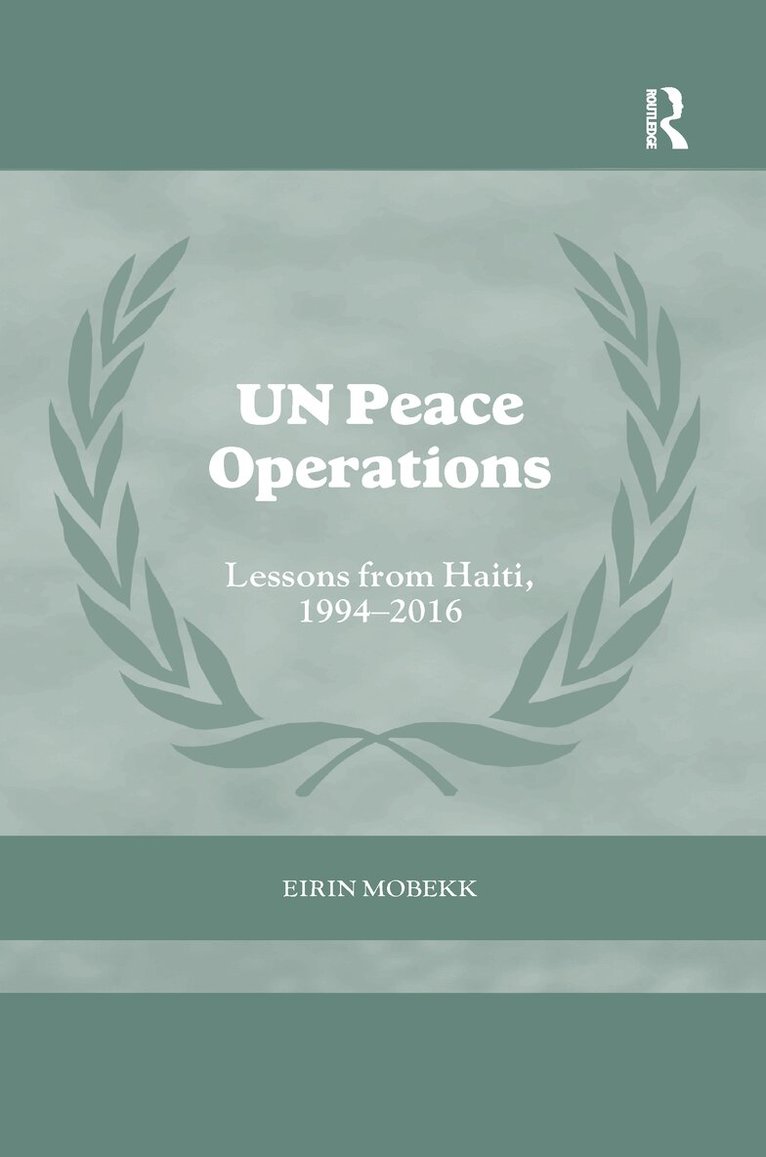
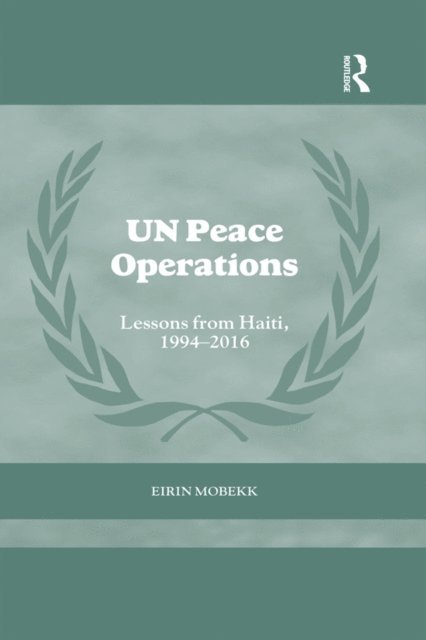
This book assesses the UN Peace Operations in Haiti and establishes what lessons should be taken into account for future operations elsewhere.Specifically, the book examines the UN’s approaches to security and stability, demobilisation, disarmament and reintegration (DDR), police, justice and prison reform, democratisation, and transitional justice and their interdependencies through the seven UN missions in Haiti. Drawing on extensive fieldwork and interviews conducted in Haiti, it identifies strengths and weaknesses of these approaches and focuses on the connections between these different sectors. It places these efforts in the broader Haitian political context, emphasises economic development as a central factor to sustainability, provides a civil society perspective, and discusses the many constraints the UN faced in implementing its mandates. The book also serves as a historical account of UN involvement in Haiti, which comes at a time when the drawdown of the mission has begun. In an environment where the UN is increasingly seeking to conduct security sector reform (SSR) within the context of integrated missions, this book will be a valuable contribution to the debate on intervention, UN peace operations and SSR. This book will be of interest to students of peace operations and peacekeeping, conflict studies, security studies and IR in general.
2 290 kr
Skickas inom 10-15 vardagar
This book assesses the UN Peace Operations in Haiti and establishes what lessons should be taken into account for future operations elsewhere.Specifically, the book examines the UN’s approaches to security and stability, demobilisation, disarmament and reintegration (DDR), police, justice and prison reform, democratisation, and transitional justice and their interdependencies through the seven UN missions in Haiti. Drawing on extensive fieldwork and interviews conducted in Haiti, it identifies strengths and weaknesses of these approaches and focuses on the connections between these different sectors. It places these efforts in the broader Haitian political context, emphasises economic development as a central factor to sustainability, provides a civil society perspective, and discusses the many constraints the UN faced in implementing its mandates. The book also serves as a historical account of UN involvement in Haiti, which comes at a time when the drawdown of the mission has begun. In an environment where the UN is increasingly seeking to conduct security sector reform (SSR) within the context of integrated missions, this book will be a valuable contribution to the debate on intervention, UN peace operations and SSR. This book will be of interest to students of peace operations and peacekeeping, conflict studies, security studies and IR in general.
797 kr
Skickas inom 5-8 vardagar
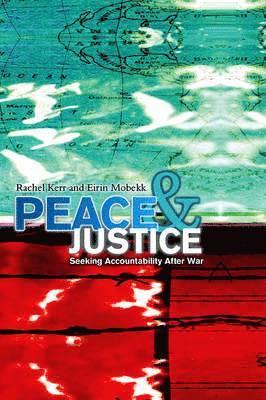
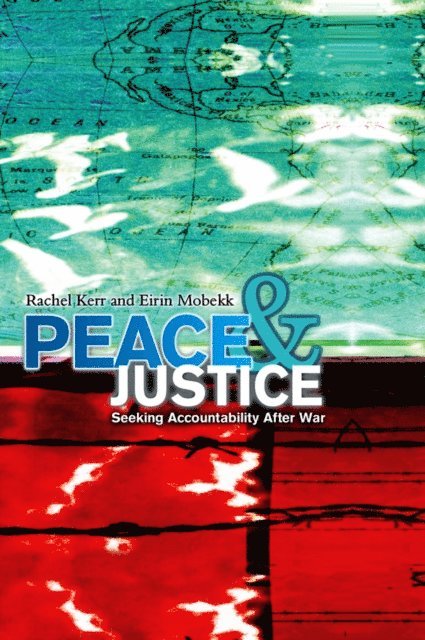
In recent years there has been a tendency to intervene in the military, political and economic affairs of failed and failing states and those emerging from violent conflict. In many cases this has been accompanied by some form of international judicial intervention to address serious and widespread abuses of international humanitarian law and human rights in recognition of an explicit link between peace and justice. A range of judicial and non-judicial approaches has been adopted in recognition of the fact that there is no one-size-fits-all model through which to seek accountability. This book considers the merits and drawbacks of these different responses and sets out an original framework for analysing transitional societies and transitional justice mechanisms. Taking as its starting point the post-Second World War tribunals at Nuremburg and Tokyo, the book goes on to discuss the creation of ad hoc international tribunals in the 1990s, hybrid/mixed courts, the International Criminal Court, domestic trials, truth commissions and traditional justice mechanisms. With examples drawn from across the world, including the former Yugoslavia, Rwanda, Cambodia, Timor-Leste, Sierra Leone, Uganda and the DRC, it presents a compelling and comprehensive study of the key responses to war crimes. Peace and Justice is a timely contribution in a world where an ever-increasing number of post-conflict societies are grappling with the complex issues of transitional justice. It will be a valuable resource for students, scholars, practitioners and policy-makers seeking to understand past violations of human rights and the most effective ways of addressing them.
270 kr
Skickas inom 5-8 vardagar
In recent years there has been a tendency to intervene in the military, political and economic affairs of failed and failing states and those emerging from violent conflict. In many cases this has been accompanied by some form of international judicial intervention to address serious and widespread abuses of international humanitarian law and human rights in recognition of an explicit link between peace and justice. A range of judicial and non-judicial approaches has been adopted in recognition of the fact that there is no one-size-fits-all model through which to seek accountability. This book considers the merits and drawbacks of these different responses and sets out an original framework for analysing transitional societies and transitional justice mechanisms. Taking as its starting point the post-Second World War tribunals at Nuremburg and Tokyo, the book goes on to discuss the creation of ad hoc international tribunals in the 1990s, hybrid/mixed courts, the International Criminal Court, domestic trials, truth commissions and traditional justice mechanisms. With examples drawn from across the world, including the former Yugoslavia, Rwanda, Cambodia, Timor-Leste, Sierra Leone, Uganda and the DRC, it presents a compelling and comprehensive study of the key responses to war crimes. Peace and Justice is a timely contribution in a world where an ever-increasing number of post-conflict societies are grappling with the complex issues of transitional justice. It will be a valuable resource for students, scholars, practitioners and policy-makers seeking to understand past violations of human rights and the most effective ways of addressing them.