Eleanor Cook - Böcker
Visar alla böcker från författaren Eleanor Cook. Handla med fri frakt och snabb leverans.
8 produkter
8 produkter
644 kr
Skickas inom 7-10 vardagar
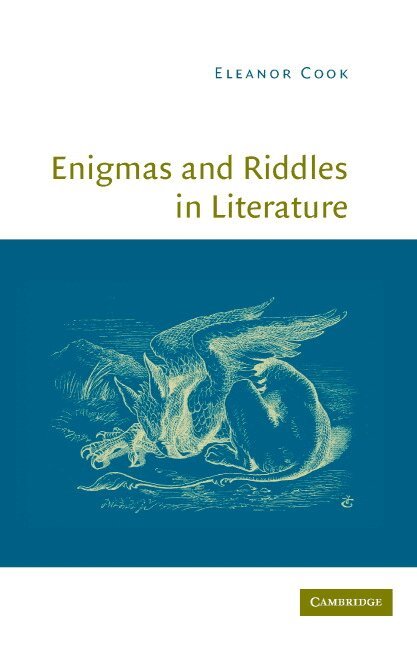
How do enigmas and riddles work in literature? This benchmark study investigates the literary trope of the riddle, and its relation to the broader term 'enigma', including enigma as large masterplot. Cook argues for a revival of the old figure of speech known as 'enigma' from Aristotle to the seventeenth century by demonstrating its usefulness. The opening chapter surveys 'enigma personified' as sphinx and griffin, resuscitating a lost Graeco-Latin pun on 'griffin' used by Lewis Carroll. The history and functions of enigma draw on classical and biblical through to modern writing. Wide-ranging examples concentrate on literature in English, especially modern poetry, with three detailed case studies on Dante, Lewis Carroll, and Wallace Stevens. An important contribution to studies of poetic thought and metaphor, this anatomy of the riddle will appeal particularly to readers and scholars of poetry, modern American and comparative literatures, rhetoric, and folk-riddles.
1 431 kr
Skickas inom 7-10 vardagar
How do enigmas and riddles work in literature? This benchmark study investigates the literary trope of the riddle, and its relation to the broader term 'enigma', including enigma as large masterplot. Cook argues for a revival of the old figure of speech known as 'enigma' from Aristotle to the seventeenth century by demonstrating its usefulness. The opening chapter surveys 'enigma personified' as sphinx and griffin, resuscitating a lost Graeco-Latin pun on 'griffin' used by Lewis Carroll. The history and functions of enigma draw on classical and biblical through to modern writing. Wide-ranging examples concentrate on literature in English, especially modern poetry, with three detailed case studies on Dante, Lewis Carroll, and Wallace Stevens. An important contribution to studies of poetic thought and metaphor, this anatomy of the riddle will appeal particularly to readers and scholars of poetry, modern American and comparative literatures, rhetoric, and folk-riddles.
416 kr
Skickas inom 10-15 vardagar
In her lifetime Elizabeth Bishop was appreciated as a writer’s writer (John Ashbery once called her “the writer’s writer’s writer”). But since her death in 1979 her reputation has grown, and today she is recognized as a major twentieth-century poet. Critics and biographers now habitually praise Bishop’s mastery of her art, but all too often they have little to say about how her poetry does its sublime work—in the ear and in the mind’s eye.Elizabeth Bishop at Work examines Bishop’s art in detail—her diction, syntax, rhythm, and meter, her acute sense of place, and her attention to the natural world. It is also a study of the poet working at something, challenging herself to try new things and to push boundaries. Eleanor Cook traces Bishop’s growing confidence and sense of freedom, from her first collection, North & South, to Questions of Travel, in which she fully realized her poetic powers, to Geography III and the breathtaking late poems, which—in individual ways—gather in and extend the poet’s earlier work. Cook shows how Bishop shapes each collection, putting to rest the notion that her published volumes are miscellanies.Elizabeth Bishop at Work is intended for readers and writers as well as teachers. In showing exactly how Bishop’s poems work, Cook suggests how we ourselves might become more attentive readers and better writers. Bishop has been compared to Vermeer, and as with his paintings, so with her poems. They create small worlds where every detail matters.
378 kr
Skickas inom 7-10 vardagar
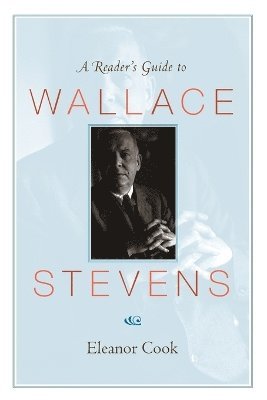
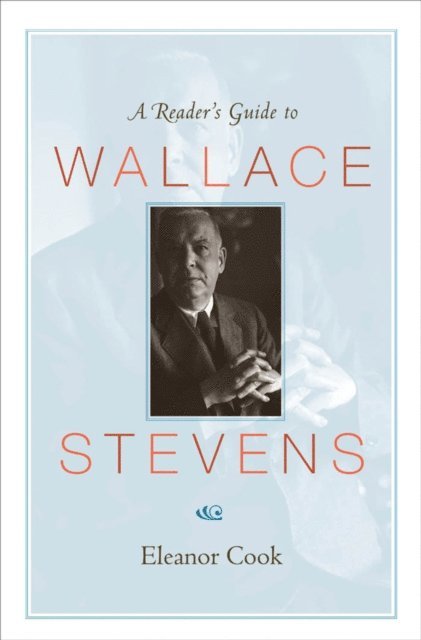
Wallace Stevens is one of the major poets of the twentieth century, and also among the most challenging. His poems can be dazzling in their verbal brilliance. They are often shot through with lavish imagery and wit, informed by a lawyer's logic, and disarmingly unexpected: a singing jackrabbit, the seductive Nanzia Nunzio. They also spoke--and still speak--to contemporary concerns. Though his work is popular and his readership continues to grow, many readers encountering it are baffled by such rich and strange poetry. Eleanor Cook, a leading critic of poetry and expert on Stevens, gives us here the essential reader's guide to this important American poet. Cook goes through each of Stevens's poems in his six major collections as well as his later lyrics, in chronological order. For each poem she provides an introductory head note and a series of annotations on difficult phrases and references, illuminating for us just why and how Stevens was a master at his art. Her annotations, which include both previously unpublished scholarship and interpretive remarks, will benefit beginners and specialists alike.Cook also provides a brief biography of Stevens, and offers a detailed appendix on how to read modern poetry. A Reader's Guide to Wallace Stevens is an indispensable resource and the perfect companion to The Collected Poems of Wallace Stevens, first published in 1954 in honor of Stevens's seventy-fifth birthday, as well as to the 1997 collection Wallace Stevens: Collected Poetry and Prose.
1 051 kr
Skickas inom 3-6 vardagar
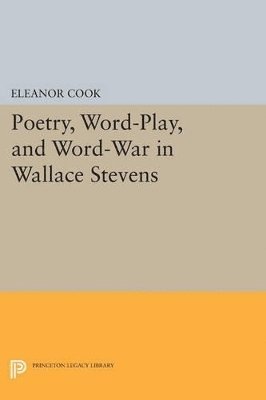
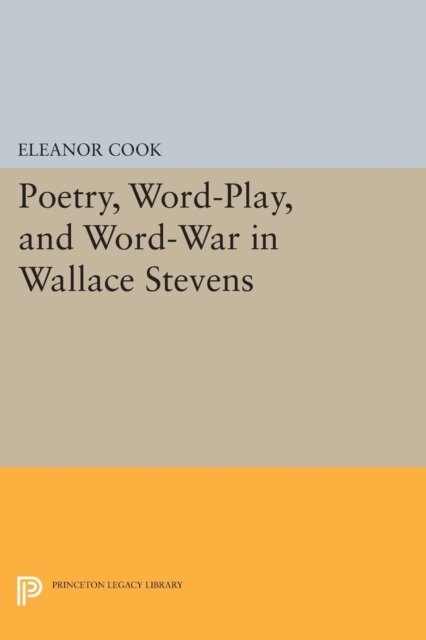
In the first full-length study of Wallace Stevens's word-play, Eleanor Cook focuses on Stevens's skillful play with grammar, etymology, allusion, and other elements of poetry, and suggests ways in which this play offers a method of approaching his work. At the same time, this book is a general study of Stevens's poetry, moving from his earliest to his latest work, and includes close readings of three of his remarkable long poems--Esthetique du Mal, Notes toward a Supreme Fiction, and An Ordinary Evening in New Haven. The chronological arrangement enables readers to follow Stevens's increasing skill and changing thought in three areas of his "poetry of the earth": the poetry of place, the poetry of eros, and the poetry of belief. Poetry, Word-Play, and Word-War in Wallace Stevens shows how, in setting words at play and in conflict, Stevens could upset the usual relations of rhetoric, grammar, and dialectic, and thus the book contributes to the current debate about logical and a-logical uses of language.Cook also places Stevens within the larger context of Western literature, hearing how he speaks to Milton, Keats, and Wordsworth; to such American forebears as Whitman, Emerson, and Dickinson; and to T. S. Eliot, his contemporary. Originally published in 1988. The Princeton Legacy Library uses the latest print-on-demand technology to again make available previously out-of-print books from the distinguished backlist of Princeton University Press. These editions preserve the original texts of these important books while presenting them in durable paperback and hardcover editions. The goal of the Princeton Legacy Library is to vastly increase access to the rich scholarly heritage found in the thousands of books published by Princeton University Press since its founding in 1905.
2 696 kr
Skickas inom 3-6 vardagar
In the first full-length study of Wallace Stevens's word-play, Eleanor Cook focuses on Stevens's skillful play with grammar, etymology, allusion, and other elements of poetry, and suggests ways in which this play offers a method of approaching his work. At the same time, this book is a general study of Stevens's poetry, moving from his earliest to his latest work, and includes close readings of three of his remarkable long poems--Esthetique du Mal, Notes toward a Supreme Fiction, and An Ordinary Evening in New Haven. The chronological arrangement enables readers to follow Stevens's increasing skill and changing thought in three areas of his "poetry of the earth": the poetry of place, the poetry of eros, and the poetry of belief. Poetry, Word-Play, and Word-War in Wallace Stevens shows how, in setting words at play and in conflict, Stevens could upset the usual relations of rhetoric, grammar, and dialectic, and thus the book contributes to the current debate about logical and a-logical uses of language.Cook also places Stevens within the larger context of Western literature, hearing how he speaks to Milton, Keats, and Wordsworth; to such American forebears as Whitman, Emerson, and Dickinson; and to T. S. Eliot, his contemporary. Originally published in 1988. The Princeton Legacy Library uses the latest print-on-demand technology to again make available previously out-of-print books from the distinguished backlist of Princeton University Press. These editions preserve the original texts of these important books while presenting them in durable paperback and hardcover editions. The goal of the Princeton Legacy Library is to vastly increase access to the rich scholarly heritage found in the thousands of books published by Princeton University Press since its founding in 1905.
923 kr
Skickas inom 10-15 vardagar
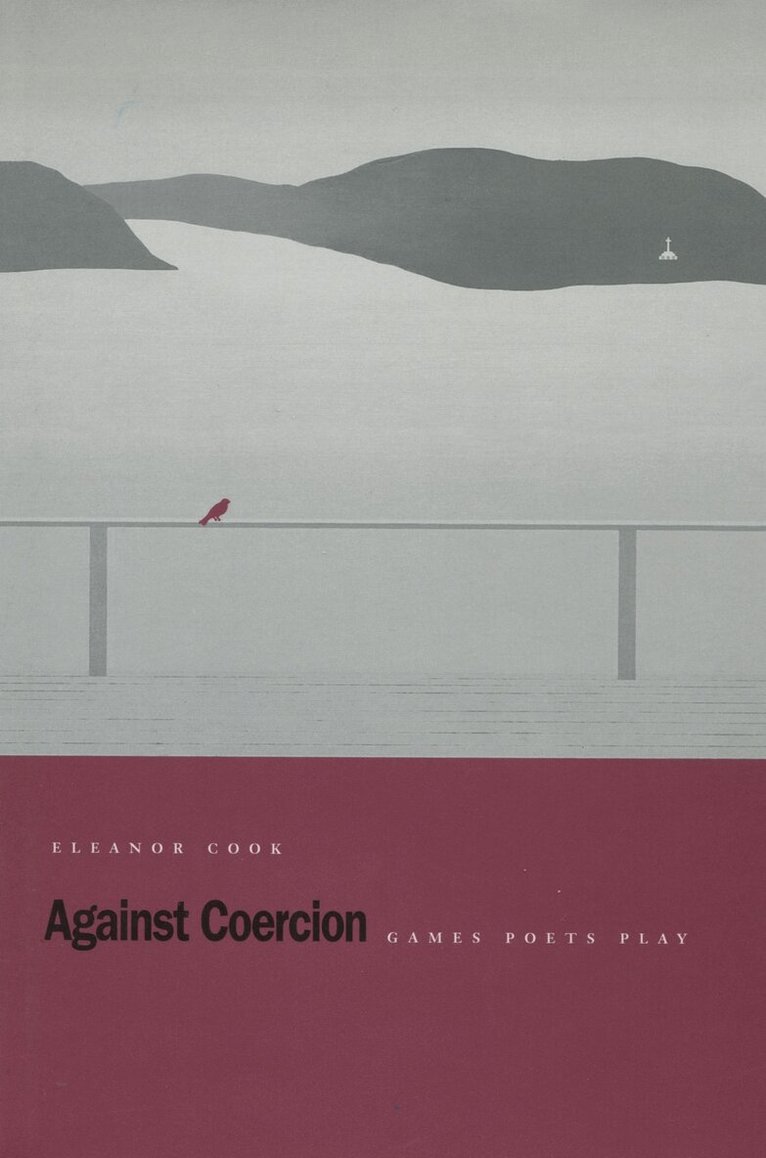
"The inertia of language," declares Geoffrey Hill, is also "the coercive force of language." Good poets write against coercion, and Against Coercion is essentially about the power of words. Looking at our most highly organized form of words, poems, and how they work, it observes how that work speaks—always indirectly—to historical, ethical, and aesthetic questions, including matters of culture, identity, and feminism. It also demonstrates how to read poetry—how to go beyond an elementary (and usually boring) approach, thereby recovering the sheer pleasure of good poems and resisting the coercion of language, that power of words to do ill.A study in advanced poetics, Against Coercion pays close attention to the intricate workings of poems, building larger claims on specific evidence and enjoying the praxis of master writers. The focus is on modern poets, from the early moderns (Stevens, Eliot) through to mid-century (Bishop) and recent (Merrill, Hill). Some chapters reach back to Milton, Wordsworth, and Aristophanes, however, while two even widen to encompass prose fiction.The opening section centers on matters of empire, war, and nation. It includes chapters on Eliot, Keynes, and empire, and on Geoffrey Hill and Elizabeth Bishop (with reflections on language and war). The second section moves to questions of culture and the uses of memory, notably in allusion to earlier writers. It examines what our collective memory chooses to retain and to forget. The range of reference here extends from the King James Bible through Milton and Wordsworth to A. R. Ammons.In the third section, poetry is seen at play, offering those happy occasions when work and play become one. Chapters treat the concept of play in Milton (including some feminist questions), the poetics of punning in Stevens and Bishop, riddles both large and small, in Stevens, a proposed typology of riddles, and a newly recovered Graeco-Latin pun in Alice in Wonderland. The final section moves to practical criticism and offers a new theory of ghost rhymes, a new suggestion of a formula in dream literature, a model for reading a poem, using John Hollander's "Owl" as an illustration, and, taking Stevens as an example, a pedagogical argument that emphasizes the importance of logic and thought in poetry.

489 kr
Skickas inom 7-10 vardagar
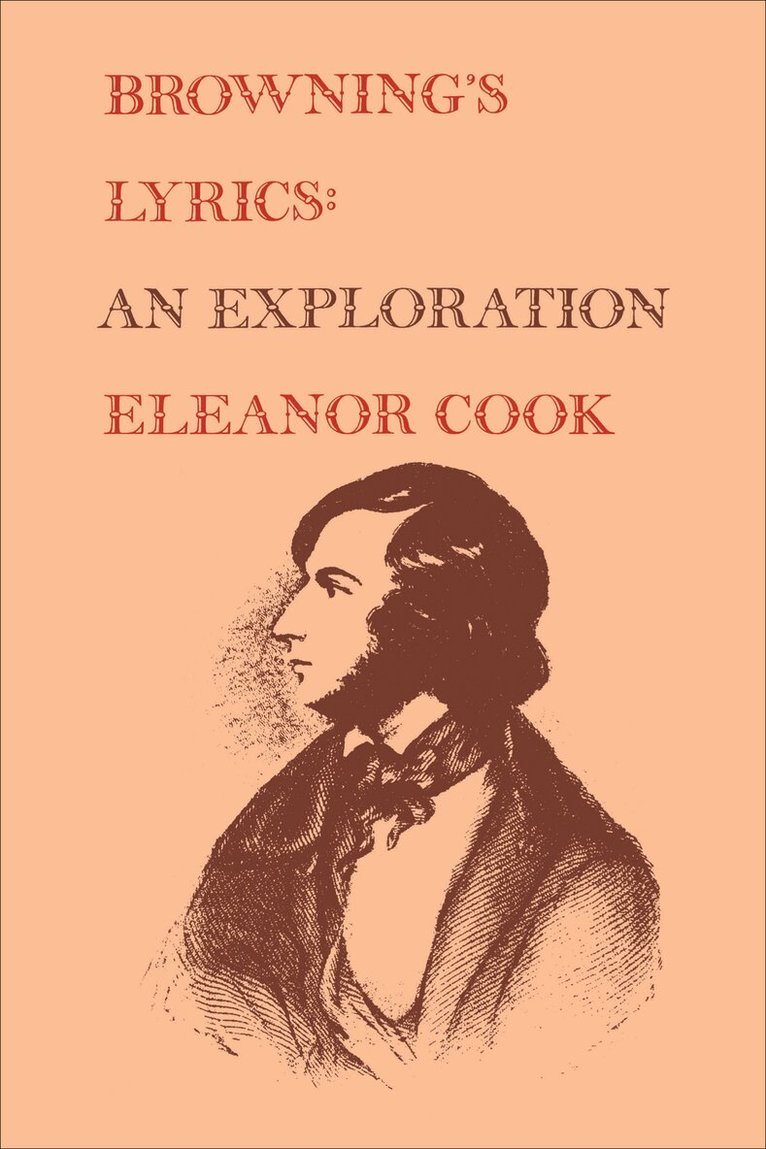
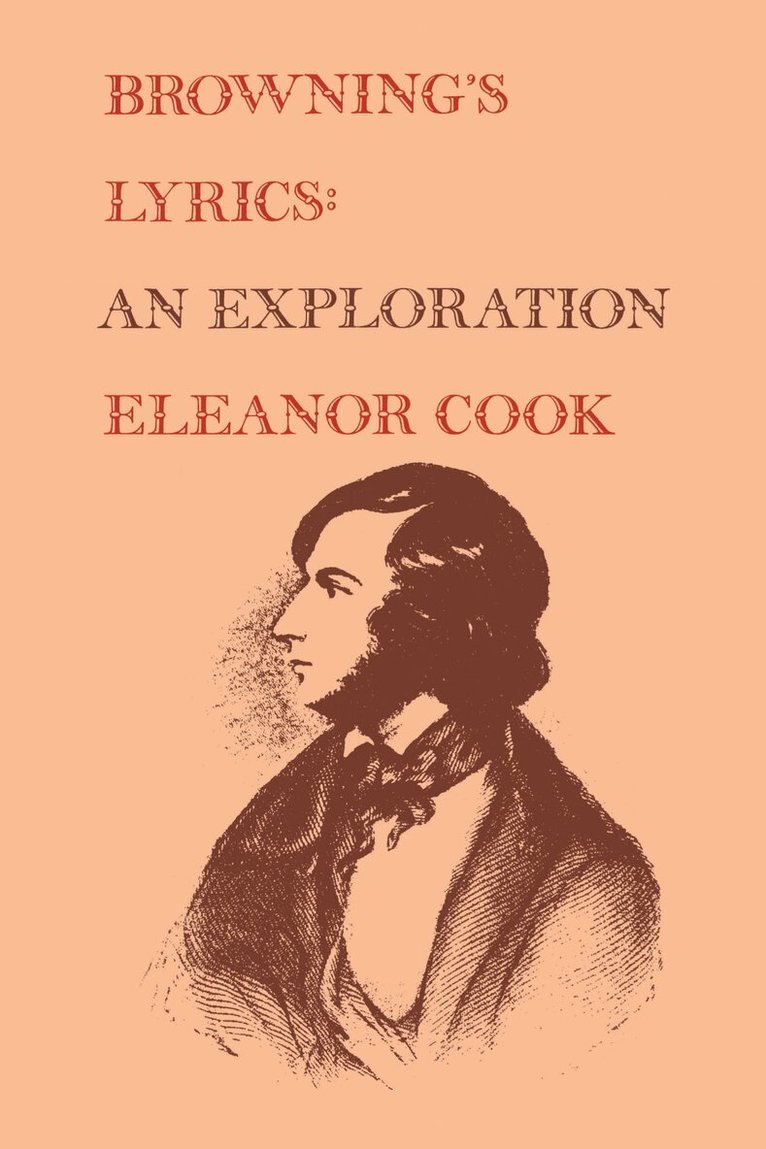
Browning's lyrics are favourite choices for anthologies but are rarely examined closely. This is the first full-length study of the lyrics, and includes detailed analyses of such well-known poems as Love Among the Ruins, Two in the Campagna, A Serenade at the Villa, A Toccata of Galuppi's, By the Fireside, and James Lee's Wife. Eleanor Cook explores Browning's use of repeated images and themes in the lyrics, examines these patterns in other poems and in his letters, and analyses their growth and change in all his work. She demonstrates how the lyrics may be linked with Browning's other work and shows something of his essential artistic unity. His imaginary is found to be more consistent and complex than is usually assumed.Students of Browning will find this work stimulating and instructive, while lovers of Browning will read it with pure pleasure. The reader will return to many of the poems with a rciher sense of their continuing vitality. In an earlier form this study was awarded the first A.S.P. Woodhouse Prize by the University of Toronto.