Elena Barabantseva – författare
2 255 kr
Skickas inom 10-15 vardagar
2 184 kr
Skickas inom 10-15 vardagar
695 kr
Skickas inom 10-15 vardagar
836 kr
Skickas inom 10-15 vardagar
1 503 kr
Läs direkt efter köp
1 451 kr
Läs direkt efter köp
1 285 kr
Skickas inom 7-10 vardagar
992 kr
Läs direkt efter köp
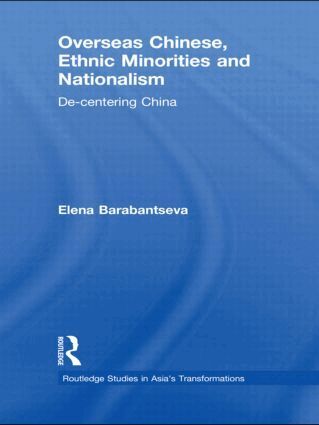
Elena Barabantseva looks at the close relationship between state-led nationalism and modernisation, with specific reference to discourses on the overseas Chinese and minority nationalities. The interplay between modernisation programmes and nationalist discourses has shaped China’s national project, whose membership criteria have evolved historically. By looking specifically at the ascribed roles of China’s ethnic minorities and overseas Chinese in successive state-led modernisation efforts,
This book offers new perspectives on the changing boundaries of the Chinese nation. It places domestic nation-building and transnational identity politics in a single analytical framework, and examines how they interact to frame the national project of the Chinese state. By exploring the processes taking place at the ethnic and territorial margins of the Chinese nation-state, the author provides a new perspective on China’s national modernisation project, clarifying the processes occurring across national boundaries and illustrating how China has negotiated the basis for belonging to its national project under the challenge to modernise amid both domestic and global transformations.
This book will be of interest to students and scholars of Asian politics, Chinese politics, nationalism, transnationalism and regionalism.
992 kr
Läs direkt efter köp
Elena Barabantseva looks at the close relationship between state-led nationalism and modernisation, with specific reference to discourses on the overseas Chinese and minority nationalities. The interplay between modernisation programmes and nationalist discourses has shaped China’s national project, whose membership criteria have evolved historically. By looking specifically at the ascribed roles of China’s ethnic minorities and overseas Chinese in successive state-led modernisation efforts,
This book offers new perspectives on the changing boundaries of the Chinese nation. It places domestic nation-building and transnational identity politics in a single analytical framework, and examines how they interact to frame the national project of the Chinese state. By exploring the processes taking place at the ethnic and territorial margins of the Chinese nation-state, the author provides a new perspective on China’s national modernisation project, clarifying the processes occurring across national boundaries and illustrating how China has negotiated the basis for belonging to its national project under the challenge to modernise amid both domestic and global transformations.
This book will be of interest to students and scholars of Asian politics, Chinese politics, nationalism, transnationalism and regionalism.
795 kr
Läs direkt efter köp
This collection of papers discusses the impact of diasporas on the articulations and practices of legal, political, cultural and social citizenship in their country of origin. While the majority of current citizenship debates focus on the challenges and directions in which diasporic and migrant communities impact on the citizenship regime in their country of settlement, the papers in this volume approach the study of citizenship from the perspective of the link between the sending state and its diasporic communities abroad. The papers discuss the role of language, religion, kinship, and other ethnic markers in diaspora politics and trace their implications for the articulations and practices of citizenship. Through discussing cases across political and geographical spectrums, and from different historical epochs the book broadens and enriches the debate on citizenship by demonstrating important ways in which diasporas impact on the delineation of citizenship regimes and the politics of national identity in their homeland.
This links to the continued use of language as an ethnic marker, but also one which may be learned, allowing a certain degree of choice and shifting affiliations amongst putative members of a diaspora.
This book was published as a special issue of Nationalism and Ethnic Politics.
824 kr
Läs direkt efter köp
This collection of papers discusses the impact of diasporas on the articulations and practices of legal, political, cultural and social citizenship in their country of origin. While the majority of current citizenship debates focus on the challenges and directions in which diasporic and migrant communities impact on the citizenship regime in their country of settlement, the papers in this volume approach the study of citizenship from the perspective of the link between the sending state and its diasporic communities abroad. The papers discuss the role of language, religion, kinship, and other ethnic markers in diaspora politics and trace their implications for the articulations and practices of citizenship. Through discussing cases across political and geographical spectrums, and from different historical epochs the book broadens and enriches the debate on citizenship by demonstrating important ways in which diasporas impact on the delineation of citizenship regimes and the politics of national identity in their homeland.
This links to the continued use of language as an ethnic marker, but also one which may be learned, allowing a certain degree of choice and shifting affiliations amongst putative members of a diaspora.
This book was published as a special issue of Nationalism and Ethnic Politics.
535 kr
Tillfälligt slut