Elena Gaura - Böcker
Visar alla böcker från författaren Elena Gaura. Handla med fri frakt och snabb leverans.
3 produkter
3 produkter
1 588 kr
Skickas inom 10-15 vardagar
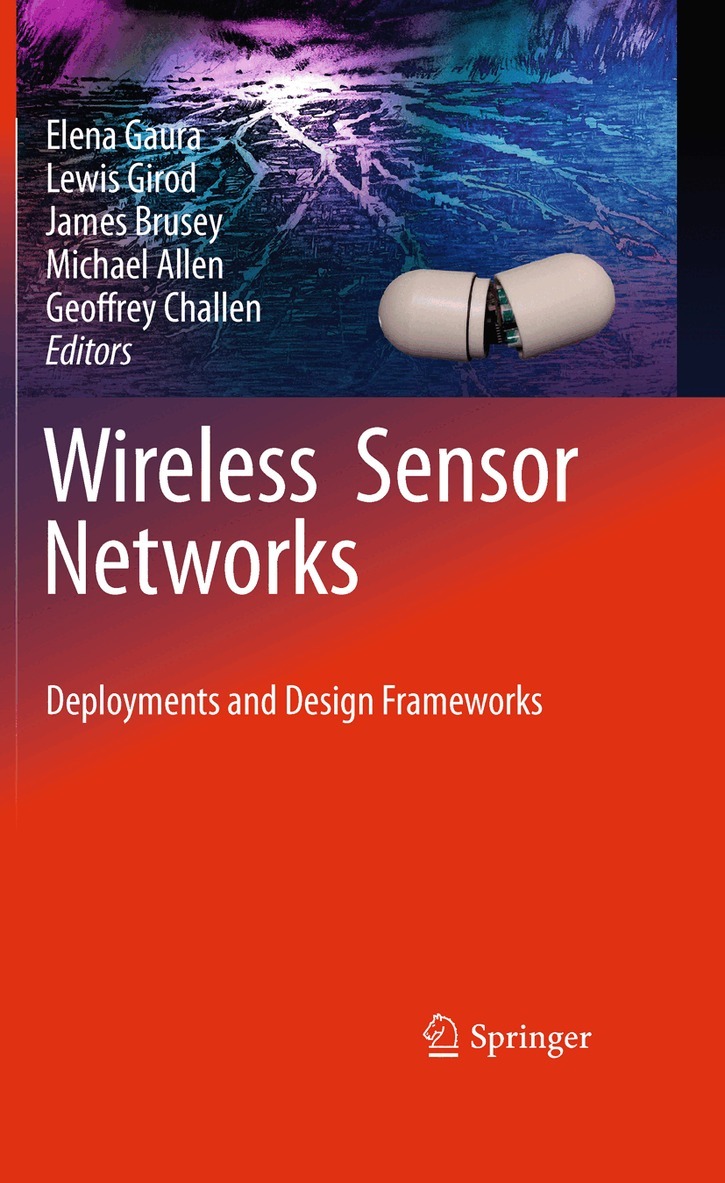
The twentieth century ended with the vision of smart dust: a network of wirelessly connected devices whose size would match that of a dust particle, each one a se- containedpackageequippedwithsensing,computation,communication,andpower. Smart dust held the promise to bridge the physical and digital worlds in the most unobtrusive manner, blending together realms that were previously considered well separated. Applications involved scattering hundreds, or even thousands, of smart dust devices to monitor various environmental quantities in scenarios ranging from habitat monitoring to disaster management. The devices were envisioned to se- organize to accomplish their task in the most ef?cient way. As such, smart dust would become a powerful tool, assisting the daily activities of scientists and en- neers in a wide range of disparate disciplines. Wireless sensor networks (WSNs), as we know them today, are the most no- worthy attempt at implementing the smart dust vision. In the last decade, this ?eld has seen a fast-growing investment from both academia and industry. Signi?cant ?nancial resources and manpower have gone into making the smart dust vision a reality through WSNs. Yet, we still cannot claim complete success. At present, only specialist computerscientists or computerengineershave the necessary background to walk the road from conception to a ?nal, deployed, and running WSN system.
1 588 kr
Skickas inom 10-15 vardagar
The twentieth century ended with the vision of smart dust: a network of wirelessly connected devices whose size would match that of a dust particle, each one a se- containedpackageequippedwithsensing,computation,communication,andpower. Smart dust held the promise to bridge the physical and digital worlds in the most unobtrusive manner, blending together realms that were previously considered well separated. Applications involved scattering hundreds, or even thousands, of smart dust devices to monitor various environmental quantities in scenarios ranging from habitat monitoring to disaster management. The devices were envisioned to se- organize to accomplish their task in the most ef?cient way. As such, smart dust would become a powerful tool, assisting the daily activities of scientists and en- neers in a wide range of disparate disciplines. Wireless sensor networks (WSNs), as we know them today, are the most no- worthy attempt at implementing the smart dust vision. In the last decade, this ?eld has seen a fast-growing investment from both academia and industry. Signi?cant ?nancial resources and manpower have gone into making the smart dust vision a reality through WSNs. Yet, we still cannot claim complete success. At present, only specialist computerscientists or computerengineershave the necessary background to walk the road from conception to a ?nal, deployed, and running WSN system.
3 427 kr
Skickas inom 5-8 vardagar
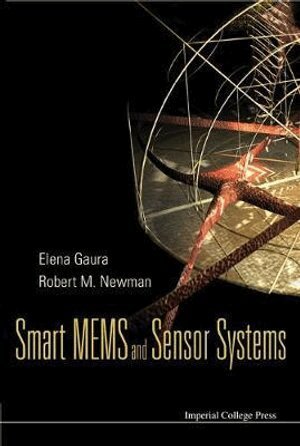
In recent years, MEMS have revolutionized the semiconductor industry, with sensors being a particularly buoyant sector. Smart MEMS and Sensor Systems presents readers with the means to understand, evaluate, appreciate and participate in the development of the field, from a unique systems perspective.The combination of MEMS and integrated intelligence has been put forward as a disruptive technology. The full potential of this technology is only evident when it is used to construct very large pervasive sensing systems. The book explores the many different technologies needed to build such systems and integrates knowledge from three different domains: MEMS technology, sensor system electronics and pervasive computing science.Throughout the book a top-down design perspective is taken, be it for the development of a single smart sensor or that of adaptive ad-hoc networks of millions of sensors.For experts in any of the domains named above the book provides the context for their MEMS based design work and an understanding of the role the other domains play. For the generalist (either in engineering or computing) or the technology manager the underpinning knowledge is provided, which can inform specialist decision making.